



























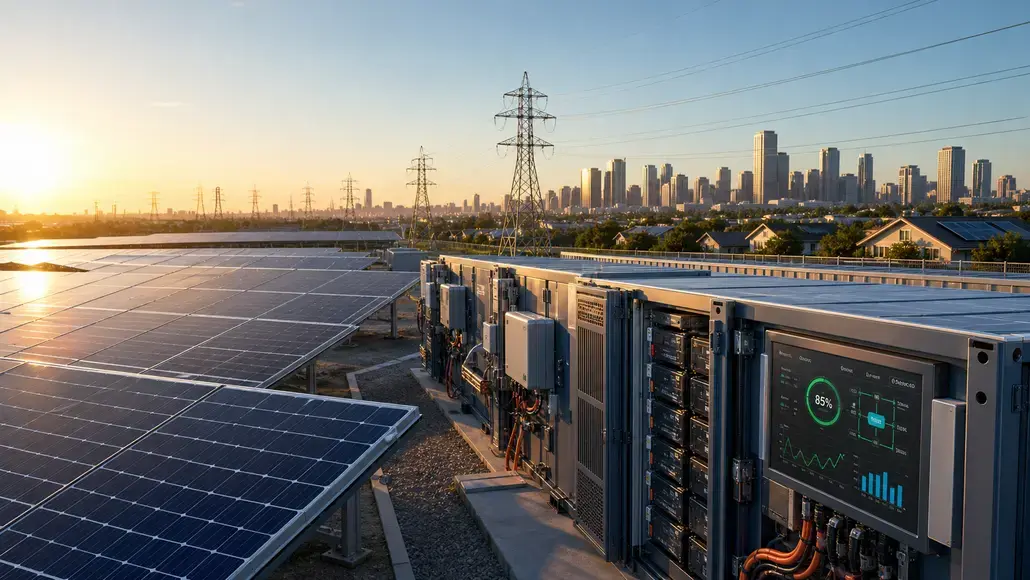

The global energy sector is witnessing a fundamental shift in how power is generated and consumed, driven by the urgent need to decarbonize and the rapid maturation of renewable technologies. While solar energy has proven to be an abundant and cost-effective source of power, its intermittent nature has historically limited its ability to serve as a complete replacement for traditional fossil fuels. However, the rise of solar plus storage systems is changing this narrative. By combining the generation capacity of photovoltaic (PV) arrays with the energy retention capabilities of advanced battery systems, we are creating a new class of “dispatchable” renewables. This combination is the key to unlocking true energy reliability, ensuring that clean power is available 24/7, regardless of whether the sun is shining or the wind is blowing.
At the core of this revolution is the concept of solar battery integration. For a solar system to truly enhance reliability, it must do more than just generate electricity; it must be able to manage that electricity over time. In a standard grid-tied solar setup without storage, any energy produced but not used is sent back to the grid. While this provides some economic benefit through net metering, it does nothing to protect the user during an outage or to help the grid manage peak loads. By adding a storage component, the user gains the ability to “time-shift” their energy. This means storing excess solar power generated during the midday peak and discharging it in the evening when demand is high and the sun has set. This capability is essential for smoothing out the “duck curve” the sharp imbalance between load and generation that often plagues modern grids.
The Evolution of Battery Chemistry and Storage Technology
The success of solar plus storage is deeply tied to the rapid advancements in battery chemistry. While lithium-ion batteries remain the industry standard due to their high energy density and falling costs, the market is diversifying to meet different needs. Lithium Iron Phosphate (LFP) chemistry, for instance, is becoming increasingly popular for stationary storage because of its superior safety profile and longer cycle life compared to traditional Nickel Manganese Cobalt (NMC) cells. Beyond lithium, we are seeing the emergence of flow batteries, which use liquid electrolytes to store energy. Flow batteries are particularly well-suited for long-duration storage—eight hours or more—making them a vital tool for managing seasonal variability in solar output.
Furthermore, the integration of these batteries into hybrid energy systems involves sophisticated power electronics and thermal management. A modern battery system is not just a collection of cells; it is an intelligent asset equipped with a Battery Management System (BMS) that monitors the health, temperature, and state of charge of every individual module. This level of control is necessary to ensure the longevity of the investment and to maximize the efficiency of the energy transfer. When integrated with a solar inverter, the storage system can react in milliseconds to changes in load or grid conditions, providing a level of responsiveness that traditional mechanical generators simply cannot match.
Enhancing Grid Flexibility and Ancillary Services
One of the most valuable aspects of solar plus storage is the support it provides to the wider electrical grid. Grid flexibility is the ability of the power system to respond to sudden changes in supply or demand. As we move away from massive, slow-moving thermal plants, we need decentralized assets that can provide “ancillary services.” These services include frequency regulation, which keeps the grid’s rhythm at exactly 50 or 60 Hertz, and voltage support, which prevents brownouts. A solar-plus-storage system can act as a “fast frequency response” asset, injecting or absorbing power almost instantaneously to keep the grid stable.
Moreover, these systems are increasingly being used to provide “black-start” capabilities. In the event of a total grid collapse, most power plants need an external source of electricity to restart their massive turbines. Solar plus storage systems can provide this initial surge of power, allowing the grid to be rebuilt from the ground up without relying on diesel generators. This role in grid resilience is becoming a critical part of national security and emergency planning, particularly in regions prone to extreme weather events. By decentralizing these capabilities, we create a more “self-healing” grid that is less vulnerable to single points of failure.
The Economics of Storage: From Peak Shaving to Energy Arbitrage
The financial incentives for solar plus storage have evolved from simple backup power to complex revenue-generating strategies. For commercial and industrial users, “peak shaving” is the most common application. Most businesses are charged not just for the total energy they use, but also for their “peak demand” the highest amount of power they draw at any one moment. By using stored solar energy to cover these peaks, businesses can save thousands of dollars on their monthly utility bills. This direct economic benefit is a major driver of corporate solar adoption, as it provides a predictable and significant return on investment.
Another emerging strategy is energy arbitrage. This involves storing solar energy when its market value is low (during the day) and selling it back to the grid when prices are high (during the evening peak). In some deregulated markets, this can be a highly lucrative endeavor, especially when combined with AI-driven software that predicts price fluctuations. Furthermore, many utilities are now implementing “Demand Response” programs, where they pay solar-plus-storage owners to discharge their batteries during times of grid stress. This turns a private asset into a public resource, creating a win-win scenario where the owner gets paid and the grid remains stable.
Residential Resilience and the Rise of Microgrids
For the individual homeowner, solar plus storage offers a level of independence that was previously unattainable. The ability to maintain power during a storm or a utility outage is the primary motivator for many residential buyers. However, we are now seeing these individual systems being linked together to form microgrids. A microgrid is a localized energy system that can disconnect from the main grid and operate autonomously. In a community-scale microgrid, several homes and local businesses share their solar and storage resources, ensuring that critical infrastructure like streetlights, water pumps, and emergency shelters remain operational even if the wider region is in the dark.
This “bottom-up” approach to energy reliability is particularly important for rural and underserved communities. Instead of waiting for expensive transmission lines to be built, these communities can build their own resilient power networks using solar and storage. This democratization of energy is a powerful force for social and economic development, providing reliable power to those who need it most while reducing the overall environmental footprint.
In conclusion, the integration of storage with solar energy is the final piece of the puzzle for the renewable transition. By addressing the challenge of intermittency and providing a suite of valuable services to both the owner and the grid, solar plus storage systems are redefining our expectations for energy reliability. As technology continues to improve and costs continue to fall, these systems will move from a premium addition to a standard requirement for all new energy infrastructure. We are entering an era where our power is not just clean and abundant, but also intelligent and dependable, ensuring a bright and resilient future for all.