






























One of the most significant challenges in the transition to a high-renewables grid is the inherent variability of weather-dependent energy sources. As solar power becomes a dominant part of the global energy mix, the ability to accurately predict how much electricity will be generated at any given time is no longer just a technical advantage it is a requirement for grid stability. Solar forecasting has emerged as a vital discipline that combines atmospheric science, high-resolution sensor networks, and advanced data analytics to provide precise insights into future generation. By improving the accuracy of predictive generation, forecasting allows utility operators to balance supply and demand in real-time, reducing the need for expensive backup reserves and ensuring that clean energy can be used to its fullest potential.
The science of solar forecasting is multi-scale, addressing needs that range from the next five minutes to the next several days. Short-term forecasting is essential for managing the immediate frequency and voltage stability of the grid, while long-term forecasts inform market bidding and the scheduling of traditional power plants. In an era where a single cloud passing over a massive solar farm can cause a significant drop in power injection, the precision provided by these tools is the key to maintaining a reliable power system. As we deploy more solar assets, the value of a high-accuracy forecast increases exponentially, making it the “intelligence” that powers the modern renewable grid.
The Role of AI Solar Analytics and Machine Learning
The recent leap in solar forecasting accuracy is largely due to the integration of AI solar analytics. Machine learning algorithms are uniquely suited to the task of forecasting because they can process vast, multi-dimensional datasets that are too complex for traditional statistical models. These algorithms are trained on years of historical weather data, satellite imagery, and real-time sensor inputs to identify the subtle relationships between atmospheric conditions and photovoltaic output. For example, a machine learning model can learn how specific aerosol levels, humidity, and cloud types affect the performance of different types of solar modules, allowing it to predict generation with remarkable precision even in highly variable environments.
Furthermore, these AI models are “self-learning,” meaning they continuously refine their accuracy as they are exposed to more data. When a forecast deviates from the actual generation, the algorithm analyzes the discrepancy to understand which variables were miscalculated, such as an unexpected shift in wind speed or a localized temperature inversion. This iterative process ensures that the system becomes more reliable over time, providing utilities with a level of confidence in solar performance that was previously unimaginable. By reducing the “uncertainty margin” in renewable generation, AI-driven forecasting allows for higher levels of solar penetration without compromising the physical integrity of the grid.
Advanced Weather Monitoring and Ground-Based Sensing
While AI provides the analytical power, the quality of a forecast is fundamentally dependent on the quality of the input data. This is where advanced weather monitoring and ground-based sensing networks play a critical role. Utility-scale solar projects are increasingly equipped with “sky-imagers” specialized cameras that take continuous, high-resolution photos of the horizon. These cameras use computer vision to track the movement and density of clouds in real-time, providing highly localized “nowcasts” that can predict a drop in solar production with 95% accuracy up to 15 minutes in advance. This localized data is vital for managing the rapid ramp rates that can otherwise stress the distribution network.
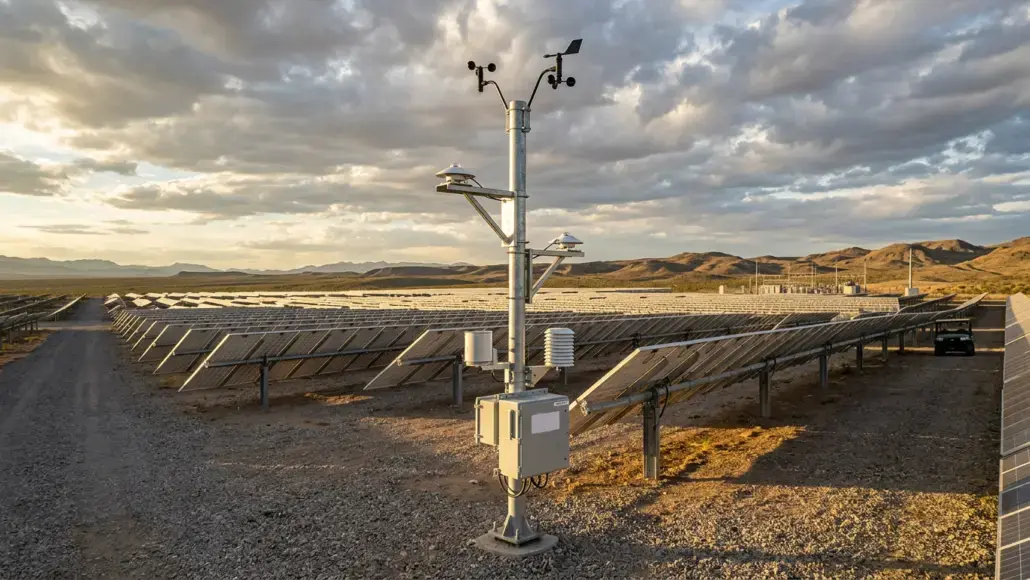
Beyond localized cameras, the industry is utilizing a global network of meteorological satellites that provide broad-scale insights into atmospheric movements. By combining these satellite feeds with data from ground-based weather stations measuring everything from barometric pressure to direct and diffuse irradiance forecasters can build a comprehensive “digital atmosphere.” This multi-layered approach ensures that the forecasting model accounts for both large-scale weather fronts and the micro-climatic variations that are common in mountainous or coastal regions. The result is a seamless flow of predictive energy insights that allows grid operators to manage solar as a predictable and dispatchable resource.
Economic Impacts and the Reduction of Solar Curtailment
The economic benefits of accurate solar forecasting are profound and affect every level of the energy market. For utility providers, a more accurate forecast means they can reduce the amount of “spinning reserve” backup generators that are kept running at low levels in case of a sudden drop in solar output. Because these reserves are often fossil-fuel-powered and expensive to operate, reducing their use lowers both the carbon intensity and the overall cost of electricity. In many markets, the implementation of advanced forecasting has been shown to reduce operational costs by millions of dollars annually, savings that can eventually be passed on to the end consumer.
Moreover, solar forecasting is a primary tool for reducing solar curtailment. Curtailment occurs when the grid cannot absorb the excess power being generated, often because operators are unsure of how long the peak production will last. With a high-confidence forecast, operators can more effectively plan for these periods of oversupply, perhaps by triggering demand-response programs or by signaling for energy storage systems to begin charging. This ensures that no clean energy is wasted, maximizing the environmental and financial return on the solar investment. In the competitive world of energy markets, the ability to provide an accurate “day-ahead” forecast is the difference between a profitable project and one that struggles to find its place in the merit order.
In conclusion, solar forecasting is the essential intelligence that allows for the stable and efficient integration of renewable energy into our global power networks. By harnessing the power of AI solar analytics, sophisticated weather monitoring, and real-time sensing, we are transforming the inherent variability of the sun into a predictable and reliable resource. As we continue to improve the accuracy of our predictive generation, we unlock the door to a world where solar power can meet the vast majority of our energy needs without compromise. The future of the grid is not just clean it is intelligent, and forecasting is the light that guides the way.
Solar forecasting has evolved into a cornerstone technology for the modern energy sector, providing the precision and reliability necessary to manage a high-renewables power grid. As photovoltaic generation becomes a primary source of electricity, the inherent variability of sunlight must be managed through advanced predictive insights. By combining AI solar analytics with a global network of weather monitoring sensors and satellite imagery, the industry is now capable of producing high-accuracy generation forecasts across multiple time scales. These tools allow utility operators to anticipate fluctuations in power output, optimize the use of energy storage, and significantly reduce the reliance on expensive fossil-fuel backup reserves. Furthermore, the ability to accurately predict “day-ahead” generation improves the economic performance of solar assets in competitive energy markets. As these forecasting models continue to learn and refine their accuracy, they are eliminating the challenges of solar intermittency, ensuring that clean energy remains a stable and dependable foundation for the global economy. Ultimately, solar forecasting is the digital bridge that connects variable renewable generation with the rigorous demands of a modern, reliable electrical network.