





































The global push toward renewable energy has resulted in an unprecedented deployment of solar photovoltaic (PV) modules, a trend that is essential for mitigating climate change and reducing our reliance on fossil fuels. However, as the first generations of solar installations reach the end of their operational lifespan, the industry faces a significant logistical and environmental challenge: managing the resulting solar waste. Solar panel recycling has emerged as a critical field of innovation, transforming what was once viewed as a mounting waste problem into a strategic opportunity for material recovery and resource security. By establishing robust systems for solar lifecycle management, the industry can ensure that the transition to clean energy is truly sustainable, closing the loop on material usage and supporting the broader objectives of a circular economy.
The urgency of developing effective solar waste management strategies cannot be overstated. Current projections suggest that by the early 2030s, the volume of decommissioned solar panels will grow exponentially, potentially reaching millions of tons annually. These modules contain valuable materials, including high-purity silicon, silver, copper, and aluminum, as well as trace amounts of specialized metals like gallium and indium. When panels are disposed of in landfills, these resources are lost to the economy, and the presence of heavy metals can pose long-term environmental risks if not properly managed. Advancing recycling technologies allows us to reclaim these precious elements, reducing the need for destructive mining practices and lowering the overall carbon footprint of new solar production.
Technological Innovations in Material Recovery Processes
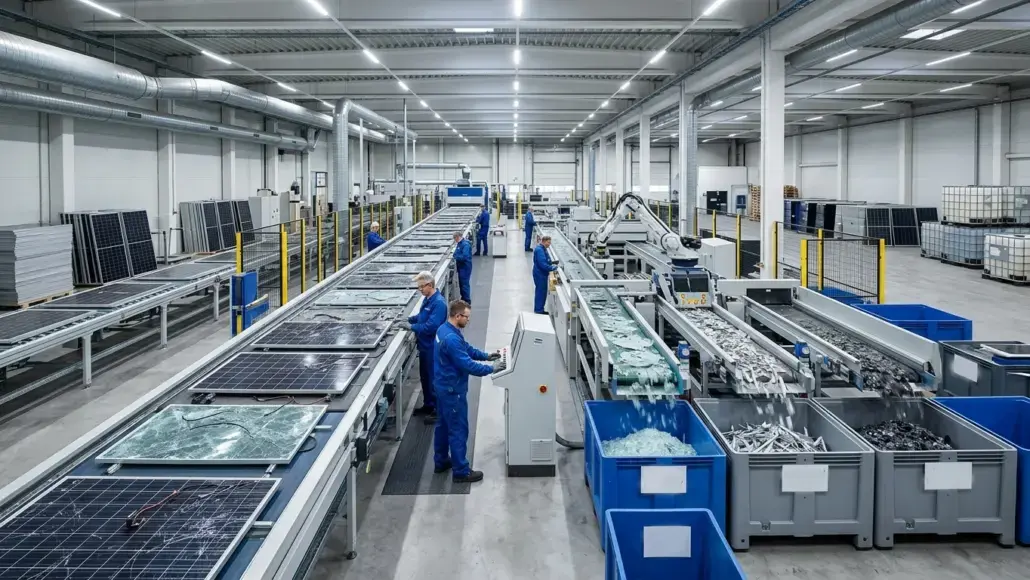
The process of solar panel recycling is evolving from simple mechanical shredding to sophisticated chemical and thermal treatments designed to maximize the purity of recovered materials. In the traditional mechanical approach, panels are crushed to separate glass and aluminum from the internal components. While effective for bulk materials, this method often degrades the quality of the silicon and precious metals, making them unsuitable for reuse in high-tech applications. Modern facilities are now implementing advanced delamination techniques, using specialized lasers or high-temperature processes to cleanly separate the solar cells from the protective polymer layers. This precision allows for the recovery of silicon wafers that can be refined and reintegrated into the manufacturing of new, high-efficiency solar cells, a hallmark of true renewable sustainability.
Furthermore, the recovery of silver and copper has become a primary economic driver for the recycling industry. These metals are used in the conductive grids of solar cells and represent a significant portion of the module’s total value. By utilizing hydrometallurgical processes where chemical solutions are used to leach and then precipitate the metals recyclers can achieve recovery rates exceeding 95%. This high level of efficiency is crucial for the financial viability of recycling centers, as the value of the reclaimed metals helps offset the costs of processing the bulk glass and plastic. As the industry scales, we are seeing the development of dedicated panel recovery hubs that utilize automation and AI-driven sorting to process thousands of modules per day, significantly bringing down the cost per unit and making recycling a competitive alternative to disposal.
The Role of Policy and Extended Producer Responsibility
The shift toward a circular economy for solar assets is being accelerated by a changing global regulatory landscape. In many regions, particularly the European Union, the principle of Extended Producer Responsibility (EPR) has been codified into law, requiring manufacturers and importers to take responsibility for the end-of-life management of their products. This policy framework creates a powerful incentive for companies to design panels with recyclability in mind a concept known as “Design for Recycling.” This might include using reversible adhesives or simplifying the material mix to make separation easier. By integrating these considerations into the initial development phase, the industry can significantly reduce the complexity and cost of solar panel recycling in the decades to come.
In other parts of the world, such as the United States and parts of Asia, the approach is increasingly focused on market-based solutions and state-level mandates. Some states have begun to classify solar panels as universal waste, which simplifies the transportation requirements for recycling facilities while still ensuring environmental protections. Moreover, the industry itself is taking proactive steps through the development of voluntary certification programs for recyclers. These programs ensure that facilities adhere to strict environmental and safety standards, providing transparency to project owners who want to ensure their decommissioned assets are handled responsibly. This combination of top-down regulation and bottom-up industry leadership is essential for creating the stable investment environment needed to build out global recycling infrastructure.
Economic Benefits and the Growth of the Circular Economy
Beyond environmental protection, solar panel recycling offers substantial economic benefits that contribute to the resilience of the renewable energy sector. By creating a secondary market for recovered materials, we can reduce the industry’s vulnerability to price fluctuations and supply chain disruptions in the global mining sector. For example, high-purity silicon is energy-intensive to produce from raw quartz using recycled silicon can reduce the energy consumption of cell manufacturing by up to 50%. This not only lowers the cost of new panels but also improves their “energy payback time,” making solar an even more effective tool for climate mitigation.
Additionally, the growth of a dedicated solar recycling industry is a major source of green job creation. From specialized logistics and transportation to high-tech chemical processing and material science research, the circular economy for solar power requires a diverse and skilled workforce. These jobs are often localized near major solar hubs, providing long-term economic stability in regions that have invested heavily in renewable generation. As we move toward a world powered primarily by the sun, the ability to manage the lifecycle of our energy infrastructure will be as important as the ability to build it. Solar panel recycling is the final, essential link in the chain, ensuring that our clean energy future is built on a foundation of resource efficiency and environmental integrity.
The transition to a sustainable energy future is fundamentally linked to our ability to manage the entire lifecycle of renewable technologies. As the volume of decommissioned photovoltaic modules continues to rise, solar panel recycling has evolved from a niche environmental concern into a central pillar of the circular economy. By leveraging advanced material recovery techniques, the industry is now capable of reclaiming precious metals and high-purity silicon, reducing the environmental impact of mining and lowering the carbon footprint of new solar production. Supported by progressive policies like Extended Producer Responsibility and an increasing focus on sustainable solar asset management, this circular approach is transforming a potential waste crisis into a resilient source of raw materials. The economic benefits of recycling, from energy savings in manufacturing to the creation of specialized green jobs, ensure that the solar industry remains the gold standard for sustainable development in the 21st century.