

































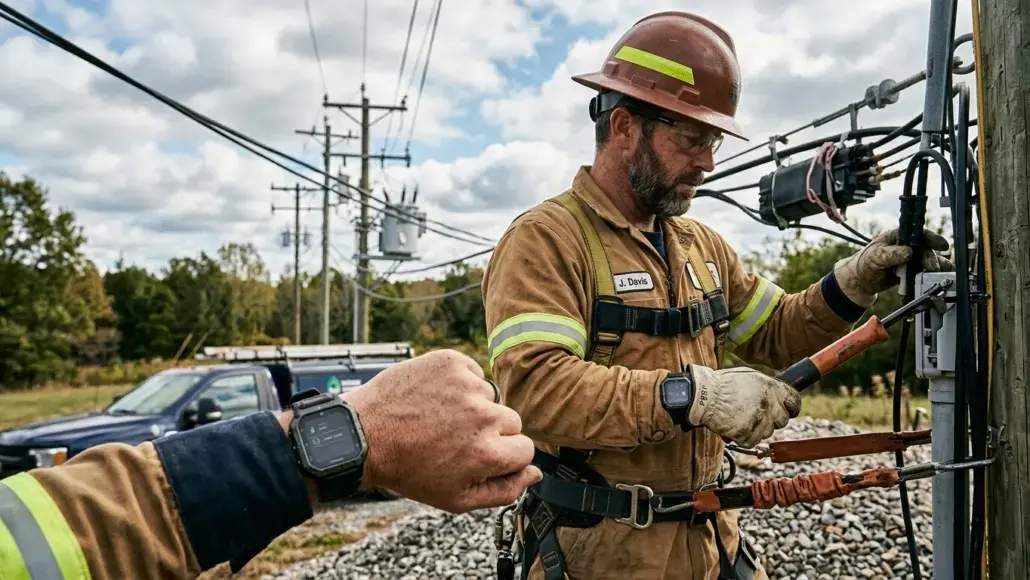

The modern utility sector is undergoing a profound digital transformation, yet the most critical evolution is occurring not within the grid itself, but on the very bodies of the people who maintain it. As electrical transmission and distribution networks become more complex, the hazards faced by field personnel have grown increasingly sophisticated, necessitating a move beyond traditional personal protective equipment. The emergence of smart wearables utility worker safety represents a pivotal shift from passive protection to active, real-time risk mitigation. By embedding sensors, communication modules, and diagnostic tools directly into the gear worn by technicians, organizations can now visualize invisible threats and monitor the physiological health of their workforce with unprecedented precision.
This integration of technology into the daily workflow is not merely a matter of convenience; it is a fundamental reimagining of occupational health and safety. In high-voltage environments, the margin for error is effectively zero. A technician who is suffering from heat exhaustion or who has unknowingly drifted into a high-induction zone is at extreme risk. Smart wearables utility worker safety provides a digital safety net that operates silently in the background, offering predictive insights that can prevent an incident before the worker even realizes they are in danger. As these technologies mature, they are becoming an indispensable component of the modern utility’s operational strategy.
The Rise of Connected PPE and Biometric Monitoring
The core of the wearable revolution lies in connected PPE traditional safety gear like helmets, vests, and boots that have been enhanced with Internet of Things (IoT) capabilities. These devices are designed to capture a wide array of data points, from environmental conditions like ambient temperature and gas concentrations to the worker’s own vital signs. By tracking heart rate, core body temperature, and even sweat composition, smart wearables utility worker safety systems can identify early indicators of fatigue or physical distress. This is particularly crucial during emergency restoration efforts where crews often work long hours in grueling conditions, pushing their physical limits to restore power to communities.
Furthermore, biometric monitoring allows for a more personalized approach to safety. Every worker has a different threshold for physical exertion and environmental stress. A standardized rest schedule might be sufficient for one individual but inadequate for another who is more susceptible to heat stress. Wearable technology provides the granular data needed to make individual-level safety interventions. When a sensor detects that a worker’s heart rate has remained elevated for a sustained period or that their movement patterns suggest onset dizziness, an automated alert can be sent to both the worker and the supervisor, triggering an immediate safety check or mandatory rest period.
Enhancing Situational Awareness in High-Voltage Zones
Beyond physiological monitoring, smart wearables utility worker safety is revolutionizing how technicians perceive their environment. One of the most significant hazards in transmission work is the proximity to energized lines that may not be visually distinguishable from de-energized ones. Modern wearable sensors can detect electromagnetic fields (EMF) and provide haptic or audible alerts as a worker approaches a danger zone. This “sixth sense” is a powerful tool for preventing accidental contact, especially in complex substation environments or during multi-crew operations where line status may change rapidly.
In addition to EMF detection, many smart helmets now incorporate augmented reality (AR) displays. These heads-up displays can overlay critical information such as circuit diagrams, voltage levels, and safety checklists directly onto the worker’s field of vision. This allows the technician to keep their hands free and their eyes on the task while still accessing the data they need to perform the work safely. The ability to verify the status of a switch or view the history of a specific asset without looking away from the equipment significantly reduces the cognitive load on the worker, thereby minimizing the potential for human error in high-consequence scenarios.
GPS Tracking and Geofencing for Remote Field Operations
Utility work often takes place in remote, rugged terrain where communication can be difficult and medical assistance is far away. In these environments, smart wearables utility worker safety systems utilize GPS tracking and satellite connectivity to ensure that no worker is ever truly alone. If a technician suffers a fall or becomes incapacitated, built-in accelerometers and “man-down” sensors can automatically trigger a distress signal, providing rescue teams with the exact coordinates of the individual. This rapid response capability is often the difference between a minor incident and a tragic outcome.
Geofencing is another powerful application of wearable GPS technology. Safety managers can create virtual boundaries around hazardous areas, such as unstable hillsides or zones with active heavy machinery. If a worker wearing a connected device crosses into one of these prohibited zones, they receive an immediate notification to retreat. This automated oversight ensures that safety protocols are followed even when a supervisor is not physically present to monitor every movement. By integrating these spatial data points into the broader safety management system, utilities can create a dynamic and responsive environment that adapts to the shifting risks of a live jobsite.
Data Analytics Driving Continuous Safety Improvement
The true power of smart wearables utility worker safety lies not just in the hardware, but in the massive amounts of data these devices generate. When aggregated and analyzed over time, this data provides a comprehensive picture of the organization’s safety profile. Safety data analytics can identify recurring hazards, such as specific towers where EMF levels are consistently higher than expected, or crews that are experiencing higher-than-average rates of heat stress. These insights allow for highly targeted interventions, whether it’s specialized training, equipment upgrades, or changes to operational procedures.
This data-driven approach also strengthens regulatory compliance and workforce accountability. By having a digital record of every safety alert and the subsequent response, utilities can demonstrate a high degree of “due diligence” to regulators and insurance providers. More importantly, it fosters a culture of transparency where safety is measured by proactive engagement rather than just the absence of injuries. When workers see that their wearable data is being used to improve their working conditions and provide them with better gear, it increases their buy-in and engagement with the overall safety program.
Overcoming Barriers to Adoption: Privacy and Ergonomics
Despite the clear benefits, the widespread adoption of smart wearables utility worker safety faces several challenges, primarily regarding worker privacy and device ergonomics. Many employees are understandably concerned about the potential for their biometric or location data to be used for performance monitoring or disciplinary purposes. To overcome this, organizations must establish clear data governance policies that protect individual privacy and ensure that the information is used strictly for safety and health purposes. Transparency and trust are the essential foundations upon which a successful wearable program is built.
Ergonomics also plays a critical role. A wearable device that is bulky, uncomfortable, or interferes with existing PPE will ultimately be discarded or bypassed by the workforce. The next generation of smart wearables utility worker safety is focusing on “invisible” integration sensors woven directly into fabrics, ultra-lightweight helmet attachments, and long-lasting batteries that don’t add significant weight. By working closely with field crews during the design and testing phases, technology providers can ensure that these tools are viewed as an asset to the work, rather than a hindrance.
Conclusion: The Future of the Connected Utility Worker
As we look toward the future, the integration of smart wearables utility worker safety will only deepen. We are moving toward an ecosystem where every piece of equipment and every worker is part of a unified digital safety fabric. This will likely include integration with autonomous vehicles and drones, where wearables provide the “human” data point in a broader automated grid. The goal is to reach a state of “zero harm” by creating an environment where hazards are identified and mitigated in real-time through the seamless interaction of humans and machines.
In conclusion, the rise of wearable technology represents a new frontier in utility safety. By embracing smart wearables utility worker safety, the industry is not just adopting new gadgets; it is committing to a future where the health and well-being of the workforce are protected by the most advanced tools available. While the challenges of privacy and ergonomics remain, the potential to save lives and prevent debilitating injuries makes the pursuit of these technologies a moral and operational imperative. The connected utility worker is not a vision of the distant future; they are the standard-bearers of a safer, more resilient energy industry today.