


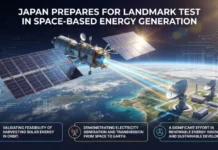





















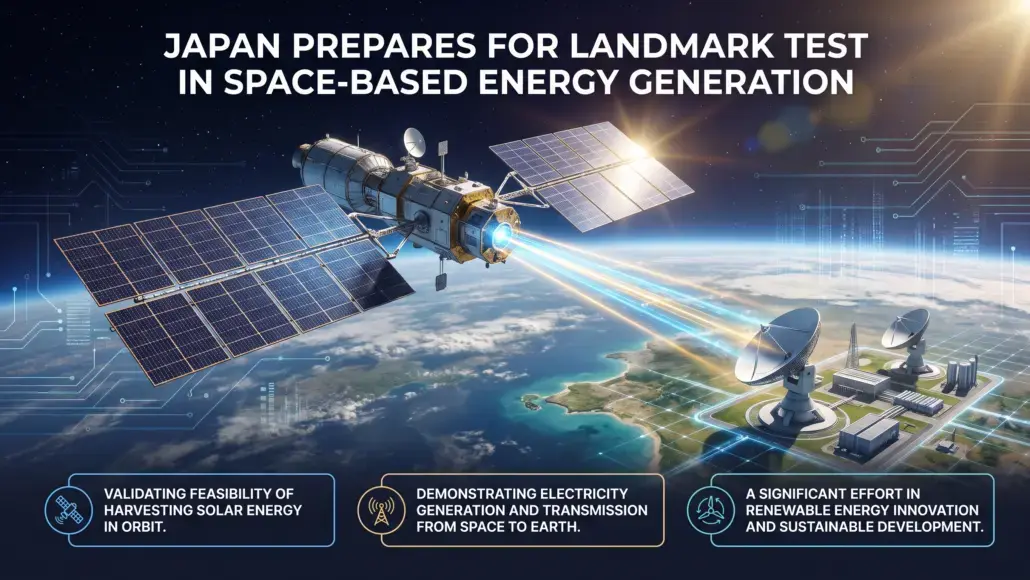

Japan is entering the final stages of preparation for a landmark satellite experiment designed to validate the feasibility of harvesting energy from the sun while in orbit. Researchers are currently conducting rigorous checks on a flight model intended to demonstrate how electricity can be generated in the vacuum of space and sent back to our planet. This initiative represents a significant effort in the field of renewable energy innovation, focusing on the development of a sustainable energy source that operates independently of terrestrial weather conditions.
Koji Tanaka, an associate professor at the Japan Aerospace Exploration Agency, stated that the primary objective of the project is to demonstrate the fundamental systems required for a future large-scale solar power station. Under this conceptual framework, specialized equipment would collect sunlight in orbit, convert it into electrical energy, and utilize wireless power transmission to deliver that energy to specific receiving stations located on the ground.
Technical Precision in Wireless Power Transmission
A distinct advantage of this space-based solar power system is its potential flexibility. Unlike traditional ground-based solar arrays that are fixed in one location, a satellite-based system could theoretically redirect its energy beam to various receiving sites, provided they are equipped with the necessary charging infrastructure. However, achieving the required accuracy for such a beam remains a formidable engineering hurdle.
Tanaka noted that the precision required is equivalent to hitting a target only 3 centimeters wide from a distance of 1 kilometer. To address this, researchers are leveraging phased-array antenna technology. This method, which allows for the electronic control of radio wave direction, is already utilized in radar systems and is being adapted to ensure the energy beam remains locked onto its terrestrial target. This satellite experiment will be crucial in determining if such high-level precision can be maintained in the harsh environment of space.
Evaluating Environmental and Atmospheric Impacts
Beyond the mechanical alignment of the beam, the research team must also account for how the Earth’s atmosphere and the space environment interact with the energy transmission. A key component of the upcoming study involves observing how ionospheric plasma might influence the stability and efficiency of the beam. Tanaka emphasized that the project must thoroughly evaluate the reciprocal effects between the transmission technology and its surroundings before any commercial application can be considered.
The construction of the flight model marks a transition from theoretical research to practical testing. The data gathered from this mission will provide essential insights into beam control and transmission accuracy, helping to define the future of space solar power technology. As the project moves toward launch, the results will help determine the commercial viability of a permanent solar power station in orbit.
The Path Toward Commercial Implementation
While the engineering milestones are critical, the broader implementation of space-based solar power faces non-technical requirements. Establishing international frameworks to govern orbital activities and securing consistent, long-term development funding are essential steps for the industry. Japan’s role in this emerging sector of renewable energy innovation will depend on continued technical success, international cooperation, and the ability to attract the investment necessary for large-scale deployment.