












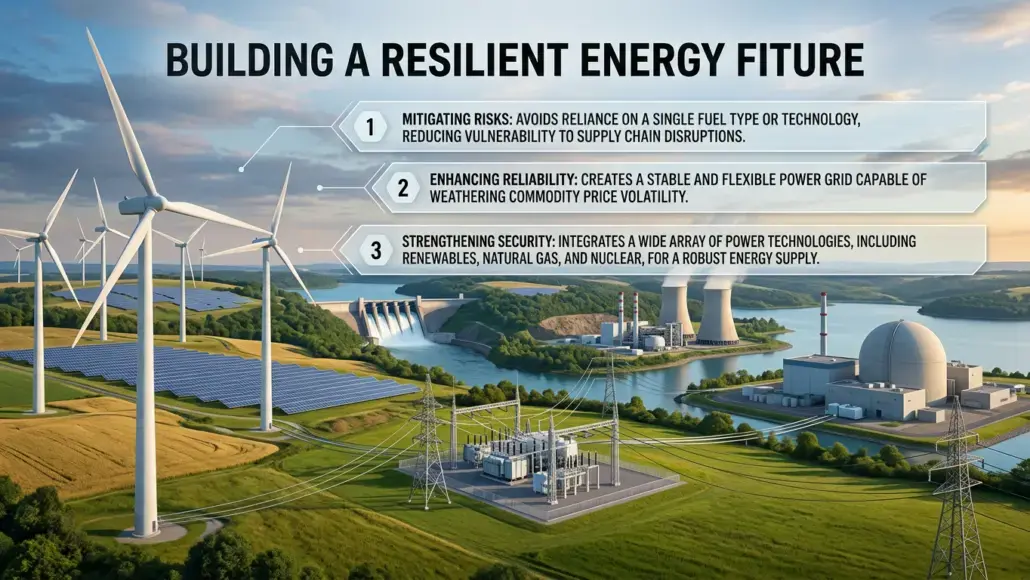

The stability of a national power grid is fundamentally dependent on the diversity of its energy sources. Relying too heavily on a single fuel type or technology exposes the system to significant risks, including supply chain disruptions, commodity price volatility, and environmental hazards. Generation portfolio diversification is the strategic process of incorporating a wide array of power technologies, such as natural gas, nuclear, wind, solar, and hydroelectric, to create a resilient and flexible supply profile. By spreading the burden of generation across different assets, utility companies can ensure that the failure or unavailability of one source does not lead to widespread power shortages. This approach is particularly critical during the current global energy transition, where the integration of variable renewables must be balanced by stable baseload and flexible peaking capacity.
Fuel price stability is one of the primary drivers for a diversified portfolio. For instance, countries that rely exclusively on natural gas for power generation are vulnerable to international market fluctuations and geopolitical tensions. By integrating nuclear energy or long-duration energy storage, these regions can create a pricing floor that protects consumers from sudden cost spikes. Similarly, the addition of solar and wind energy provides a zero-marginal-cost resource that reduces the overall financial burden on the system during periods of high sun and wind availability. The goal is to create a portfolio where the strengths of one technology compensate for the weaknesses of another, ensuring a reliable and affordable electricity supply regardless of external market conditions.
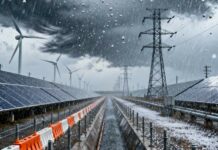
Environmental resilience is another vital aspect of diversification. Climate change is increasing the frequency of extreme weather events, from prolonged droughts that affect hydroelectric production to severe cold snaps that can freeze natural gas infrastructure. A diversified fleet that includes assets with different operational profiles is better equipped to handle these stresses. For example, during a heatwave that reduces the efficiency of thermal cooling systems, wind and solar assets may continue to provide critical output. This multi-technology approach provides grid operators with more options for managing system equilibrium during times of high stress. The strategic alignment of assets with different vulnerabilities is the foundation of a modern, secure energy system.
The Strategic Integration of Dispatchable and Variable Resources
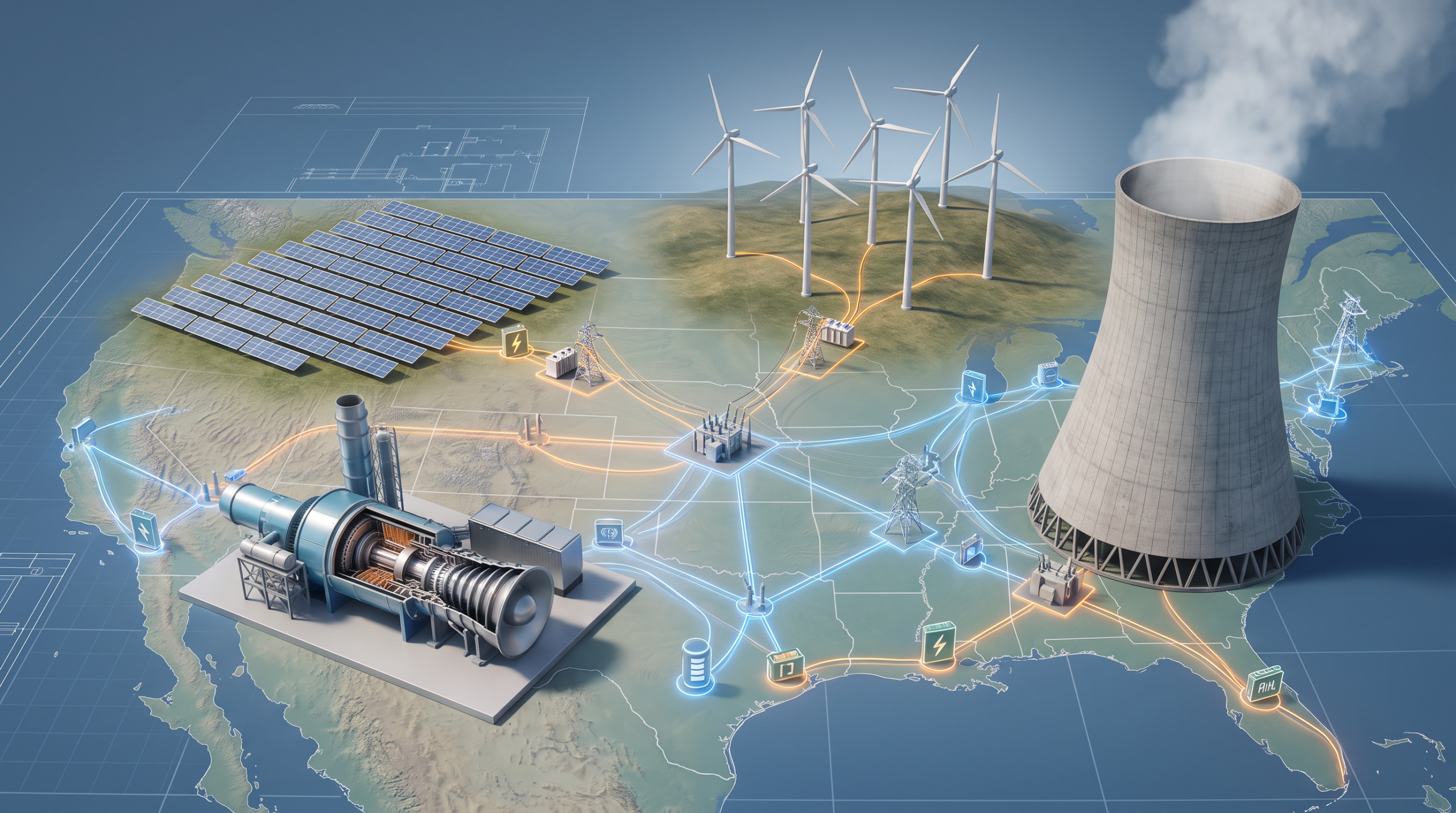
The primary challenge of a modern power portfolio is the integration of variable renewable energy with dispatchable baseload assets. Wind and solar are inherently intermittent, meaning their output depends on weather conditions rather than grid demand. To maintain stability, these variable sources must be complemented by dispatchable assets like natural gas turbines or pumped hydro storage that can be turned on or off quickly. Generation portfolio diversification provides the framework for this balance, ensuring that there is always enough firm capacity to meet demand even when the sun is not shining or the wind is not blowing. This synergy is essential for maintaining the high levels of reliability that modern industrial and digital economies require.
Long-term investment strategies are shifting toward this balanced model. Financial institutions and insurance companies are increasingly scrutinizing the carbon intensity and risk profile of energy portfolios. Companies that demonstrate a commitment to diversification are often seen as more creditworthy and better prepared for future regulatory changes. This shift is driving a wave of investment in new technologies, including small modular reactors and green hydrogen production, which can provide clean, dispatchable power. By staying at the forefront of technological innovation, power generation companies can future-proof their assets and ensure long-term profitability in a rapidly changing market.
- Technological Resilience: Using a mix of thermal, mechanical, and chemical energy conversion.
- Geographic Distribution: Placing assets in different climatic zones to reduce weather-related risks.
- Operational Flexibility: Prioritizing assets that can ramp up or down quickly.
- Resource Availability: Ensuring access to a wide variety of fuels and natural resources.
- Economic Hedging: Protecting against price volatility in any single commodity market.
Regulatory Frameworks and Policy Incentives for Diversification
Government policies play a crucial role in shaping the diversity of the power sector. Many countries have implemented renewable portfolio standards or clean energy mandates that require utilities to source a certain percentage of their power from carbon-free technologies. These regulations are designed to accelerate the energy transition and reduce national dependence on imported fossil fuels. However, effective policy must also recognize the need for grid stability and the importance of firm capacity. Incentives for energy storage and advanced grid management are becoming more common as policymakers realize that a diverse mix of generation is only effective if it can be integrated and managed efficiently.
Market mechanisms are also evolving to support diversification. In some regions, capacity markets provide payments to generators simply for being available, which helps to support the economic viability of baseload and peaking plants that might not run frequently but are essential for grid security. These payments provide a predictable revenue stream that allows companies to maintain a diverse fleet of assets. Similarly, carbon pricing mechanisms are making cleaner technologies more competitive, encouraging a natural shift toward a more sustainable and diverse energy mix. The alignment of economic incentives with societal goals is key to driving the necessary investment in new power infrastructure.
Inter-regional cooperation is another important factor in strengthening supply security. By connecting different power grids through high-voltage transmission lines, countries can share their diverse generation assets. For example, a country with abundant hydroelectric resources can export power to a neighbor during periods of low solar production. This cross-border exchange increases the overall diversity of the combined system and reduces the need for expensive domestic peaking capacity. This level of cooperation requires significant investment in transmission infrastructure and the harmonization of market rules, but the benefits in terms of reliability and cost-efficiency are substantial.
Long-Term Planning and the Role of Reserve Margin Security
Effective diversification is not just about the types of assets in the portfolio, but also how they are planned and managed over time. This involves meticulous reserve margin planning to ensure that there is always a sufficient buffer of capacity to handle peak demand or unexpected outages. A diverse portfolio makes this planning more complex but ultimately more effective, as different assets have different availability profiles. By accounting for the statistical likelihood of different generation scenarios, planners can create a more resilient system that can withstand a wide variety of shocks. This proactive approach to security is the hallmark of a mature and well-managed power utility.
Asset life extension is another critical component of portfolio management. While new technologies are essential, existing assets like nuclear and hydro plants provide a stable foundation of low-carbon power that is difficult to replace. Retrofitting these plants with modern control systems and more efficient components can extend their useful life by decades. This allows utilities to maintain a diverse mix while focusing their capital investment on new, innovative technologies. The balance between maintaining the old and investing in the new is a constant challenge for utility executives, requiring a deep understanding of both engineering and finance.
Additionally, the rise of distributed energy resources is adding a new layer of diversity to the grid. Rooftop solar, small-scale wind, and behind-the-meter battery storage are empowering consumers to become active participants in the energy system. While this presents challenges for grid operators, it also provides a massive new source of flexibility and resilience. Integrating these distributed resources into the broader generation portfolio is a major focus for the industry. By leveraging the diversity of both large-scale and small-scale assets, we can create a power system that is more democratic, efficient, and secure than ever before.
Technological Innovation Driving Future Diversity
The future of power generation will be defined by even greater levels of technological diversity. Innovations in areas like deep geothermal, ocean energy, and fusion are currently in various stages of development and could provide powerful new tools for strengthening supply security. These technologies offer the promise of constant, carbon-free power that can complement existing renewable and thermal assets. Investment in research and development is essential for bringing these technologies to market and ensuring that the power sector remains at the forefront of the global innovation economy. The companies that lead in this area will be the ones that define the energy sector of the 22-century.
Artificial intelligence and big data will also play an increasingly important role in managing diverse portfolios. These tools can analyze vast amounts of data from sensors, weather forecasts, and market signals to optimize the dispatch of generation assets. By predicting demand and generation patterns with high precision, AI can help to minimize fuel costs and reduce emissions while maintaining the highest levels of grid stability. This digital overlay is the brain of the modern power system, allowing the diverse physical assets to work together as a single, integrated whole. The combination of advanced hardware and intelligent software is the key to a secure and sustainable energy future.
Generation portfolio diversification is the most effective strategy for ensuring the long-term security and stability of our electricity supply. By embracing a wide variety of technologies and fuels, we can mitigate risks, reduce costs, and build a more resilient grid. This requires a coordinated effort between engineers, policymakers, and investors, as well as a commitment to ongoing innovation. As we move through the energy transition, the diversity of our power generation will be our greatest strength. By building a portfolio that is both broad and deep, we can ensure that we have the power we need to thrive in a rapidly changing world.