










Events Date: 9

UK Extends CfD Renewable Energy Contracts to 20 Years

Note* - All images used are for editorial and illustrative purposes only and may not originate from the original news provider or associated company.

Subscribe

- Never miss a story with notifications

- Gain full access to our premium content

- Browse free from any location or device.

Media Packs

Expand Your Reach With Our Customized Solutions Empowering Your Campaigns To Maximize Your Reach & Drive Real Results!

– Access the Media Pack Now

– Book a Conference Call

Leave Message for Us to Get Back

Related stories

Ergonomics Improving Efficiency in Transmission Worksites

Optimizing the physical interaction between utility professionals and their environment, ergonomics transmission worksites initiatives are proving that worker comfort is a primary engine of operational speed. By refining tool design and harness mechanics, the power sector is reducing physical strain and fatigue, allowing crews to maintain peak performance throughout the demanding lifecycle of infrastructure projects.

Data Driven Insights Transforming Safety in Power Grids

Revolutionizing the management of risk in the energy sector, data driven safety power grids initiatives are turning vast streams of information into actionable protection strategies. By analyzing patterns of maintenance, environmental conditions, and worker behavior, utility providers are now able to predict hazards before they manifest, creating a more transparent and responsive safety environment for the modern electrical infrastructure.

Building Safety Culture Across Power Transmission Teams

Strengthening the human foundation of our energy networks, safety culture power transmission teams initiatives are moving beyond compliance to a deep-seated commitment to mutual protection. By fostering open communication, leadership accountability, and peer-to-peer engagement, utility organizations are creating an environment where every individual feels empowered to prioritize safety as a core personal and professional value.
- Advertisement -

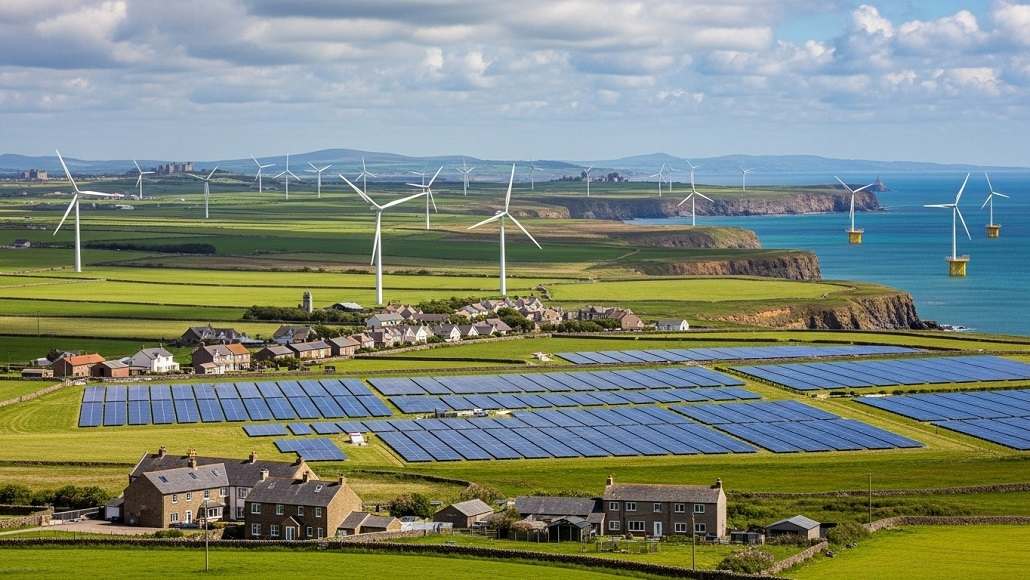
The UK government announced that it would extend the lifespan of its Contracts for Difference (CfD) renewable energy contracts from 15 years to 20 years. This modification, which was confirmed on July 15, will take effect with Allocation Round 7 (AR7), which will open for bids in August 2025. It affects solar, onshore wind, offshore wind, and floating offshore wind technologies.

The government’s primary program for subsidising low-carbon energy is the CfD renewable energy contracts scheme. It guarantees developers a set price for the power they generate. The UK wants to lower developers’ cost of capital by extending the contract length to 20 years. In the end, they intend to pass those savings on to consumers. But it is still unclear whether such savings will ever happen.

The Department for Energy Security and Net Zero reported that longer contracts will help balance the high upfront costs of renewable infrastructure with more stable, long-term revenues. The government claims this would assist keep the energy transition on track towards its Clean Power 2030 targets, particularly as demand for power rises in the next decades.

The change comes after months of consultation and lobbying from the sector. Most developers say that 15-year CfD renewable energy contracts no longer reflect the market reality, particularly because electricity costs are unstable, interest rates are increasing, and negative pricing is becoming more common.

Most importantly, the government claims that the longer term would not modify the indexation measure, which means that payments will still be linked to the Consumer Price Index (CPI).

Others who dislike the concept say that extending the CfD contracts to 20 years might merely be a way to provide more money to people without truly giving them greater value. If wholesale power costs decrease a lot after year 15, as many people think they will, customers might wind up paying too much over the last five years of the contract.

The AR7 overhaul includes other changes that are good for developers, in addition to the contract extension. For example, floating offshore wind projects will get extra money from the budget, solar PV projects will have more time to get started, and offshore wind bidders no longer need full planning permission to take part—just a 12-month planning history.

The revised CfD renewable energy contracts under AR7 aim to reshape project timelines and market incentives. How vigorously developers compete when the bids come in will determine whether this leads to a boom or simply another bureaucratic shuffle.

Latest stories

Related stories

Ergonomics Improving Efficiency in Transmission Worksites

Optimizing the physical interaction between utility professionals and their environment, ergonomics transmission worksites initiatives are proving that worker comfort is a primary engine of operational speed. By refining tool design and harness mechanics, the power sector is reducing physical strain and fatigue, allowing crews to maintain peak performance throughout the demanding lifecycle of infrastructure projects.

Data Driven Insights Transforming Safety in Power Grids

Revolutionizing the management of risk in the energy sector, data driven safety power grids initiatives are turning vast streams of information into actionable protection strategies. By analyzing patterns of maintenance, environmental conditions, and worker behavior, utility providers are now able to predict hazards before they manifest, creating a more transparent and responsive safety environment for the modern electrical infrastructure.

Building Safety Culture Across Power Transmission Teams

Strengthening the human foundation of our energy networks, safety culture power transmission teams initiatives are moving beyond compliance to a deep-seated commitment to mutual protection. By fostering open communication, leadership accountability, and peer-to-peer engagement, utility organizations are creating an environment where every individual feels empowered to prioritize safety as a core personal and professional value.

Human Factors Shaping Safety in Power Transmission Work

Understanding the cognitive and psychological drivers of performance, human factors power transmission safety initiatives are refining the interface between the worker and the high-voltage environment. By addressing issues like cognitive load, decision-making biases, and fatigue, the energy sector is moving beyond physical protection to a sophisticated model of error prevention that acknowledges the inherent limitations and strengths of the human mind.

Subscribe

- Never miss a story with notifications

- Gain full access to our premium content

- Browse free from any location or device.

Media Packs

Expand Your Reach With Our Customized Solutions Empowering Your Campaigns To Maximize Your Reach & Drive Real Results!

– Access the Media Pack Now

– Book a Conference Call

Leave Message for Us to Get Back

Translate »