



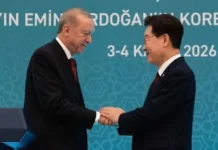
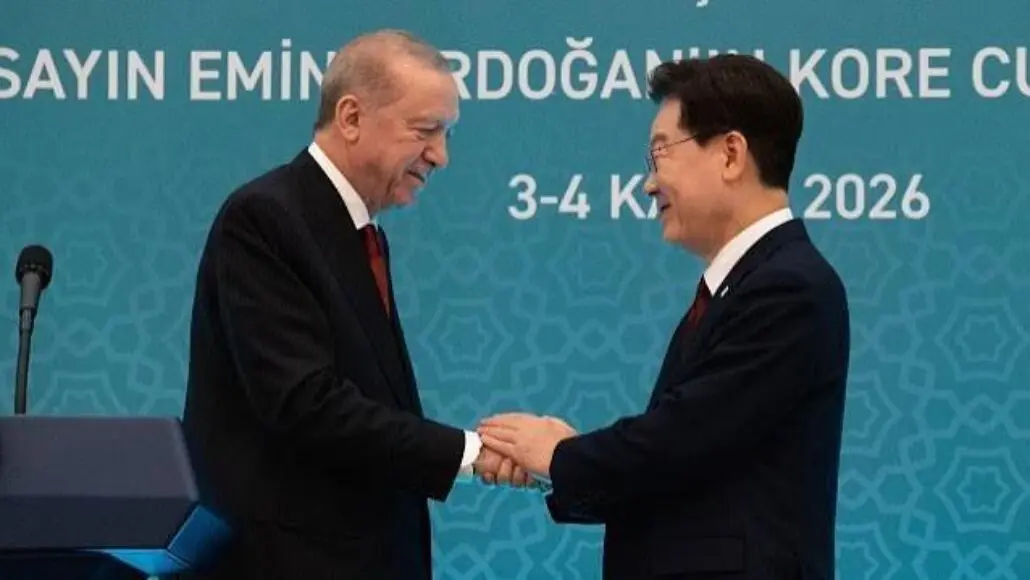

Türkiye and South Korea have agreed to establish a framework for Nuclear project financing, strengthening bilateral energy ties and creating opportunities for companies from both countries to participate in future developments. The agreement was signed by Türkiye Nuclear Energy Company (TÜNAŞ) and the Export-Import Bank of Korea (KEXIM) during Turkish President Recep Tayyip Erdoğan’s visit to South Korea.
The memorandum of understanding (MOU) will support cooperation on financial modelling, analysis and the development of potential financing structures for nuclear power projects undertaken through TÜNAŞ. The two organisations will also establish a working group to exchange information regularly and explore opportunities for future cooperation.
The agreement forms part of a wider energy cooperation initiative signed by Türkiye’s Minister of Energy and Natural Resources, Alparslan Bayraktar, and South Korea’s Minister of Climate, Energy and Environment, Kim Sung-whan. Their MOU covers nuclear energy, renewable power, hydrogen, energy efficiency, smart grids and other energy technologies.
TÜNAŞ and KEXIM Agree on Nuclear Financing Cooperation
The nuclear financing MOU establishes a framework for TÜNAŞ and KEXIM to evaluate potential financing solutions for nuclear power projects to be undertaken through the Turkish company.
According to Türkiye’s Energy Ministry, the organisations will cooperate on financial modelling and analysis, as well as financing structures. A dedicated working group will facilitate regular information exchange and help identify potential areas for collaboration.
The agreement does not constitute a confirmed financing commitment for a specific nuclear power plant. Instead, it provides a basis for the two organisations to assess financing options and explore arrangements that could support future project development.
South Korea’s presidential office said the MOU would provide a foundation for supporting the participation of South Korean companies in new nuclear power projects in Türkiye.
Bilateral Energy Agreement Covers Nuclear and Clean Energy
The financing agreement accompanies a broader MOU on strengthening cooperation in the energy sector. Under this arrangement, the two governments will work together on clean energy policies and carbon emissions reduction, nuclear energy and power plant construction, renewable energy, hydrogen, energy efficiency, smart grids and emerging energy technologies.
The countries also agreed to establish a bilateral energy transition forum that will meet annually. The forum will serve as a high-level mechanism for discussions on nuclear power plant investments, technology integration, financing models and joint venture opportunities.
The initiative is intended to provide a regular platform for government institutions and industry stakeholders to examine opportunities across the energy sector, including nuclear infrastructure development and investment.
Sinop Nuclear Power Plant Cooperation Progresses
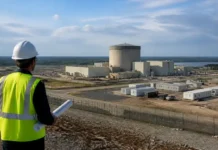
The planned Sinop nuclear power plant in northern Türkiye is among the projects relevant to the expanding bilateral cooperation. South Korea’s presidential office said discussions on the project, including site evaluation and the operation of a joint working group, were progressing under an MOU on nuclear cooperation signed in the previous year.
South Korea has previously expressed interest in participating in Türkiye’s nuclear development programme. In January 2023, Korea Electric Power Corporation (KEPCO) submitted a preliminary proposal for the construction of four APR-1400 reactors at an undisclosed site in the northern part of the country.
The latest financing framework could provide a basis for further discussions on how financial structures and institutional cooperation might support future nuclear developments. However, the MOU does not confirm a final technology selection, construction contract or financing package for the Sinop project.
Türkiye Advances Plans for Nuclear Generation Expansion
Türkiye’s nuclear energy programme includes the Akkuyu nuclear power plant in Mersin province, the country’s first nuclear facility. Russia’s Rosatom is constructing four VVER-1200 reactors under a build-own-operate model. Construction of the units began between 2018 and 2023.
The 4,800 MWe facility is expected to supply approximately 10% of Türkiye’s electricity requirements when fully operational. The country aims to bring all four units into operation by the end of 2028.
Türkiye has also been discussing plans for additional nuclear power plants. In March 2024, Energy Minister Alparslan Bayraktar said the country was in talks with Russia and South Korea over the proposed Sinop plant, while discussions with China concerned a potential third facility in the Thrace region in northwestern Türkiye.
Alongside large-scale nuclear developments, Türkiye is pursuing small modular reactor deployment. Its plans envisage adding 5 GWe of SMR capacity by 2050, equivalent to at least 16 individual reactors.
The cooperation framework between TÜNAŞ and KEXIM adds a financing dimension to Türkiye’s broader nuclear development plans. Through financial analysis, information exchange and discussions on potential financing structures, the two organisations aim to advance Nuclear project financing opportunities for future nuclear power projects.