








Events Date: 9

EV Charging & Alternative Fueling – $623mn In Grants In US

Note* - All images used are for editorial and illustrative purposes only and may not originate from the original news provider or associated company.

Subscribe

- Never miss a story with notifications

- Gain full access to our premium content

- Browse free from any location or device.

Media Packs

Expand Your Reach With Our Customized Solutions Empowering Your Campaigns To Maximize Your Reach & Drive Real Results!

– Access the Media Pack Now

– Book a Conference Call

Leave Message for Us to Get Back

Related stories

Ergonomics Improving Efficiency in Transmission Worksites

Optimizing the physical interaction between utility professionals and their environment, ergonomics transmission worksites initiatives are proving that worker comfort is a primary engine of operational speed. By refining tool design and harness mechanics, the power sector is reducing physical strain and fatigue, allowing crews to maintain peak performance throughout the demanding lifecycle of infrastructure projects.

Data Driven Insights Transforming Safety in Power Grids

Revolutionizing the management of risk in the energy sector, data driven safety power grids initiatives are turning vast streams of information into actionable protection strategies. By analyzing patterns of maintenance, environmental conditions, and worker behavior, utility providers are now able to predict hazards before they manifest, creating a more transparent and responsive safety environment for the modern electrical infrastructure.

Building Safety Culture Across Power Transmission Teams

Strengthening the human foundation of our energy networks, safety culture power transmission teams initiatives are moving beyond compliance to a deep-seated commitment to mutual protection. By fostering open communication, leadership accountability, and peer-to-peer engagement, utility organizations are creating an environment where every individual feels empowered to prioritize safety as a core personal and professional value.
- Advertisement -

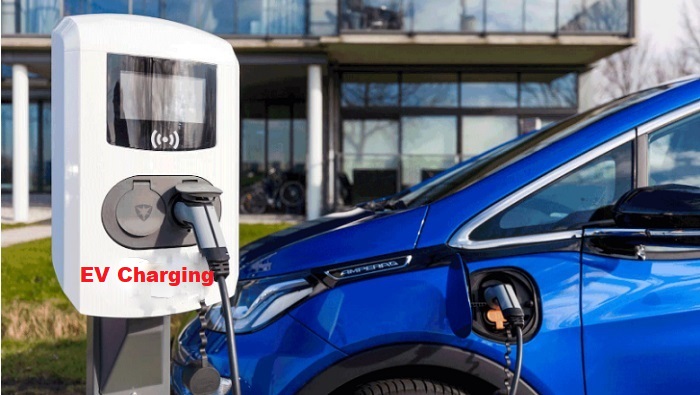
The Biden-Harris Administration has recently gone on to announce $623 million in grants so as to help build hydrogen refueling infrastructure and an electric vehicle- EV charging network throughout the US. The funding will go ahead and support projects across the states of California, Colorado, as well as Texas that will roll out clean hydrogen fueling infrastructure when it comes to medium- and heavy-duty- MD and HD vehicles. The U.S. National Clean Hydrogen Strategy and Roadmap goes on to identify the MD/HD transportation sector as one of the many high-impact areas in which hydrogen has distinct advantages as a decarbonization tool.

These investments happen to be part of the Biden-Harris Administration’s whole-of-government approach so as to advance clean hydrogen, which is being facilitated and coordinated through the Hydrogen Interagency Task Force. Rollout, when it comes to clean hydrogen infrastructure for critical transportation applications, will go on to work hand-in-hand with historic investments within the Regional Clean Hydrogen Hubs, ongoing research and development, in addition to the demonstration efforts conducted under the purview of the DOE Hydrogen Program, as well as critical market incentives like clean hydrogen production tax credits.

It is well to be noted that the hydrogen-related funding in this announcement goes on to include:

  • $70 million for the North Central Texas Council of Governments in order to build up to five hydrogen fueling stations right from medium- and heavy-duty freight trucks in Dallas-Fort Worth, Houston, Austin, as well as San Antonio. The project will go on to create a hydrogen corridor right from Southern California to Texas.
  • $12 million to California’s Victor Valley Transit Authority in order to build a hydrogen fueling station as well as six DC fast charging stations for their fleet and the public’s fueling requirements. The hydrogen fueling station will go ahead and support light-medium as well as heavy-duty vehicles.
  • $7 million to the California State University, Los Angeles, in order to transform their hydrogen research and fueling facility from a high-capacity, multi-modal light to a heavy-duty vehicle hydrogen fueling station. The facility, which is publicly accessible, will go on to service numerous public customers and fleets, such as the ports of Long Beach along with Los Angeles.
  • Almost $9 million for Colorado State University- CSU so as to build a network of 3 public hydrogen fueling stations nearby the CSU campuses throughout Fort Collins, Denver as well as Pueblo so as to provide hydrogen fueling for medium as well as heavy-duty vehicle fleets and also future light-duty passenger vehicles along Interstate 25.

These grants happen to be made possible due to the Bipartisan Infrastructure Law’s $2.5 billion Charging and Fueling Infrastructure-CFI Discretionary Grant Program, which will go on to fund 47 EV charging as well as alternative-fueling infrastructure projects across 22 states and Puerto Rico. The Joint Office of Energy and Transportation will keep giving support to the CFI program by offering grant awardees technical assistance when executing their funds.

Latest stories

Related stories

Ergonomics Improving Efficiency in Transmission Worksites

Optimizing the physical interaction between utility professionals and their environment, ergonomics transmission worksites initiatives are proving that worker comfort is a primary engine of operational speed. By refining tool design and harness mechanics, the power sector is reducing physical strain and fatigue, allowing crews to maintain peak performance throughout the demanding lifecycle of infrastructure projects.

Data Driven Insights Transforming Safety in Power Grids

Revolutionizing the management of risk in the energy sector, data driven safety power grids initiatives are turning vast streams of information into actionable protection strategies. By analyzing patterns of maintenance, environmental conditions, and worker behavior, utility providers are now able to predict hazards before they manifest, creating a more transparent and responsive safety environment for the modern electrical infrastructure.

Building Safety Culture Across Power Transmission Teams

Strengthening the human foundation of our energy networks, safety culture power transmission teams initiatives are moving beyond compliance to a deep-seated commitment to mutual protection. By fostering open communication, leadership accountability, and peer-to-peer engagement, utility organizations are creating an environment where every individual feels empowered to prioritize safety as a core personal and professional value.

Human Factors Shaping Safety in Power Transmission Work

Understanding the cognitive and psychological drivers of performance, human factors power transmission safety initiatives are refining the interface between the worker and the high-voltage environment. By addressing issues like cognitive load, decision-making biases, and fatigue, the energy sector is moving beyond physical protection to a sophisticated model of error prevention that acknowledges the inherent limitations and strengths of the human mind.

Subscribe

- Never miss a story with notifications

- Gain full access to our premium content

- Browse free from any location or device.

Media Packs

Expand Your Reach With Our Customized Solutions Empowering Your Campaigns To Maximize Your Reach & Drive Real Results!

– Access the Media Pack Now

– Book a Conference Call

Leave Message for Us to Get Back

Translate »