






































Game theory offers a new approach for optimising investments involving multiple players in an integrated low carbon energy system, GB researchers find.
The study from researchers at Heriot-Watt University in Edinburgh is intended to provide a model for optimising the inputs and maximising the returns for the multiple investors in the projects that are becoming commonplace as the energy sector decarbonises.
The research draws on game theory in the form of what is known as Stackelberg-Cournot modelling in which there is a first mover leader and sequential and/or simultaneous followers.
In practical terms, the example that is modelled is of the dominant player, i.e. the leader, who builds a power line and renewable generation capacity, and local renewable and storage investors, i.e. the multiple followers, who react to the installation of the line by increasing their own capacity.
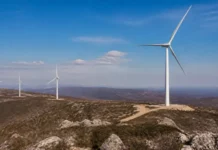
The outcome is a solution that estimates the ‘game equilibrium’. This was then applied to the real world case of the Kintyre-Hunterston grid reinforcement project in western Scotland to bring in additional wind resources from Kintyre to the Scottish mainland.
In this case a private investor (the leader) is installing wind generation capacity and a power line linking the two regions. As access to remote demand is established, local investors react by constructing wind generation capacity (player 2) and storage capacity (player 3).
Findings are that the higher the cost for installing additional capacity, the less profitable it is to invest in renewable generation, leading to a reduction of the installed capacity.
Additionally, renewables investors compete with each other to match the optimal capacity given the investment costs and trading fees, with reduction in capacity built by one investor leading to an increase in capacity by the rival investor.
Storage capacity follows a similar trajectory to the total renewable capacity installed, as the storage system relies on the practice of trading excess production that cannot be absorbed.
Generally, transmission capacity remains unaffected by changes in financial parameters indicating that the search for an optimal solution can be reduced in a smaller region.
Another finding is who benefits from the introduction of storage, with results indicating the beneficiary as predominantly the lead investor. Revenues are increased due to the larger capacity being installed, but also due to additional revenue streams generated by selling surplus energy to storage and charges for transmission.
Despite the increased competitiveness from storage when there is a shortage of supply, the lead investor is able to exploit its market power to its own advantage whereas the local generators are susceptible to the competition and thereby achieve lower profits with storage.
The researchers consider the methodology to provide a realistic mechanism to analyse investor decision-making and investigate feasible tariffs that encourage distributed renewable investment, with sharing of grid access.
Future work will focus on extending the model to account for energy transmission losses, other storage technologies and their control management and exploring how alternative ownership models and market structures would affect the underlying strategic game. For example, renewables investors could build their own storage capacity or cooperate to invest in a large community storage system.
Another extension is to consider multiple local investors, where each is modelled as an independent separate entity, leading to new formulations of the game.