






Events Date: 9

Italy Power Mix – Renewable Energy Eyes Domination By 2035

Note* - All images used are for editorial and illustrative purposes only and may not originate from the original news provider or associated company.

Subscribe

- Never miss a story with notifications

- Gain full access to our premium content

- Browse free from any location or device.

Media Packs

Expand Your Reach With Our Customized Solutions Empowering Your Campaigns To Maximize Your Reach & Drive Real Results!

โ€“ Access the Media Pack Now

โ€“ Book a Conference Call

โ€“ Leave Message for Us to Get Back

Related stories

Hydrogen Infrastructure Driving Future Energy Growth

As the world shifts toward a low-carbon economy, hydrogen infrastructure for energy growth is emerging as a critical engine for industrial transformation. Through massive investments in clean fuel production, storage, and transport, hydrogen is poised to unlock new energy markets and provide a sustainable solution for the hardest-to-abate sectors.

Energy Storage Systems Supporting Utility Expansion

The rapid growth of global energy demand is driving a massive scale-up of utility infrastructure, where energy storage systems serve as the critical balancer. By providing essential services like grid stability and seamless renewable integration, these systems are enabling a flexible and reliable expansion of modern power networks.

Smart Energy Infrastructure Improving Grid Efficiency

The digital transformation of the power sector is being led by smart energy infrastructure efficiency, where data-driven insights and automation are redefining grid performance. By integrating digital monitoring and predictive operations, utilities are creating a more responsive, reliable, and efficient energy network for the modern age.
- Advertisement -

The Russia-Ukraine war has had quite a massive impact on the worldwide energy market. The over-dependence on the Russian fossil fuels of the European nations has posed quite a phenomenal challenge when it comes to supply security.

It is worth noting that Italy, as one of the largest natural gas importers, went on to source 40% of its gas from Russia until 2021, but in 2022, it reduced its dependence on Russian imports to 19% of its overall natural gas imports.

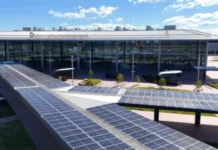
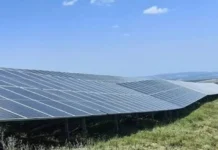
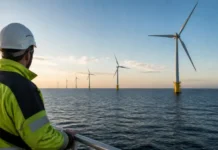
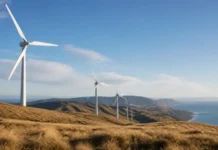
Up against this backdrop, the country is anticipated to achieve a total installed capacity of 162 GW from renewable sources of energy by 2035, with the renewable share rising to 69% in the power capacity mix, as per a leading data and analytics company, GlobalData.

The updated report from GlobalData suggests that all the parameters, be it trends, market size, regulations, forecast, and competitive landscape for 2024-2035 reveal that the country is anticipated to have a renewable capacity of 107.7 GW by the decade-end with the share when it comes to renewables in overall yearly generation touching almost 59% by 2030.

The power analyst at GlobalData, Sudeshna Sarmah, remarks that the severe drought in 2022 went on to majorly affect Italyโ€™s power market since hydropower generation went on to dip from 31.2 TWh to 13.7 TWh in 2022.

In the absence of a nuclear power source, Italy went on to increase its thermal power generation by almost 8.5% in 2022. Moreover, the electricity imports went on to touch a total of 47.4 TWh.

It was in 2022, the government in Italy went on to introduce the National Plan for Containment of Natural Gas, which aimed at reducing the nationโ€™s consumption of natural gas. As part of a supplementary measure, Italy has started to import natural gas from countries such as Azerbaijan, Algeria, and Libya.

While all this does offer makeshift relief, the country must surely focus on elevating its renewable energy capacity so as to attain self-sufficiency.

It is worth noting that in 2023, Italy went ahead and revised its renewable energy objective, therefore setting a new aim of attaining 65% by the end of the decade.
Sarmah adds that the upgrade of the renewable targets has to come up with strong measures as well as a clear roadmap with definite objectives in order to achieve them as well as overcome the dependence on natural gas as well as imports of electricity.

She concludes that the country is indeed committed to eradicating coal-powered plants by 2025. The government is looking forward to making the national grid more robust and also prioritizing the fast creation of renewable sources of energy. Moreover, Italy is anticipated to make a revision to its National Energy and Climate Plan- NECP. The present target thatโ€™s mentioned in the NECP happens to reach 93.2 GW of renewable energy capacity by 2030, with solar PV systems anticipated to contribute 50 GW and wind power all set to offer 19.3 GW.

Power Info Today brings together the global energy industry โ€” from generation and transmission operators to utility executives and energy transition leaders โ€” through trusted editorial, market intelligence, and digital engagement.

Our 2026 Media Pack offers integrated solutions to reach your audience:

  • Magazine & Digital Editions Showcase your brand within premium energy industry coverage read by executives and decision - makers worldwide.
  • Industry Insights & Reports Align with data - driven analysis, trend reports, and regional roundups across the global power and energy value chain.
  • Brand Authority & Credibility Position your company as a thought leader through expert commentary, interviews, and special features.

Latest stories

Related stories

Hydrogen Infrastructure Driving Future Energy Growth

As the world shifts toward a low-carbon economy, hydrogen infrastructure for energy growth is emerging as a critical engine for industrial transformation. Through massive investments in clean fuel production, storage, and transport, hydrogen is poised to unlock new energy markets and provide a sustainable solution for the hardest-to-abate sectors.

Energy Storage Systems Supporting Utility Expansion

The rapid growth of global energy demand is driving a massive scale-up of utility infrastructure, where energy storage systems serve as the critical balancer. By providing essential services like grid stability and seamless renewable integration, these systems are enabling a flexible and reliable expansion of modern power networks.

Smart Energy Infrastructure Improving Grid Efficiency

The digital transformation of the power sector is being led by smart energy infrastructure efficiency, where data-driven insights and automation are redefining grid performance. By integrating digital monitoring and predictive operations, utilities are creating a more responsive, reliable, and efficient energy network for the modern age.

Grid Modernization Driving Energy Infrastructure

Modern energy systems are undergoing a radical transformation as grid modernization becomes the cornerstone of infrastructure resilience. By integrating advanced digital monitoring, transmission upgrades, and smart grid technologies, utility providers are building a foundation for a reliable and decarbonized future.

Subscribe

- Never miss a story with notifications

- Gain full access to our premium content

- Browse free from any location or device.

Media Packs

Expand Your Reach With Our Customized Solutions Empowering Your Campaigns To Maximize Your Reach & Drive Real Results!

โ€“ Access the Media Pack Now

โ€“ Book a Conference Call

โ€“ Leave Message for Us to Get Back

Translate ยป