














Close
MCE 2026
World Hydrogen & Carbon Americas

The UK Being Pushed To Scale-Back Its Renewables Build-Out

Note* - All images used are for editorial and illustrative purposes only and may not originate from the original news provider or associated company.

Subscribe

- Never miss a story with notifications

- Gain full access to our premium content

- Browse free from any location or device.

Media Packs

Expand Your Reach With Our Customized Solutions Empowering Your Campaigns To Maximize Your Reach & Drive Real Results!

– Access the Media Pack Now

– Book a Conference Call

Leave Message for Us to Get Back

Related stories

Hybrid Power Systems Combining Renewables Hydrogen and Dispatchable Generation

In-depth analysis of hybrid power system architecture integrating renewables, hydrogen storage and dispatchable generation to manage intermittency, enhance grid stability and achieve long-term decarbonisation targets.

Carbon Utilisation Pathways Creating New Value for Power Producers

Exploration of how captured carbon emissions are transformed into commercially viable products, from synthetic fuels to industrial feedstocks, improving project economics for power producers through carbon utilisation strategies.

Integrating Renewable Energy into Large-Scale Hydrogen Production

Examination of how solar, wind and hydro resources are integrated into large-scale hydrogen production, with focus on intermittency, optimisation and grid vs off-grid models.
- Advertisement -

It is well to be noted that failure to go further and faster in the next 5 years on the infra delivery plans can go on to constrain economic growth and also threaten climate targets as per the UK government’s official infrastructure advisers. Noting the fact that the country has already faced many years of disruption due to COVID as well as the cost-of-living crisis, the annual review by the National Infrastructure Commission gives a mixed picture of progress when it comes to major infrastructure objectives.

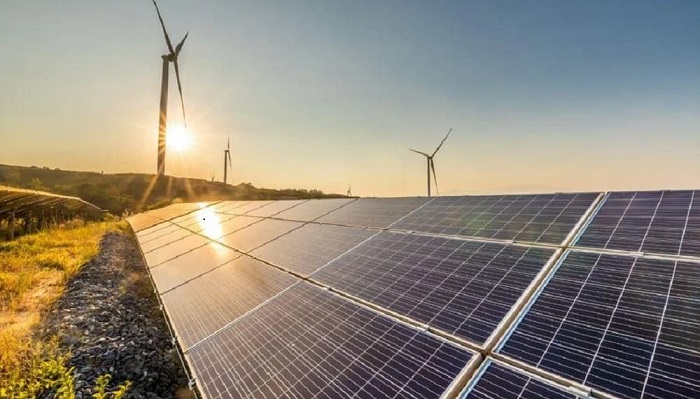
However, it has gone on to find that the electricity share that’s generated through renewables has progressed to 47% in 2023, and there have also been quite welcoming moves so as to speed up the rollout pertaining to transmission infrastructure so as to avail the electricity wherever it is required, but the changes when it comes to the planning system in terms of onshore wind developments happen to be not that sufficient for the source so as to meet the potential.

The updated national policy statement for energy, national networks, and water resources must make sure of faster decision-making as far as major projects are concerned; however, the opportunities remain to go further by way of expanding community advantages in terms of hosting infrastructure and also decreasing duplicative environmental evaluations.

Notably, the Commission’s Infrastructure Progress Review 2024 asks for a concerted catch-up program speeding up policy execution as well as delivery so as to ensure the country’s infrastructure is fit for the future.

In the most recent National Infrastructure Assessment, the commission went on to calculate that public investment in infrastructure will have to reach almost £30bn every year in the next 10 years, up from the £20bn that was seen over the past decade, in addition to an uplift of private investment to almost £50bn in a year.

The commission’s chair, Sir John Armitt, goes on to describe the forthcoming five years as a very critical period in terms of making decisions pertaining to things that happen to be of immediate concern to the common public, and those are potholes, prices, and pollution. He added that a window still remains so as to make sure that the practical delivery plans happen to be in place, which are indeed backed up by required public and private funding in order to help attain environmental as well as economic goals that will go on to enhance British household lives. But the window is indeed closing, and the fact is that one does not want to delay those advantages and, in a way, compound the disruptions that were seen in recent years.

Latest stories

Related stories

Hybrid Power Systems Combining Renewables Hydrogen and Dispatchable Generation

In-depth analysis of hybrid power system architecture integrating renewables, hydrogen storage and dispatchable generation to manage intermittency, enhance grid stability and achieve long-term decarbonisation targets.

Carbon Utilisation Pathways Creating New Value for Power Producers

Exploration of how captured carbon emissions are transformed into commercially viable products, from synthetic fuels to industrial feedstocks, improving project economics for power producers through carbon utilisation strategies.

Integrating Renewable Energy into Large-Scale Hydrogen Production

Examination of how solar, wind and hydro resources are integrated into large-scale hydrogen production, with focus on intermittency, optimisation and grid vs off-grid models.

Electrolysis Technologies Advancing the Future of Clean Power

Comparative analysis of alkaline, PEM and solid oxide electrolysers, their efficiency, cost trajectories and implications for renewable-driven hydrogen and clean power.

Subscribe

- Never miss a story with notifications

- Gain full access to our premium content

- Browse free from any location or device.

Media Packs

Expand Your Reach With Our Customized Solutions Empowering Your Campaigns To Maximize Your Reach & Drive Real Results!

– Access the Media Pack Now

– Book a Conference Call

Leave Message for Us to Get Back

Translate »