























Events Date: 9

JA Solar, JinkoSolar, Longi agree on 182mm module standardization

Note* - All images used are for editorial and illustrative purposes only and may not originate from the original news provider or associated company.

Subscribe

- Never miss a story with notifications

- Gain full access to our premium content

- Browse free from any location or device.

Media Packs

Expand Your Reach With Our Customized Solutions Empowering Your Campaigns To Maximize Your Reach & Drive Real Results!

– Access the Media Pack Now

– Book a Conference Call

Leave Message for Us to Get Back

Related stories

Domestic Solar Manufacturing Strengthening Energy Supply

Bolstering domestic solar manufacturing is a strategic imperative for achieving national energy security and fostering a resilient supply chain that reduces reliance on volatile international markets.

Climate Resilient Solar Infrastructure for Future Grids

Designing and deploying climate resilient solar infrastructure is paramount to ensuring energy reliability as the global frequency of extreme weather events increases, demanding a fundamental shift in photovoltaic engineering and site planning.

Solar EV Charging Supporting Clean Mobility Expansion

The convergence of solar energy and electric vehicle infrastructure is a transformative development for urban sustainability, offering a clean, renewable pathway for the rapid expansion of global mobility systems.
- Advertisement -

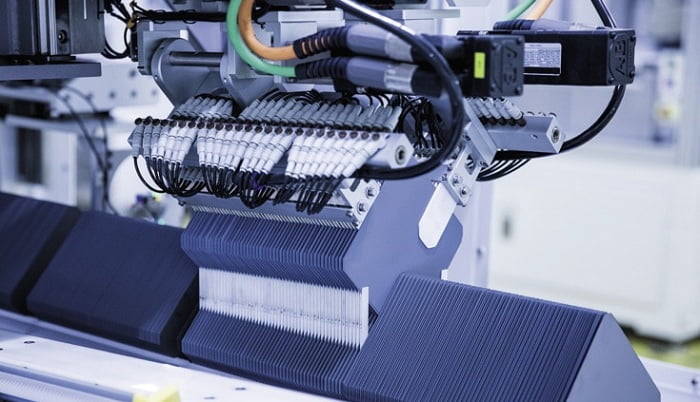
Chinese solar panel makers JinkoSolar, Longi and JA Solar have released a joint statement to announce they have reached a consensus on the standardization of PV modules produced with 182mm (M10) wafers.

The three manufacturers agreed that 54-cell panels will have to measure 1,722×1,134mm and have a mounting hole spacing of 1,400mm and that 72-cell products must have a size of 2,278×1,134mm and the same mounting hole spacing as 54-cell modules. Furthermore, they agreed that 78-cell panels will have to measure 2,465×1,134mm and have a mounting hole spacing ranging from 400mm to 1,500mm.

“Since the joint launch of the M10-type wafer standard by JA Solar, Jinko Solar and Longi Solar, in June 2020, the wafer size has been gaining widespread recognition and acceptance in the PV industry,” the statement read. “However, due to the differences in the technical roadmap, design concept and installation mode followed by different manufacturers, the standards of the same type of modules vary in their lengths, widths and mounting hole spacings despite being based on the same M10 wafer technology.”

The new parameters are aimed at standardizing component specifications to reduce manufacturing costs and simplify design and installation in the downstream business, the three companies stated. In mid-June, they jointly published a white paper intended to show what they believe are the advantages for developers of large scale PV projects of using photovoltaic modules manufactured with M10, 182mm wafers. In November 2020, the three manufacturers stated their combined production capacity of PV panels based on 182mm wafers would reach 54 GW in 2021.

The three manufacturers emphasized the increasing reliability risks associated with larger and more powerful products and reiterated the well-known saying “bigger is not always better,” heard in recent months from all those companies that decided not to bet on 210mm wafers and modules with a power output exceeding 600 W.


Power Info Today brings together the global energy industry — from generation and transmission operators to utility executives and energy transition leaders — through trusted editorial, market intelligence, and digital engagement.

Our 2026 Media Pack offers integrated solutions to reach your audience:

  • Magazine & Digital Editions Showcase your brand within premium energy industry coverage read by executives and decision - makers worldwide.
  • Industry Insights & Reports Align with data - driven analysis, trend reports, and regional roundups across the global power and energy value chain.
  • Brand Authority & Credibility Position your company as a thought leader through expert commentary, interviews, and special features.

Latest stories

Related stories

Domestic Solar Manufacturing Strengthening Energy Supply

Bolstering domestic solar manufacturing is a strategic imperative for achieving national energy security and fostering a resilient supply chain that reduces reliance on volatile international markets.

Climate Resilient Solar Infrastructure for Future Grids

Designing and deploying climate resilient solar infrastructure is paramount to ensuring energy reliability as the global frequency of extreme weather events increases, demanding a fundamental shift in photovoltaic engineering and site planning.

Solar EV Charging Supporting Clean Mobility Expansion

The convergence of solar energy and electric vehicle infrastructure is a transformative development for urban sustainability, offering a clean, renewable pathway for the rapid expansion of global mobility systems.

Solar Forecasting Improving Renewable Power Accuracy

Advanced solar forecasting techniques, powered by artificial intelligence and sophisticated meteorological monitoring, are essential for improving the accuracy of renewable power generation and ensuring the seamless integration of solar assets into the global energy grid.

Subscribe

- Never miss a story with notifications

- Gain full access to our premium content

- Browse free from any location or device.

Media Packs

Expand Your Reach With Our Customized Solutions Empowering Your Campaigns To Maximize Your Reach & Drive Real Results!

– Access the Media Pack Now

– Book a Conference Call

Leave Message for Us to Get Back

Translate »