
















Close
MCE 2026
World Hydrogen & Carbon Americas

Power-One supplies string inverters for 8.1MW rooftop solar plant in Germany

Note* - All images used are for editorial and illustrative purposes only and may not originate from the original news provider or associated company.

Subscribe

- Never miss a story with notifications

- Gain full access to our premium content

- Browse free from any location or device.

Media Packs

Expand Your Reach With Our Customized Solutions Empowering Your Campaigns To Maximize Your Reach & Drive Real Results!

– Access the Media Pack Now

– Book a Conference Call

– Leave Message for Us to Get Back

Related stories

Microgrids Strengthening Energy Resilience for Cities

Microgrids are becoming a cornerstone of urban energy infrastructure, providing cities with the ability to maintain critical services during major grid disruptions and fostering a more decentralized and resilient electrical network.

AI-Powered Forecasting Is Improving Power Demand Management

The application of artificial intelligence and machine learning to energy demand forecasting is enabling utilities to optimize grid operations, reduce peak loads, and integrate renewable energy more effectively through high-precision predictive insights.

Decentralized Energy Networks Transform Power Systems

The shift from centralized power plants to decentralized energy networks is creating a more resilient and democratic energy landscape, enabling local generation, peer-to-peer trading, and improved infrastructure reliability.
- Advertisement -

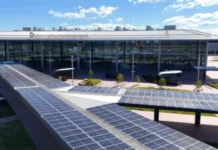
US-based PV inverter producer Power-One has powered 8.1MW crystalline rooftop solar power plant in Germany with its Aurora Trio string inverters.

The solar installation, which was designed and built by solar service provider WIRSOL and owned by pfenning logistics, was connected to the grid at the end of July 2013.

Built on the roofs of two building blocks of logistic centre, the plant with a total area of 11 hectares features over 33,000 crystalline PV modules and 255 of Power-One’s string inverters.

The project owner pfenning will use the solar PV plant’s annual output self consumption and can up to 5,171 tons of CO2 emissions per year.

Power-One Northern EMEA sales director Gerhard Schackert said that this project demonstrates the solar PV market is still capable of generating revenues for German investors despite the recent government’s recent feed-in tariff reductions.


Latest stories

Related stories

Microgrids Strengthening Energy Resilience for Cities

Microgrids are becoming a cornerstone of urban energy infrastructure, providing cities with the ability to maintain critical services during major grid disruptions and fostering a more decentralized and resilient electrical network.

AI-Powered Forecasting Is Improving Power Demand Management

The application of artificial intelligence and machine learning to energy demand forecasting is enabling utilities to optimize grid operations, reduce peak loads, and integrate renewable energy more effectively through high-precision predictive insights.

Decentralized Energy Networks Transform Power Systems

The shift from centralized power plants to decentralized energy networks is creating a more resilient and democratic energy landscape, enabling local generation, peer-to-peer trading, and improved infrastructure reliability.

Germany Solar Generation Hits Record 70.1 TWh in 2025 Data

Preliminary figures released by Germany’s Destatis indicate that 438.2...

Subscribe

- Never miss a story with notifications

- Gain full access to our premium content

- Browse free from any location or device.

Media Packs

Expand Your Reach With Our Customized Solutions Empowering Your Campaigns To Maximize Your Reach & Drive Real Results!

– Access the Media Pack Now

– Book a Conference Call

– Leave Message for Us to Get Back

Translate »