











The region’s nations, notably its three largest economies, China, Japan, and India, came under fire last year for not pledging greater amounts of resources to combat climate change at the COP26 international conference. However, six months later, there is still another, perhaps more pressing, reason for Asia to move away from oil, gas, and coal: money.
Since Russia began its invasion of Ukraine in late February, energy costs worldwide have increased. With Germany believing hydrogen could be its solution, it has forced European nations to look for alternatives to lean less on Russian gas. Before the conflict in Ukraine, Japan and South Korea made significant investments in hydrogen technology. The rising cost of energy has given them an additional motivation to move more quickly toward cleaner fuels.
Despite the fact that burning coal to produce energy significantly pollutes the environment, Asian economies persist in doing so. Even if some nations have made headway toward reducing their reliance on fossil fuels, in times of need, such as when two of the region’s economic behemoths, China and India, had power shortages, coal was the source that they turned to.
After the Fukushima nuclear tragedy in 2011, Japan, which had previously invested heavily in nuclear energy, also turned to fossil fuels.
An increasing number of South Korean companies are now placing their bets on hydrogen, which some experts believe can aid nations in making the switch from fossil fuels to renewable energy sources. The nation has so far declared the largest state intervention in hydrogen technology research in Asia.
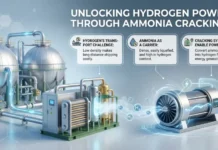
Seoul is promoting investments in hydrogen production, fuel cell power generation technology, and hydrogen-powered vehicles. Since hydrogen may be kept as a solid, liquid, or gas, some scientists believe that it is the most useful substitute for fossil fuels. This indicates that it can be transferred and stored more easily than solar and wind energy.
According to S&P Global Commodity Insights’ Vince Heo in Seoul, hydrogen is like an energy carrier. One can use the energy that is stored in hydrogen whenever they wish. There are various forms of hydrogen, and what South Korea is now engaging in is not emission-free, which is a major problem.