










































The global transportation sector is at a crossroads, with the urgent need to decarbonize driving a massive shift toward electric vehicles (EVs). However, the environmental benefits of electric mobility are fundamentally tied to the source of the electricity used to power them. If an EV is charged using power from coal-fired plants, its carbon footprint remains significant. This is where solar EV charging emerges as the ultimate solution for clean mobility expansion. By directly pairing photovoltaic generation with vehicle charging infrastructure, we can create a truly zero-emission transport system. This synergy not only reduces the carbon intensity of travel but also alleviates the strain on the electrical grid, providing a resilient and cost-effective foundation for the future of sustainable transport.
The integration of solar power into the EV ecosystem is taking place at multiple scales, from residential carports to massive commercial charging hubs. At each level, the goal is the same: to capture sunlight and convert it directly into miles of travel. This “well-to-wheel” efficiency is the hallmark of a modern, integrated energy strategy. As battery technology improves and the cost of solar continues to fall, the economic case for solar EV charging becomes undeniable. For individuals and businesses alike, the ability to generate their own fuel from the sun offers protection against volatile gasoline prices and rising utility rates, making clean transport an engine of economic empowerment as well as environmental stewardship.
Architectural Innovation: Solar Charging Stations and Carports
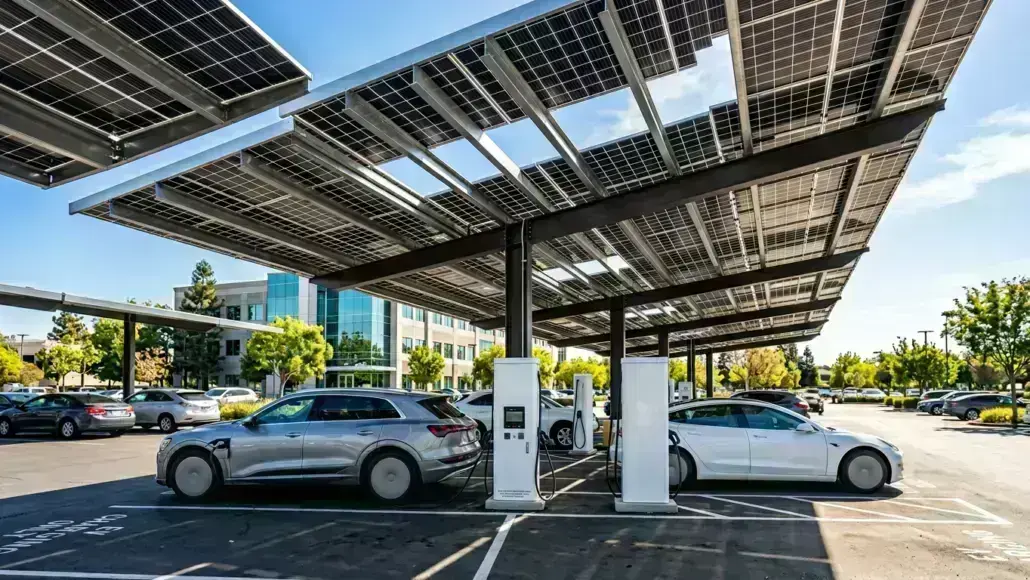
One of the most visible manifestations of this trend is the rise of solar carports in urban and commercial environments. These structures serve a dual purpose: they provide shade and protection for parked vehicles while utilizing the vast, unobstructed surface area of parking lots to generate clean energy. Modern solar carports are engineered for high durability and can be integrated with localized battery storage to ensure that the solar energy is available even when the sun is not shining. For commercial property owners, these installations transform a passive asset parking space into a productive energy-generating hub that attracts eco-conscious tenants and customers.
Beyond simple carports, we are seeing the development of dedicated solar charging stations that function like traditional gas stations but without the emissions. these stations often feature high-efficiency bifacial panels and integrated energy management software that optimizes the flow of power between the solar array, the storage system, and the vehicle. In rural or remote areas where the grid may be weak or non-existent, these “islanded” solar charging stations are providing a lifeline for clean mobility expansion. They allow EV drivers to travel across vast distances with the confidence that they can find a reliable source of renewable power, effectively solving the problem of “range anxiety” while promoting energy independence.
Smart Charging and the Role of Vehicle-to-Grid (V2G) Technology
The true power of solar EV charging lies in the intelligent coordination of energy flow. Smart charging systems use real-time data to synchronize vehicle charging with peak solar production. Instead of everyone plugging in as soon as they get home in the evening the time of highest grid stress smart systems incentivize charging during the middle of the day when solar output is at its highest. This not only maximizes the use of clean energy but also helps balance the grid, preventing localized overloads. This “solar-managed” charging is essential for accommodating the millions of new EVs expected to hit the road in the coming decade.
Furthermore, the emergence of Vehicle-to-Grid (V2G) and Vehicle-to-Home (V2H) technology is turning EVs into mobile battery assets. When an EV is connected to a solar-powered charging station, it can act as a buffer for the local network. During a period of cloud cover or high demand, the vehicle can discharge a small portion of its battery back into the home or the grid, helping to maintain stability. This bi-directional flow of energy makes the entire power system more resilient and flexible. In this model, the EV is no longer just a consumer of electricity; it is an active participant in a renewable mobility ecosystem, providing a vital service that enhances the value of the solar investment.
Urban Integration and Sustainable Transport Systems for Cities
As cities strive to become “smart” and “green,” the integration of solar EV charging into the urban fabric is a top priority. This involves more than just adding chargers; it requires a holistic approach to city planning that incorporates renewable mobility into public transit and municipal fleets. For example, electric buses can be charged at depots equipped with massive solar arrays, ensuring that public transportation is powered by the sun. Similarly, urban “mobility hubs” are being designed to combine solar charging for e-bikes, scooters, and cars with access to public transit, providing a seamless and sustainable transport experience for residents.
The implementation of solar EV charging in multi-family dwellings and apartment complexes is also critical for ensuring equitable access to clean transport. By utilizing the roofs of apartment buildings to power shared charging infrastructure, developers can provide a valuable amenity that lowers the cost of living for residents. This is particularly important in densely populated urban centers where private parking is scarce. By democratizing access to renewable mobility, cities can accelerate the transition away from fossil-fuel-powered vehicles, leading to cleaner air, quieter streets, and a higher quality of life for all urban dwellers. This vision of the “solar-powered city” is the ultimate goal of sustainable transport systems.
In conclusion, solar EV charging is the essential link between clean energy and clean transport. By harnessing the power of the sun to fuel our vehicles, we are creating a more efficient, resilient, and sustainable mobility system. The expansion of solar charging stations, the adoption of smart charging protocols, and the integration of these technologies into our urban environments are all vital steps toward a decarbonized future. The transition to electric vehicles is a massive undertaking, but with the support of solar energy, it is a journey that we can navigate successfully, ensuring that the way we move today does not compromise the world of tomorrow.
The synergy between solar energy and electric vehicle infrastructure is driving a profound transformation in how we approach clean mobility expansion. As the world transitions away from fossil fuels, the ability to power transport through renewable energy is essential for achieving true environmental sustainability. Solar EV charging systems, ranging from residential carports to large-scale commercial hubs, allow for the direct conversion of sunlight into vehicle range, maximizing the efficiency of the clean energy transition. By utilizing smart charging technology and integrated battery storage, these systems can manage the flow of power to coincide with peak solar generation, reducing the strain on the electrical grid and lowering costs for users. Furthermore, the rise of bi-directional charging allows EVs to serve as flexible assets that support grid stability. In urban environments, the integration of solar-powered charging into public transit and multi-family housing ensures that the benefits of renewable mobility are accessible to all. Ultimately, solar EV charging is the foundation of a modern, resilient transport system that provides a zero-emission pathway for the future of global mobility.