





































The reliability of a modern electrical grid is often measured by its uptime, but its true resilience is found in how it learns from its failures. In the high-consequence world of transmission and distribution, the ability to capture, analyze, and disseminate information about incidents and near-misses is a foundational safety requirement. Establishing comprehensive incident reporting grid safety protocols is the primary mechanism through which utilities transform individual experiences into organizational wisdom. When an organization can effectively document what went wrong and, more importantly, why it almost went wrong it creates a continuous feedback loop that drives systematic improvements in safety performance across the entire network.
The evolution of these systems has moved far beyond simple paper forms and filing cabinets. Today, incident reporting systems are sophisticated digital platforms that integrate with broader grid safety management frameworks. They allow for the real-time capture of data from the field, providing immediate visibility into emerging trends and hazards. By fostering a culture where reporting is seen as a tool for improvement rather than a precursor to punishment, utilities can unlock a wealth of information that was previously hidden by the fear of reprisal. This transparency is the cornerstone of a “Just Culture,” where the focus is on fixing the system rather than fixing the person.
The Power of Near-Miss Reporting and Predictive Insight
One of the most valuable, yet often underutilized, components of incident reporting grid safety is the “near-miss.” A near-miss is an event that did not result in injury or damage but had the clear potential to do so under slightly different circumstances. In many ways, a near-miss is a “free lesson” it provides all the data of an actual incident without the associated human or financial cost. Mature organizations prioritize the reporting of near-misses because they provide a much larger data set than actual accidents, allowing for more robust statistical analysis and the identification of subtle systemic weaknesses.
By utilizing safety data analytics on near-miss reports, utilities can identify “precursors” to major incidents. For example, a series of reported near-misses involving vehicle backing in a specific substation might point to a flawed traffic management plan or a lack of standardized spotting protocols. Addressing these issues early can prevent a more serious collision in the future. This shift from reactive to proactive safety is the ultimate goal of any incident reporting systems strategy. It allows the organization to “predict” where the next accident might occur and to intervene before the latent hazard is triggered.
Digital Transformation and Real-Time Data Capture
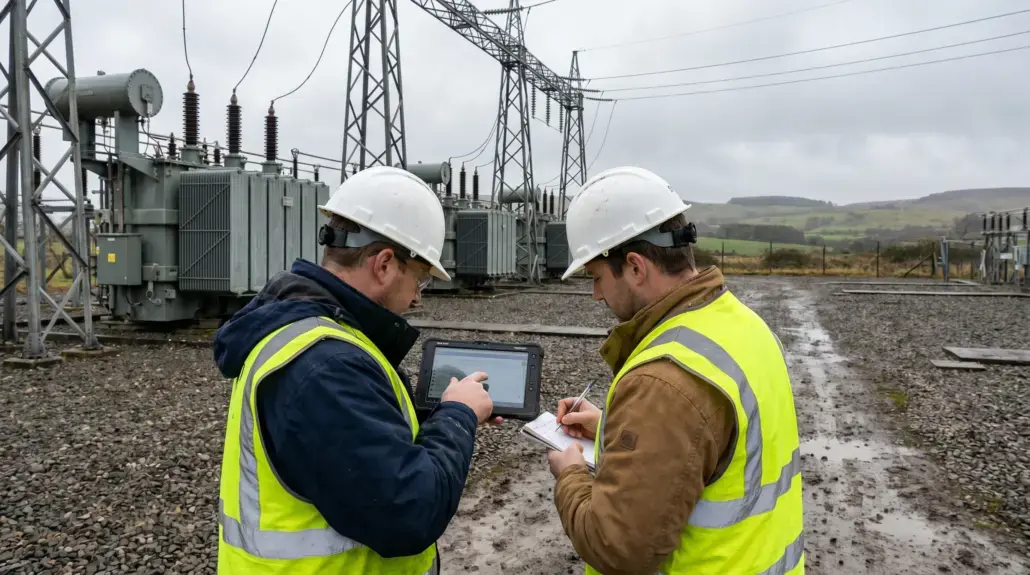
The effectiveness of incident reporting grid safety is directly proportional to the ease with which data can be captured in the field. If a reporting process is cumbersome or time-consuming, it will inevitably be ignored by busy crews. Modern power sector reporting tools are designed with a “mobile-first” philosophy, allowing workers to submit reports via tablets or smartphones directly from the jobsite. These digital reports can include photos, GPS coordinates, and even voice memos, providing a much richer and more accurate picture of the event than a text-only report could ever achieve.
Furthermore, these digital systems allow for the immediate notification of key stakeholders. When a high-potential incident is reported, an automated alert can be sent to safety managers, operations directors, and executive leadership. This rapid escalation ensures that urgent hazards are addressed immediately and that the necessary resources for a thorough investigation are deployed without delay. This real-time visibility is essential for managing safety across vast, geographically dispersed transmission networks. By streamlining the collection and dissemination of information, these safety improvement systems ensure that the “lessons learned” in one region are instantly available to teams across the entire organization.
Moving from Blame to Root Cause Analysis
The true value of any incident reporting grid safety system is realized during the investigation phase. Traditionally, investigations often stopped at “human error,” leading to retraining or disciplinary action. However, modern grid safety management recognizes that human error is usually a symptom of a deeper systemic issue, not the root cause. Effective reporting systems guide investigators through a structured “Root Cause Analysis” (RCA) process, encouraging them to look at factors such as equipment design, organizational pressure, environmental stressors, and the quality of previous training.
By identifying the systemic root causes, utilities can implement “permanent fixes” that make it harder for future workers to make the same mistake. For instance, if an investigation finds that a worker touched an energized component because the labeling was confusing, the solution is not to tell the worker to be more careful; it is to standardize and improve the labeling across the entire system. This focus on systemic improvement is what allows incident reporting systems to have a lasting impact on safety performance. It shifts the narrative from “Who is responsible?” to “How can we make the system safer?”
Transparency and the Sharing of Safety Intelligence
Safety intelligence is only useful if it is shared. A critical component of incident reporting grid safety is the dissemination of “Safety Alerts” and “Lessons Learned” bulletins throughout the workforce. These communications should be clear, concise, and focused on practical applications. When workers see that the incidents they report are leading to tangible changes in policy, equipment, or training, it reinforces the value of the reporting system and encourages further participation. This creates a “virtuous cycle” of transparency and improvement.
In addition to internal sharing, many utilities are now participating in industry-wide reporting programs. By sharing anonymized incident data with peers through organizations like the Edison Electric Institute (EEI) or regional transmission organizations, utilities can learn from each other’s mistakes. This collective intelligence is particularly important for rare but high-consequence events, where an individual utility may not have enough data to identify a trend. This collaborative approach to safety data analytics strengthens the entire industry, ensuring that a lesson learned in one corner of the grid benefits everyone who works on the infrastructure.
Conclusion: Incident Reporting as a Moral Imperative
As we look to the future of the power sector, the role of incident reporting grid safety will only grow in importance. With the increasing integration of complex new technologies and the ongoing turnover of an aging workforce, the potential for “unseen” risks is higher than ever. Our reporting systems must be robust enough to capture these new challenges and agile enough to help us adapt quickly. The investment in these systems is not just an operational necessity; it is a moral imperative. Every incident report is a testament to an organization’s commitment to protecting its people.
In conclusion, the goal of strengthening grid safety through incident reporting is to create an organization that is “mindful” of its own vulnerabilities. It requires a commitment to transparency, a dedication to rigorous analysis, and a culture that values learning over blame. By perfecting our incident reporting systems and embracing the power of safety data analytics, we can ensure that every near-miss and every accident becomes a stepping stone toward a safer and more reliable energy future. The grid is a complex machine, but its most important components will always be the men and women who keep the power flowing.