




























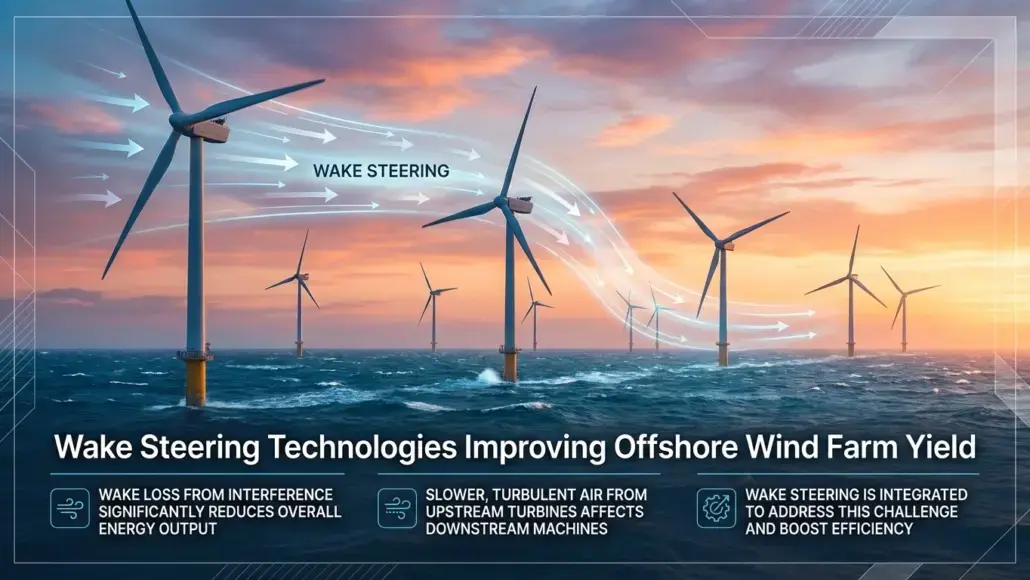

The efficiency of large scale offshore wind arrays is often limited by the aerodynamic interference between individual turbines. As wind passes through a turbine rotor, it creates a wake of slower, more turbulent air that negatively affects the performance of downstream machines. This phenomenon, known as wake loss, can significantly reduce the overall energy output of a wind farm. To address this challenge, wake steering technologies improving offshore wind farm yield are being integrated into the control systems of modern turbine fleets. By deliberately misaligning the upstream turbines with the incoming wind, operators can deflect the wake away from downstream rotors, thereby increasing the total power generation of the entire facility. This shift from individual turbine optimization to collective farm management represents a major advancement in the operational strategy of the wind energy sector.
Aerodynamic Optimization and Secondary Steering Mechanisms
The core principle of wake steering involves adjusting the yaw angle of a turbine so that it is no longer pointing directly into the wind. While this slightly reduces the power produced by the steering turbine, the resulting deflection of the wake allows downstream turbines to access higher velocity air. The net effect is a substantial increase in the total energy yield of the array. Effective implementation requires a deep understanding of atmospheric physics and the complex interactions between multiple wakes within a farm. Engineers use high fidelity computational fluid dynamics simulations to map out the wake behavior under various wind conditions. These simulations help determine the optimal yaw offset for each turbine in the array to maximize the aggregate output.
In addition to yaw based steering, researchers are exploring secondary steering mechanisms such as individual pitch control and tilt control. These methods can further refine the wake shape and position, providing more granular control over the airflow through the farm. The combination of these techniques allows for a more dynamic response to changing wind patterns. For example, during periods of low wind speed, wake effects are more pronounced, making steering strategies even more valuable. By employing wake steering technologies improving offshore wind farm yield, operators can recover a significant portion of the energy that would otherwise be lost to aerodynamic interference, enhancing the economic performance of offshore assets.
Data Integration and Real Time Control Algorithms
Implementing wake steering at a commercial scale requires the integration of vast amounts of data from meteorological sensors, turbine SCADA systems, and advanced wind sensing technologies like LiDAR. Real time data on wind speed, direction, and turbulence intensity are essential for calculating the correct steering commands. Modern control algorithms must process this information instantaneously to adjust the yaw positions of dozens of turbines simultaneously. These algorithms are often based on machine learning models that have been trained on historical performance data and simulation results. The ability to predict how a change in one turbine’s orientation will affect the entire farm is a key requirement for successful steering operations.
The communication infrastructure within the wind farm must be capable of handling high speed data exchange between the individual turbine controllers and the central farm management system. Latency in the control loop can lead to suboptimal steering and even increased structural loads if the turbines are misaligned during rapid shifts in wind direction. Therefore, the deployment of wake steering technologies improving offshore wind farm yield is closely linked to the advancement of digital twin technology and the Internet of Things in the power generation sector. By creating a digital replica of the wind farm, operators can test different steering strategies in a virtual environment before applying them to the physical assets, reducing the risk of operational errors. These digital twins also allow for continuous monitoring and optimization, as the system can learn from the actual performance of the turbines and adjust the control logic accordingly. The integration of high resolution weather forecasting into these models further enhances their predictive capability, allowing for proactive steering adjustments in anticipation of changing atmospheric conditions. Additionally, the use of edge computing at the turbine level can reduce the reliance on central processing, enabling faster localized responses to turbulence and wind gusts. This decentralized approach ensures that the steering system remains resilient even in the event of a communication failure with the main farm controller.
Collective Farm Management and Energy Production Gains
Traditionally, wind turbines have been operated as independent units, each programmed to maximize its own power production. Wake steering represents a fundamental change in this philosophy, prioritizing the performance of the collective array. This systems level approach requires sophisticated coordination between all the turbines in the farm. The gains in annual energy production from wake steering can range from one to three percent, which translates to millions of dollars in additional revenue over the life of a gigawatt scale project. These improvements are achieved without the need for additional hardware, as most modern turbines are already equipped with the necessary yaw and pitch control systems. The primary requirement is the software and control logic to enable the steering functionality.
The benefits of collective management extend beyond energy production. By optimizing the airflow through the farm, wake steering can also reduce the overall level of turbulence within the array. This leads to a more stable power output and reduces the strain on the electrical grid infrastructure. Additionally, steering strategies can be used to manage the wake effects during maintenance activities. If a specific turbine needs to be shut down, the surrounding machines can be steered to minimize the impact on the rest of the farm. The integration of wake steering technologies improving offshore wind farm yield is thus an essential component of a comprehensive asset management strategy, providing both economic and operational advantages to wind farm owners and operators.
Impact on Structural Load and Asset Longevity
One of the primary concerns when implementing wake steering is the impact of intentional yaw misalignment on the structural integrity of the turbines. Operating a turbine at an angle to the wind introduces asymmetric loads on the rotor blades, drivetrain, and tower. These loads can potentially increase the rate of fatigue damage and shorten the service life of the machine. To mitigate this risk, control systems must carefully balance the benefits of increased energy yield against the potential for increased mechanical wear. Advanced load monitoring systems, such as strain gauges and accelerometers, are used to track the real time stresses on critical components during steering operations.
The design of the steering algorithms must include constraints that prevent the turbines from exceeding their structural design limits. In some cases, the optimal steering strategy from an energy production standpoint may be modified to prioritize asset longevity. Manufacturers are also considering the requirements of wake steering in the design of next generation turbines. By strengthening key components and optimizing the blade geometry for off axis operation, they can enable more aggressive steering strategies. The successful deployment of wake steering technologies improving offshore wind farm yield depends on this holistic approach, ensuring that the gains in power generation do not come at the expense of long term reliability.
Commercial Implementation and Field Validation Results
While the theoretical benefits of wake steering have been recognized for years, the technology is now moving into the commercial implementation phase. Several pilot projects and full scale trials have been conducted in both onshore and offshore environments, providing valuable empirical data. These trials have confirmed that wake steering can indeed deliver significant increases in energy yield under real world conditions. The results from these projects are being used to refine the control models and build confidence among investors and insurers. As the industry gains more experience with the technology, it is expected to become a standard feature in the operation of large offshore wind farms.
The validation process involves comparing the actual energy production of a farm using wake steering against a baseline of traditional operation. This requires sophisticated statistical analysis to account for the inherent variability of the wind. Field data has also shown that the effectiveness of wake steering varies depending on the farm layout, the turbine spacing, and the local wind climate. Therefore, each steering strategy must be tailored to the specific characteristics of the project. The ongoing refinement of wake steering technologies improving offshore wind farm yield is supported by collaborative research efforts between industry and academia. By sharing data and best practices, the sector can accelerate the adoption of this important technology and contribute to the overall efficiency and sustainability of global power generation. The transition to steering based farm management is a testament to the power of digital innovation in optimizing renewable energy resources.
As the offshore wind sector continues to grow, the importance of maximizing every available kilowatt hour becomes increasingly apparent. Wake steering offers a cost effective way to achieve this goal, providing a software driven solution to a complex aerodynamic challenge. The long term success of the technology will depend on continued investment in research and development, as well as the open exchange of performance data across the industry. By working together to refine these steering strategies, stakeholders can ensure that offshore wind remains a competitive and reliable source of clean energy for decades to come. The future of wind farm operation lies in this collaborative, data driven approach, where every turbine works in harmony with its neighbors to achieve the highest possible energy yield for the entire facility. Strategic implementation of these advanced controls will be a key differentiator for leading power generation companies in the coming years.