






















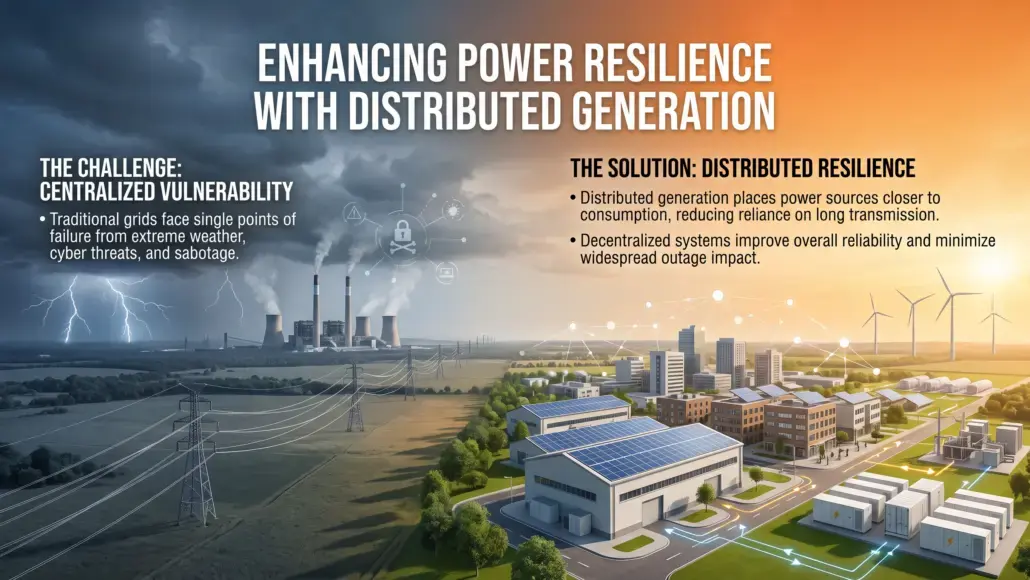

The traditional centralized model of power generation, characterized by large, distant power plants connected to consumers via thousands of miles of transmission lines, is increasingly vulnerable to a variety of threats. From extreme weather events and wildfires to cyberattacks and physical sabotage, the centralized grid faces numerous single points of failure that can lead to widespread and prolonged outages. In response to these challenges, the deployment of distributed generation systems improving power supply resilience has become a cornerstone of modern energy planning. By generating power close to the point of consumption using a variety of small-scale technologies like rooftop solar, small wind turbines, and combined heat and power units, these systems reduce the reliance on the long-distance transmission network. When integrated into microgrids, they can operate independently during a wider grid failure, ensuring that critical loads like hospitals, water treatment plants, and emergency services remain powered.
Decentralization as a Strategy for Grid Hardening
The primary benefit of a decentralized energy architecture is the elimination of the systemic risk inherent in a centralized system. In a traditional grid, a failure at a single high-voltage substation or along a major transmission corridor can cascade into a regional blackout. In contrast, distributed generation systems improving power supply resilience consist of numerous independent nodes that are less likely to fail simultaneously. This diversity of location and technology means that even if one part of the system is damaged, the rest can continue to function. This “cellular” approach to grid design is particularly effective for hardening the power supply against the increasing frequency of climate-related disasters, which often target large-scale infrastructure.
Hardening also involves the physical protection of these localized assets. Small-scale generation units can be located in more secure or sheltered environments, such as inside buildings or within protected industrial compounds. Additionally, the use of underground cabling for local distribution networks within a microgrid can significantly reduce the risk of damage from wind, ice, or falling trees. By focusing on the resilience of the local network, communities can ensure that their most vital services are protected even when the broader utility grid is incapacitated. This bottom-up approach to security is a fundamental shift in how we think about the reliability of our energy infrastructure.
The Role of Microgrids and Islanding Capabilities
The true power of localized generation is realized when it is managed as part of a microgrid. A microgrid is a group of interconnected loads and distributed energy resources within clearly defined electrical boundaries that acts as a single controllable entity. One of the most critical features of a microgrid is its ability to “island” itself from the main grid during a disturbance. When the utility power fails, the microgrid’s control system automatically disconnects from the transmission network and uses its internal distributed generation systems improving power supply resilience to continue serving its local loads. This seamless transition is essential for maintaining the operation of critical facilities that cannot tolerate even a brief interruption in power.
Islanding requires sophisticated power electronics and control logic to maintain frequency and voltage stability without the support of the main grid. Grid-forming inverters and fast-acting energy storage systems are typically used to manage the balance between local generation and demand. As the microgrid operates in island mode, it must also prioritize its loads, ensuring that the most important services receive power if generation is limited. This intelligent load management is a key aspect of resilience, allowing a community to survive an extended outage by focusing its limited resources where they are needed most. The development of standardized protocols for microgrid interconnection and operation is further accelerating the adoption of these resilient systems.
Integration of Distributed Energy Resource Management Systems
Managing thousands of small, decentralized generation units requires a level of coordination that far exceeds the capabilities of traditional grid management tools. This has led to the development of Distributed Energy Resource Management Systems (DERMS). These software platforms provide grid operators with real-time visibility and control over all the distributed assets in their network, allowing them to be used as a coordinated resource for grid support. The advancement of distributed generation systems improving power supply resilience is closely tied to the sophistication of these DERMS platforms, which can optimize the output of local units to prevent overloading transformers or to provide voltage support during peak periods.
DERMS also enables the creation of “virtual power plants,” where the combined output of many small solar installations and batteries is bid into electricity markets as a single, dispatchable resource. This not only provides a new revenue stream for the owners of the distributed assets but also gives the utility a new tool for balancing the grid. By providing a more granular level of control, DERMS helps to integrate higher levels of renewable energy while maintaining or even improving the overall stability of the power supply. The digital layer of the distributed grid is just as important as the physical hardware, providing the intelligence needed to manage the complex dynamics of a decentralized energy system.
Economic and Regulatory Incentives for Localized Power
The transition to a distributed energy model is driven as much by economics and regulation as it is by technology. In many regions, the cost of generating power locally using solar and storage is now competitive with, or even lower than, the cost of purchasing power from the grid, especially when the costs of transmission and distribution are included. Additionally, many utilities are now offering incentives for customers to install distributed generation systems improving power supply resilience, as these units can help the utility avoid expensive upgrades to the central grid. Net metering and feed-in tariffs are common regulatory tools used to encourage the adoption of these technologies by rewarding owners for the excess power they export to the grid.
However, the regulatory environment is still evolving, with ongoing debates about how to fairly allocate the costs of maintaining the transmission network when more customers are generating their own power. Some regions are moving toward “value of solar” tariffs that attempt to account for the specific benefits that distributed generation provides, such as avoided carbon emissions and improved grid resilience. Clear and stable regulatory frameworks are essential for providing the long-term certainty that investors and homeowners need to commit to these capital-intensive projects. As the benefits of decentralized power become more evident, the regulatory pressure to support these systems is likely to increase.
Community Resilience and Energy Democracy
Beyond the technical and economic benefits, distributed generation offers a way to enhance community resilience and promote energy democracy. By owning and controlling their own power sources, communities can become more self-reliant and less dependent on distant, unaccountable utilities. This is particularly important for remote or underserved areas where the central grid is often unreliable or expensive to extend. Distributed generation systems improving power supply resilience can provide these communities with a path to economic development and social stability, ensuring that everyone has access to a secure and affordable supply of energy.
Community-led energy projects, such as solar cooperatives, allow residents to pool their resources and invest in larger-scale distributed assets that benefit the whole neighborhood. These projects often include a strong focus on education and local job creation, further strengthening the social fabric of the community. In a crisis, these localized networks become vital centers of support, providing power for communication, refrigeration, and medical equipment. The shift toward a distributed energy system is not just a technical change; it is a fundamental reimagining of the relationship between energy, society, and the environment, putting the power back into the hands of the people.
Future Trends in Distributed Generation and Resilience
The future of distributed generation will likely be defined by the continued integration of electric vehicles (EVs) and the advancement of vehicle-to-grid (V2G) technology. As the number of EVs on the road grows, their massive battery capacity represents a vast and highly distributed energy resource that can be tapped to support the grid. By using EV batteries as part of distributed generation systems improving power supply resilience, utilities can manage peaks in demand and provide a backup power source for homes and businesses during outages. This integration of transport and energy is a major step toward a more holistic and resilient infrastructure.
Additionally, the development of more efficient and lower-cost fuel cells will expand the range of technologies available for distributed generation. Hydrogen-powered fuel cells can provide high-quality, emissions-free power and heat for industrial and commercial applications, offering a reliable alternative to diesel generators. As these and other technologies mature, the distributed grid will become increasingly diverse and strong, capable of meeting the energy needs of a modern society while protecting it from the uncertainties of the future. The ongoing commitment to innovation and decentralization will ensure that the power supply of tomorrow is not only cleaner but also fundamentally more resilient.