





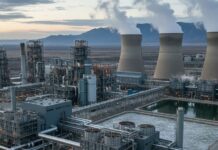






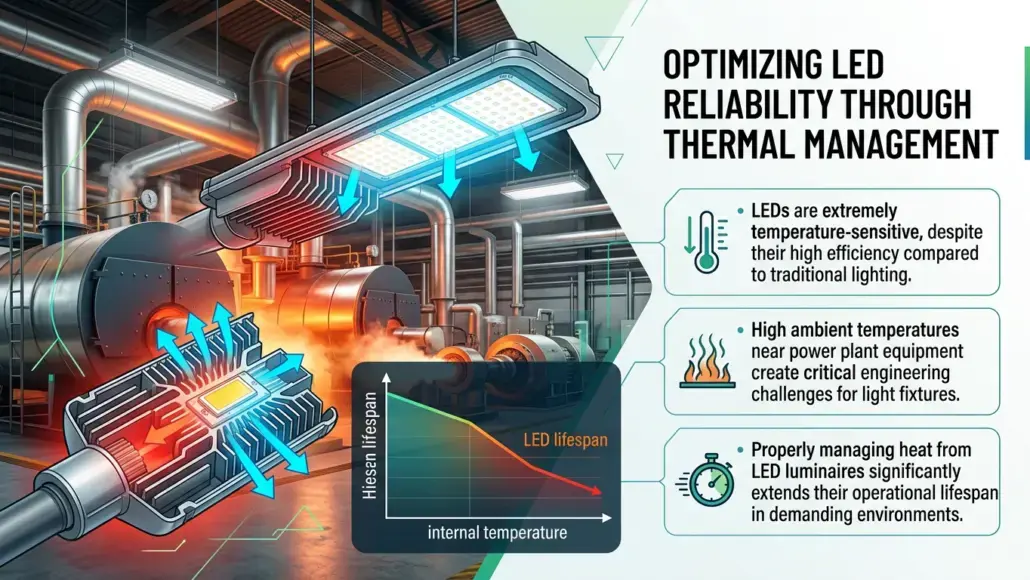

Light-emitting diodes are solid-state devices that are fundamentally sensitive to temperature. While they are far more efficient than traditional light sources, they still convert a significant portion of their electrical energy into heat. In the context of a power generation facility, where ambient temperatures near boilers, steam pipes, and turbines can frequently exceed fifty degrees Celsius, the management of this heat is a critical engineering challenge. The application of luminaire thermal management refers to the comprehensive set of design strategies used to dissipate heat away from the LED chips and their sensitive driver electronics. Without effective thermal control, the lifespan of the fixture can be reduced significantly, leading to frequent failures and increased maintenance costs.
The degradation of an LED due to heat is a two-fold process. First, there is a reduction in luminous efficacy, meaning the LED produces less light for every watt of power consumed as the temperature at the semi-conductor junction rises. This leads to a gradual dimming of the facility over time, which can eventually fall below safe visibility standards. Second, and more critically, excessive heat can lead to the permanent failure of the packaging and internal connections of the LED. The phosphor materials that convert the blue LED light into white light can also degrade, leading to a shift in color temperature that can disrupt the visual environment. Integrated luminaire thermal management ensures that the junction temperature remains within the manufacturer’s specified range, preserving the light output and color quality of the system for its intended operational life.
Additionally, the electronic drivers that power the LEDs are often even more sensitive to heat than the light sources themselves. These components contain capacitors and other elements that have a direct correlation between operational temperature and failure rate. A well-designed luminaire treats the driver and the LED array as a single thermal system, ensuring that heat from one does not compromise the other. In a power plant environment, where reliability is the most important metric, the resilience of this thermal design is what separates a professional industrial fixture from a standard commercial product. By investing in superior engineering, facility managers can ensure that their lighting infrastructure is as resilient as the primary generation equipment it supports.
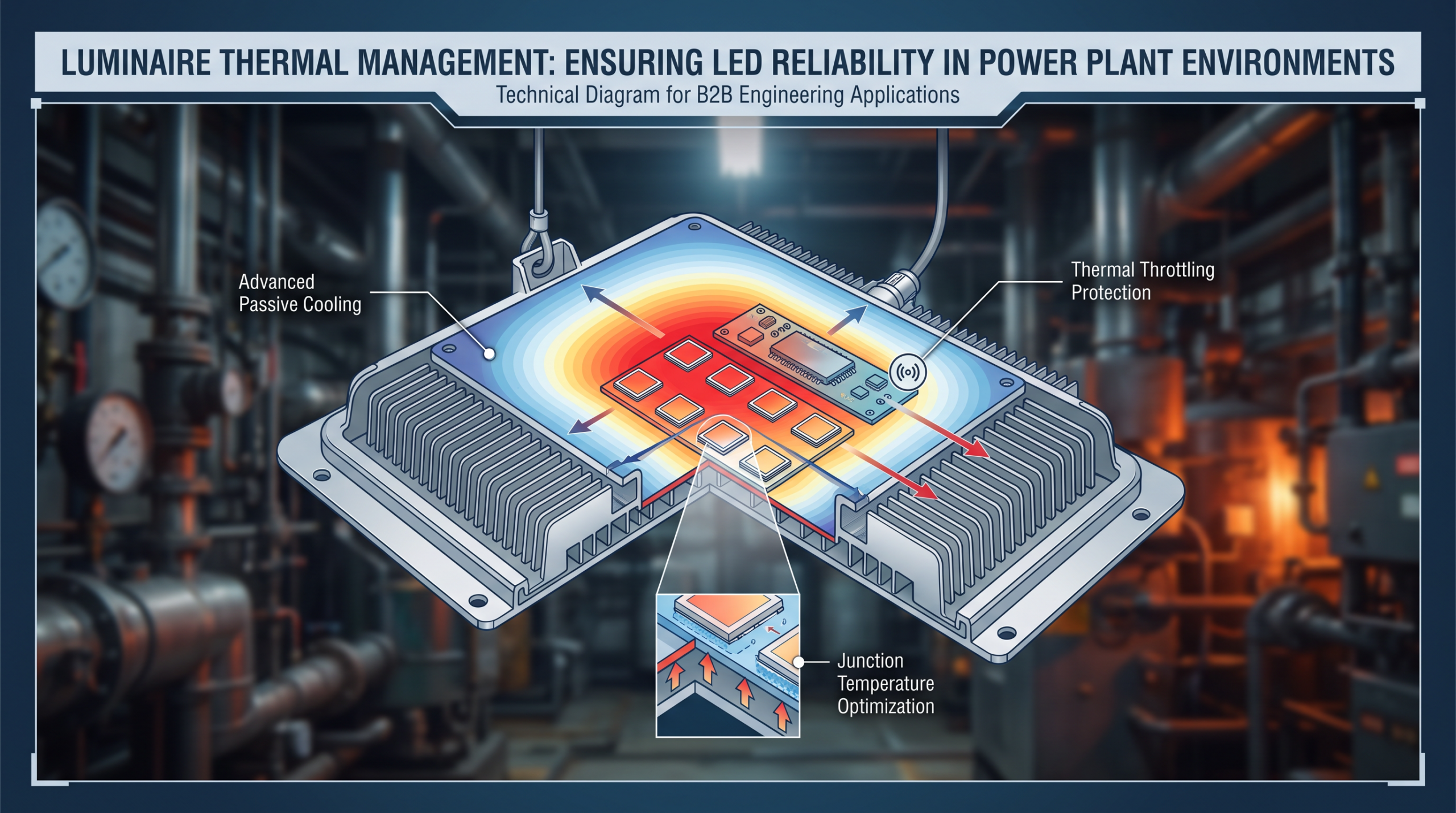
Advanced Passive Cooling and Material Science
The primary method for heat dissipation in industrial luminaires is passive cooling through the use of high-performance heat sinks. These components are typically made from die-cast aluminum or specialized thermal polymers that have a high coefficient of thermal conductivity. The design of the heat sink involves maximizing the surface area exposed to the air while maintaining a low weight and a compact footprint. This is often achieved through the use of intricate fin structures that promote natural convection. In power plants, where dust and grime can accumulate on these fins, the design must also be self-cleaning or resistant to fouling, as a layer of dirt can act as an insulator and trap heat within the fixture.
Comprehensive luminaire thermal management also incorporates advanced materials such as thermal interface materials (TIMs). These are specialized greases or pads placed between the LED board and the heat sink to eliminate microscopic air gaps that can impede heat flow. The quality of the TIM is a small but vital detail; a low-quality material can dry out or pull away over time, leading to a sudden and catastrophic increase in operating temperature. High-end industrial fixtures use phase-change materials or high-stability silicones that maintain their properties over decades of service. This attention to detail at the material level is what enables LED lighting to survive in the high-ambient environments of the power sector.
- Utilization of vertical fin orientations to promote the “chimney effect” for natural convection.
- Implementation of copper heat pipes for rapid transport of heat away from high-density LED arrays.
- Use of thermal-conductive polymers for lightweight, corrosion-resistant housings.
- Integration of oversized heat sinks to provide a large thermal margin for high-temperature zones.
- Adoption of modular designs that separate the driver from the LED heat source.
The effectiveness of these passive cooling strategies is often enhanced by the strategic placement of the luminaires. In a large turbine hall, for instance, fixtures might be positioned to take advantage of the existing ventilation airflow. This synergy between the building’s infrastructure and the light fixtures ensures that the lighting operates at its most efficient point. Additionally, the resilience of these cooling systems is essential for outdoor applications, where solar gain can add a significant thermal load to the fixture. The same principles that protect a fixture from a boiler’s heat also ensure that Outdoor Lighting Optics Sites remain functional during the peak of summer. By addressing the thermal environment from every angle, the industry can achieve unprecedented levels of lighting reliability.
Thermal Throttling and Intelligent Protection Mechanisms
Despite the best passive cooling designs, there may be occasions when the ambient temperature exceeds the design limits of the luminaire, such as during a steam leak or a cooling system failure. To protect against permanent damage in these scenarios, advanced industrial luminaires are equipped with intelligent protection mechanisms. These systems use integrated temperature sensors to monitor the internal state of the fixture in real-time. If a dangerous temperature threshold is reached, the driver automatically reduces the current to the LEDs, effectively dimming the light to lower the heat output.
This proactive approach to luminaire thermal management ensures that the light remains operational, albeit at a lower intensity, rather than failing completely. For power plant operators, this is a critical safety feature. It is far better to have a slightly dimmed environment than a total blackout during a thermal incident. Once the ambient temperature returns to a safe level, the system automatically ramps the light output back up to its normal state. This “self-healing” capability reduces the need for emergency maintenance and protects the long-term investment in the lighting infrastructure.
In addition to thermal throttling, some systems also include diagnostic alerts that can be sent to the facility’s maintenance software. If a fixture is consistently operating at a high temperature, it can indicate that the heat sink is blocked by debris or that the surrounding ventilation has been compromised. This data allows maintenance teams to address the underlying issue before a failure occurs. This transition from reactive to predictive maintenance is a major trend in the power sector, and thermal data from the lighting system is a valuable part of this data-driven strategy. By making the lighting “smart,” the industry is increasing the overall resilience of the plant’s auxiliary systems.
Impact of Thermal Design on Long-Term L70 Life
The industry standard for measuring the life of an LED is the L70 rating, which is the time it takes for the light output to drop to seventy percent of its initial value. This metric is inextricably linked to technical heat dissipation strategies. A fixture that operates at a lower temperature will have a significantly longer L70 life than one that runs hot. In a power plant, where the cost of replacing a high-bay fixture can be several times the cost of the fixture itself due to the need for scaffolding or specialized lifts, maximizing this life is of paramount economic importance.
The relationship between temperature and life is non-linear; even a small reduction in the operating temperature can lead to a significant increase in the life of the LEDs. For example, reducing the junction temperature by ten degrees Celsius can sometimes double the expected life of the device. This is why engineers prioritize thermal design over initial cost when selecting lighting for power generation facilities. A more expensive fixture with superior luminaire thermal management will almost always provide a lower total cost of ownership over its lifetime because it will require fewer replacements and will maintain its required light levels for much longer.
Beyond this, the stability of the light output over time is essential for maintaining safety standards. If the lighting in a technical area dims significantly over five years, it may no longer meet the minimum lux levels required for safe operation. This would necessitate a premature retrofit of the entire system. By ensuring that the light output remains stable through effective heat dissipation, a facility can remain in compliance with safety regulations for the entire rated life of the system. This long-term performance stability is the ultimate proof of a well-engineered thermal management strategy.
Future Trends and Innovations in Thermal Control
As LED technology continues to evolve, the power densities of luminaires are increasing, which in turn increases the thermal management challenge. Future innovations in the sector are likely to include the use of active cooling systems, such as micro-fans or liquid cooling, for the most demanding applications. While these systems add complexity, they can provide a level of heat dissipation that is impossible with passive systems alone. We may also see the adoption of graphene-based materials, which have thermal conductivities significantly higher than aluminum, allowing for even smaller and more efficient heat sinks.
Another area of development is the integration of thermoelectric coolers that can actively pump heat away from the LED junction. These solid-state devices could potentially allow LEDs to operate in ambient temperatures that are currently considered impossible for semiconductor electronics. As these technologies mature, the range of applications for LED lighting in the power sector will continue to expand, covering even the most extreme environments within a generation facility. Regardless of the specific technology used, the core objective will remain the same: the health of the light depends on the management of its heat.
Ultimately, the focus on these technical strategies is a testament to the sophistication of modern industrial lighting. It is a field that combines physics, material science, and electronic engineering to solve a fundamental problem of reliability. For the power generation industry, where the stakes are always high and the environment is always challenging, these technical solutions are what make the modern world possible. By prioritizing the invisible science of heat management, the industry is ensuring that its visual environment remains safe, efficient, and reliable for generations to come.