












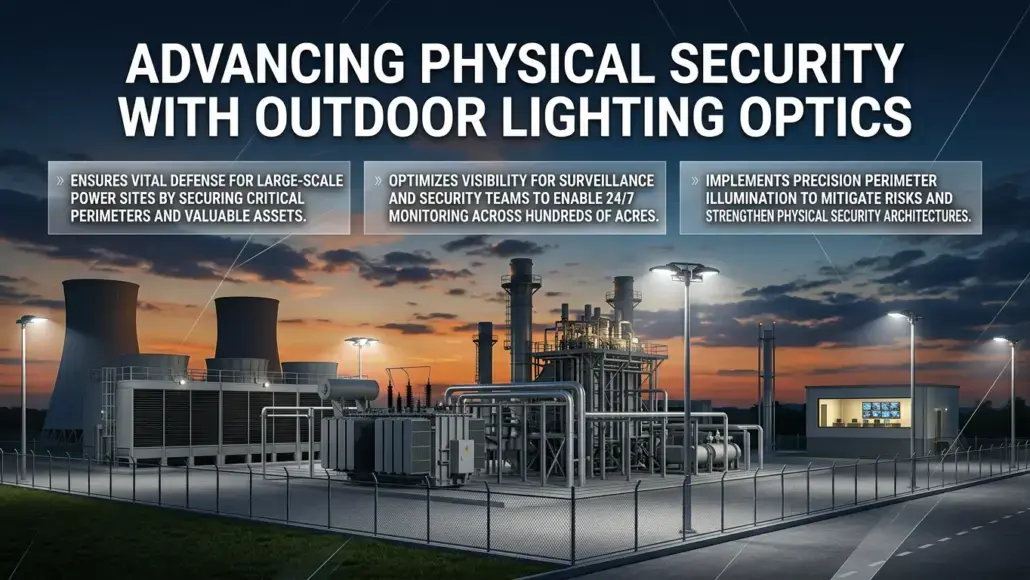

The exterior of a power generation facility represents the first line of defense in its overall security and safety architecture. Spanning dozens or even hundreds of acres, these sites contain high-value assets, hazardous materials, and critical infrastructure that must be monitored around the clock. The implementation of advanced outdoor lighting optics is essential for ensuring that security personnel and surveillance systems have the visibility required to detect unauthorized access or operational anomalies. Unlike indoor environments where light is contained by walls, outdoor lighting must be meticulously controlled to ensure that it reaches the intended targets while minimizing spill light into neighboring areas or the night sky.
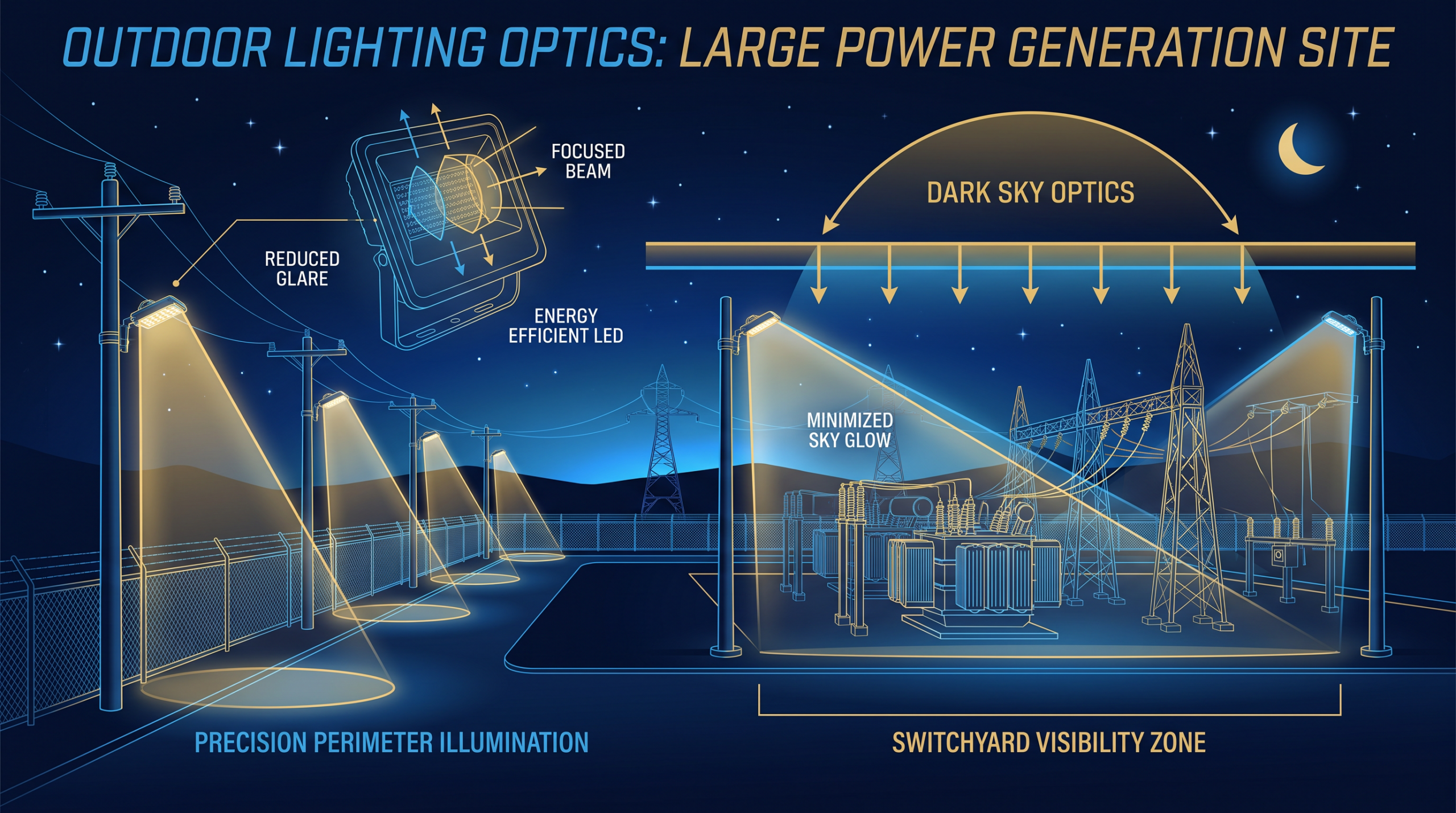
Perimeter visibility is a complex optical challenge because it requires a balance between high intensity and uniform distribution. Traditional floodlighting often created “hot spots” near the poles and dark shadows between them, providing perfect cover for an intruder. Modern external systems utilize asymmetric distribution patterns to throw light further along the fence line, creating a continuous blanket of illumination. This uniform light is critical for the effective operation of Closed-Circuit Television (CCTV) systems, which rely on consistent light levels to maintain high-resolution images. By eliminating the high-contrast shadows that plague older systems, these advanced optics ensure that security teams can identify potential threats at a much greater distance.
In addition to security, the perimeter lighting must also support the safety of the facility’s employees. Power plants often feature extensive road networks, cooling ponds, and fuel storage areas that require safe navigation during the night. The outdoor lighting optics are designed to provide the necessary vertical and horizontal illumination for these tasks, ensuring that obstacles, spills, or wildlife are clearly visible to drivers and pedestrians. The integration of these systems into a broader facility plan, including the use of High-Bay Lighting Systems for the interior structures, creates a seamless transition between the indoor and outdoor visual environments. This consistency is vital for maintaining the spatial awareness and alertness of the workforce as they move between different zones of the plant.
Managing Light Spill and Environmental Compliance
As power plants are often located near sensitive ecosystems or residential communities, the management of light pollution has become a significant regulatory and social responsibility. Light that is directed upward or beyond the facility’s boundaries is not only a waste of energy but also an environmental hazard that can disrupt local wildlife and degrade the quality of life for nearby residents. Technical outdoor lighting optics play a central role in mitigating these issues through the use of precise “cutoff” angles. These optics ensure that the light is focused downward and onto the work surface, with virtually no light emitted above the horizontal plane. This “dark sky” compliance is increasingly a mandatory requirement for new projects and major retrofits.
The technical challenge of light control involves the use of sophisticated secondary components, such as TIR lenses or multi-faceted reflectors. These parts allow engineers to shape the beam with extraordinary precision, creating sharp edges where the light abruptly stops at the property line. This level of control is particularly important for plants located near major roads or airports, where light glare could potentially distract or blind pilots and drivers. By ensuring that every lumen produced by the luminaire is directed toward a functional purpose, high-performance outdoor lighting optics maximize the efficiency of the system while minimizing its environmental footprint.
- Adoption of Type I through Type V light distribution patterns for specific site geometries.
- Implementation of “backlight, uplight, and glare” ratings to quantify optical performance.
- Use of internal shields and external baffles to further restrict light to the target area.
- Integration of astronomical clocks and photocells to ensure lights are only active when needed.
- Selection of color temperatures (typically 3000K or 4000K) that balance visibility with environmental impact.
Environmental compliance also extends to the choice of color spectrum. There is a growing body of evidence suggesting that blue-rich white light can have a more significant impact on nocturnal animals and human circadian rhythms than warmer tones. Modern external systems allow for the use of “warm” LED sources that provide excellent visibility and color rendering while reducing the amount of blue light emitted. This ensures that the facility can meet its safety and security goals without unnecessarily impacting the local environment. By prioritizing optical quality over sheer brightness, power plant operators can build better relationships with their host communities and demonstrate a commitment to sustainable operations.
Switchyard Visibility and High-Voltage Safety
The switchyard is perhaps the most hazardous area of a power generation site, characterized by the presence of high-voltage transmission lines, massive transformers, and complex switching gear. Maintenance and inspection tasks in this zone are often performed under high-stress conditions, frequently in the dark or during inclement weather. The visibility in the switchyard must be absolute, as any error in judgment can result in an electrical arc or a fatal contact with energized equipment. Precision outdoor lighting optics used in switchyards are designed to provide high-intensity, glare-free light that reaches into the upper reaches of the steel structures, illuminating insulators, conductors, and disconnect switches.
One of the unique challenges of switchyard lighting is the need for vertical illumination. Traditional streetlights focus their energy on the horizontal plane (the ground), but switchyard technicians need to see the components that are suspended ten or twenty meters in the air. Specialized external components have been developed to provide a “vertical throw” that illuminates these high-level assets from the ground level. This eliminates the need for technicians to use handheld flashlights while performing critical switching operations, allowing them to keep both hands free for their work. The quality of this light also ensures that color-coded safety markers and identification tags on the equipment are clearly readable, reducing the risk of a switching error.
Additionally, the lighting in the switchyard must be durable enough to withstand the electromagnetic interference generated by the high-voltage environment. The luminaires and their associated components are often housed in heavy-duty, non-conductive materials that prevent electrical tracking and ensure long-term reliability. The resilience of these systems is a critical link in the overall safety chain of the facility. By providing a clear, bright, and stable visual environment, advanced optics ensure that the most dangerous part of the plant is also one of the most safely managed. This focus on high-voltage visibility is a primary example of how technical lighting solutions are tailored to the unique demands of the power generation sector.
Resilience and Reliability in Extreme Weather Conditions
Power plants are often situated in coastal, mountainous, or desert environments where they are exposed to extreme weather conditions. The outdoor lighting infrastructure must be capable of operating reliably in high winds, heavy snow, torrential rain, and extreme heat. The design of external systems includes considerations for these environmental stressors. For example, lenses must be constructed from high-impact, UV-stabilized materials that will not yellow or crack over years of exposure to the sun. The housings must be sealed to prevent the ingress of dust and moisture, which can degrade the optical performance and lead to premature failure of the electronics.
Thermal management is another critical factor in the reliability of outdoor systems. LED luminaires generate heat that must be effectively dissipated to maintain the life of the light source and the integrity of the optics. Advanced heat sinks are often integrated into the design of the fixture, using the natural airflow of the outdoor environment to cool the components. In extreme climates, the lighting may also include sensors that automatically dim the light if the temperature exceeds a safe threshold, protecting the investment from thermal damage. This level of resilience ensures that the facility remains lit even during the most severe weather events, supporting emergency response and recovery efforts.
The reliability of the lighting also impacts the maintenance schedule of the facility. Replacing a light fixture in a remote corner of a coal yard or atop a tall switchyard tower is a logistically challenging and expensive task. By using long-rated lives and minimal maintenance requirements, power plants can reduce the frequency of these interventions. This not only saves money but also reduces the exposure of maintenance personnel to the hazards of working at height and in proximity to high-voltage equipment. The durability of the lighting system is therefore directly proportional to the overall efficiency and safety of the plant’s outdoor operations.
Strategic Planning and Photometric Modeling for Site-Wide Success
The implementation of a site-wide outdoor lighting plan requires a high degree of strategic planning and technical expertise. Modern lighting designers use advanced photometric modeling software to simulate the light distribution across the entire site before any hardware is purchased. This modeling takes into account the topography of the land, the position of major structures, and the specific visibility requirements of each zone. By adjusting the optical parameters within the digital model, engineers can optimize the number and placement of poles to achieve the required light levels with the minimum possible energy consumption.
This strategic approach also allows for the integration of smart lighting controls. For instance, the lighting in low-traffic areas can be dimmed to twenty percent during the middle of the night, only ramping up to full intensity when motion is detected. This not only saves energy but also reduces the environmental impact of the facility. The data collected from these smart systems can also be used to track the health of the lighting infrastructure, allowing for proactive maintenance before a failure occurs. This move toward data-driven lighting management is the next logical step in the evolution of power plant operations.
Ultimately, the goal of these systems is to create a visual environment that supports every aspect of the plant’s mission, from security and safety to environmental stewardship. By investing in high-quality optics and a well-designed lighting plan, power plant operators can ensure that their facilities are ready for the challenges of the future. The clarity and reliability provided by these systems form the foundation of a safe, secure, and efficient power generation site, ensuring that the lights stay on both inside the plant and across the grid it serves.