





















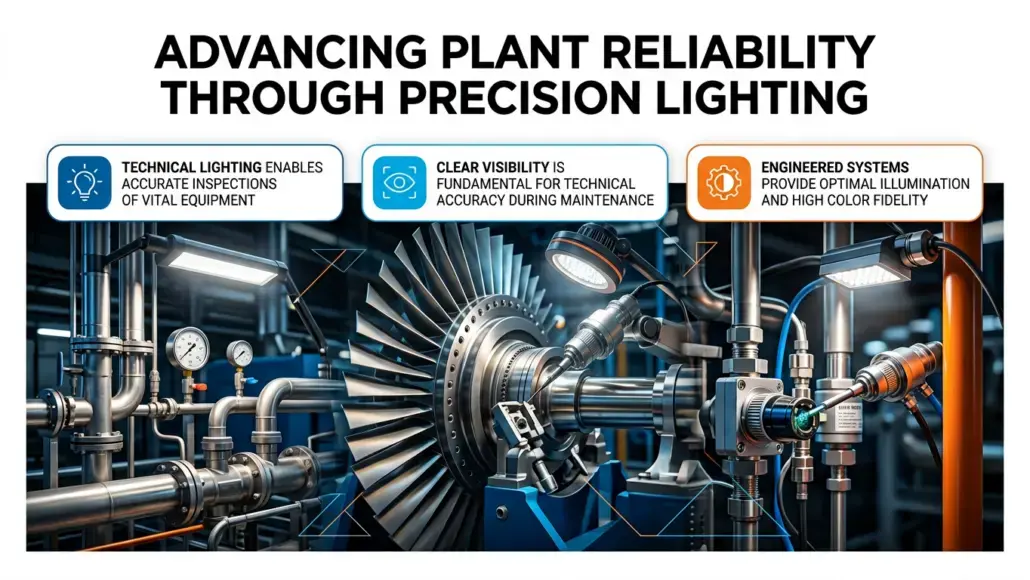

Preventive maintenance is the cornerstone of reliability in the power generation industry. It involves the meticulous inspection of components ranging from massive turbine blades to microscopic sensors. In these scenarios, the quality of light is not just a matter of convenience but a fundamental requirement for technical accuracy. The implementation of technical lighting systems are specifically engineered to provide the high levels of illumination and color fidelity needed for these intensive tasks. Unlike general area lighting, which is designed for safe passage and general observation, technical lighting is focused on revealing detail, depth, and color nuances that are critical for identifying wear, corrosion, or electrical faults.
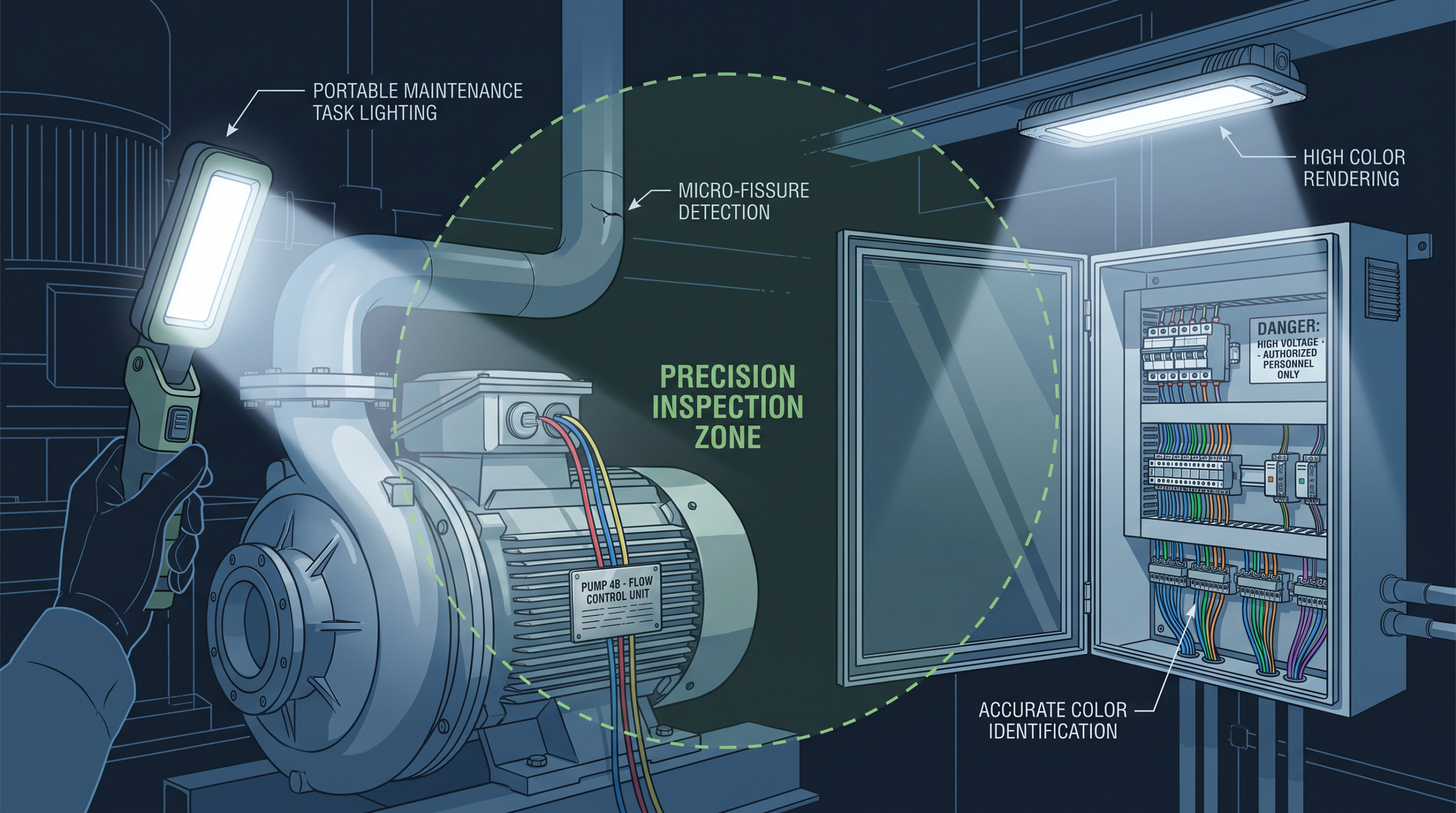
The visibility of fine details is often the difference between catching a minor issue and experiencing a major mechanical failure. For example, during a steam turbine overhaul, technicians must inspect the surfaces of the blades for stress fractures that may only be a few millimeters in length. Under standard industrial lighting, these tiny anomalies can be masked by shadows or low contrast. Specialized technical lighting systems provide a concentrated, directional beam that can be positioned to create glancing light, highlighting any surface irregularities through shadow enhancement. This level of precision is essential for maintaining the integrity of high-speed rotating equipment where even a small crack can lead to catastrophic failure.
Maintenance visibility also extends to the internal components of electrical cabinets and control systems. These areas are often densely packed with wiring, terminals, and circuit breakers, many of which are color-coded for identification. High-quality illumination ensures that these colors are reproduced accurately, preventing errors during rewiring or troubleshooting operations. The ability to distinguish between a dark blue and a black wire, or to read the small printed labels on a terminal block, is vital for the safety of the maintenance personnel and the integrity of the power system. By reducing the visual effort required to perform these tasks, modern technical lighting systems also reduce the cognitive load on the technician, allowing them to maintain higher levels of focus and accuracy over long work hours.
Integration of Portable and Fixed Technical Solutions
A comprehensive approach to maintenance illumination requires a combination of fixed and portable task-specific hardware. Fixed systems are permanently installed in areas where frequent maintenance occurs, such as pump galleries, valve stations, and turbine decks. These fixtures are often designed with adjustable heads or specialized reflectors that allow the light to be directed onto specific equipment. The benefit of fixed systems is that they provide a consistent, reliable source of light that is always available when needed. They are also typically integrated into the plant’s central electrical system, ensuring that they can be easily controlled and monitored by the facility management team.
- High-intensity LED task lights with adjustable magnetic bases for temporary mounting.
- Explosion-proof portable lanterns for use in hazardous fuel handling areas.
- Low-profile under-shelf lighting for tool benches and calibration stations.
- Extendable light towers for illuminating large-scale maintenance projects like boiler overhauls.
- Fiber-optic inspection lights for viewing the interior of pipes and inaccessible cavities.
Portable technical lighting systems provide the flexibility needed to address unforeseen issues or to light areas that are not covered by the fixed infrastructure. Modern portable solutions have been significantly improved by the adoption of high-capacity lithium-ion batteries and efficient LED emitters. These units can provide high-intensity light for several hours on a single charge, allowing technicians to work in remote or confined spaces without the need for trailing power cables. The safety implications of this are significant, as it eliminates a common trip hazard and allows for faster deployment during emergency repairs. Additionally, the integration of Central Battery Systems in Power Plants ensures that even during a primary power failure, the infrastructure supporting these maintenance tasks remains functional.
The selection of portable equipment also considers the harsh physical environment of a power plant. Tools are frequently dropped, exposed to moisture, and subjected to extreme temperatures. Therefore, hardware used for maintenance must have high ingress protection ratings and impact resistance. Many portable units are now constructed with reinforced polymer housings and rubberized bumpers to survive the rigors of the field. By ensuring that these tools are as resilient as the machinery they are used to maintain, power plant managers can guarantee that their teams always have the visibility required to perform their jobs safely and effectively.
Enhancing Inspection Accuracy with Specialized Spectral Control
The spectral quality of light is a technical parameter that has a direct impact on the success of maintenance inspections. Different types of material defects and chemical deposits respond differently to various wavelengths of light. Technical illumination can be designed with specialized spectral outputs to enhance the visibility of specific hazards. For instance, ultraviolet lighting is frequently used in non-destructive testing to reveal fluorescent penetrant dyes that have seeped into cracks. Similarly, lighting with a high blue-light content can be used to highlight oil leaks, as many lubricants have a natural fluorescence under these conditions.
Broad-spectrum white light with a high color rendering index is the standard for general maintenance, but even here, the color temperature can be optimized for specific environments. A cooler color temperature (5000K or higher) is often preferred for mechanical inspections as it provides a “crisp” light that enhances the visibility of metal surfaces and textures. Conversely, a slightly warmer temperature might be used in control rooms or laboratories to reduce eye strain and provide a more natural environment for reading technical documentation. These specialized solutions allow the user to tune the light to the specific requirements of the task at hand, providing a level of versatility that was impossible with older lighting technologies.
The accuracy of inspections is also improved by the elimination of stroboscopic effects. In a power plant, many components are in constant motion. If the lighting system has a high flicker rate, it can create a dangerous optical illusion where rotating parts appear to be moving slowly or not at all. This can lead to serious injury if a technician attempts to touch or adjust a component that they perceive to be stationary. High-end equipment utilize DC-driven LEDs or high-frequency AC drivers that provide a perfectly steady output, ensuring that moving parts are always seen as they truly are. This is a fundamental safety feature that is particularly critical in the high-stakes environment of power generation.
Supporting Ergonomics and Reducing Human Error in Repairs
The relationship between lighting and human performance is well-documented in industrial psychology. Poor visibility is a leading cause of “near misses” and actual accidents in the workplace. These illumination systems contribute to a safer environment by supporting the natural ergonomics of the human eye. When a technician has sufficient light to perform a task, they do not have to strain their neck or assume uncomfortable postures to see what they are doing. This reduction in physical strain leads to less fatigue and a lower likelihood of repetitive motion injuries. In the context of a long maintenance outage, where teams work twelve-hour shifts for weeks at a time, these ergonomic benefits are cumulative and significant.
Beyond the physical benefits, high-quality lighting also supports better decision-making. Maintenance in a power plant often involves complex diagnostic procedures where the technician must weigh multiple pieces of evidence to determine the best course of action. If their visual information is degraded by poor lighting, they are more likely to make incorrect assumptions or miss subtle clues. Professional lighting ensures that the “data” being received by the eyes is as accurate as possible, providing a solid foundation for the analytical work of the technician. This reduction in human error is a key factor in improving the overall reliability of the plant and preventing the rework that often follows a poorly executed repair.
Beyond the physical, the psychological impact of a well-lit environment should not be underestimated. Working in dark, dingy spaces is inherently demotivating and can lead to a “just get it done” attitude that compromises quality. Conversely, a brightly lit, professional maintenance bay equipped with advanced technical solutions signals that the organization values precision and safety. This cultural impact encourages technicians to take pride in their work and to adhere to the highest standards of workmanship. By investing in the best possible lighting for their maintenance teams, power plant operators are making a statement about their commitment to excellence in every aspect of their operation.
Future Innovations in Maintenance Lighting and Augmented Reality
The future of professional task lighting in the power sector is likely to be characterized by the integration of digital technologies. One area of active development is the combination of high-precision lighting with augmented reality systems. In this scenario, an illumination fixture could also serve as a mounting point for a camera or a projection system that overlays technical data directly onto the equipment being serviced. For example, a technician inspecting a pump could see a projected blueprint or a sequence of repair steps right on the surface of the machinery, all illuminated by the same high-quality technical light.
Another trend is the development of “smart” task lights that can automatically adjust their intensity and beam angle based on the task being performed. Using integrated sensors and machine learning algorithms, these systems could detect when a technician is performing a wide-area inspection versus a detailed repair and adjust the light output accordingly. This would not only improve visibility but also optimize energy use and battery life for portable units. As these technologies mature, the distinction between a “light fixture” and a “technical tool” will continue to blur, leading to a more integrated and efficient maintenance workflow.
Finally, the shift toward sustainable materials and energy-efficient designs will continue to drive innovation in the sector. Future systems will likely utilize even more efficient LED emitters and recyclable polymers, reducing the environmental footprint of the lighting infrastructure. For power plant operators, these advancements will translate into lower operational costs and a better alignment with corporate sustainability goals. Regardless of the specific technology used, the core objective will remain the same: providing the visibility and precision required to keep the world’s power grids running safely and reliably.