













Close
MCE 2026
World Hydrogen & Carbon Americas

Germany agrees on amended energy law to boost renewables

Note* - All images used are for editorial and illustrative purposes only and may not originate from the original news provider or associated company.

Subscribe

- Never miss a story with notifications

- Gain full access to our premium content

- Browse free from any location or device.

Media Packs

Expand Your Reach With Our Customized Solutions Empowering Your Campaigns To Maximize Your Reach & Drive Real Results!

– Access the Media Pack Now

– Book a Conference Call

Leave Message for Us to Get Back

Related stories

Carbon Pricing and Its Long-Term Impact on Power Generation Economics

The implementation of robust carbon pricing mechanisms is fundamentally altering the financial landscape of the energy sector. By internalizing the environmental costs of emissions, these policies are shifting the competitive advantage from fossil fuels to low-carbon alternatives, reshaping investment strategies, and redefining the long-term economic viability of power generation technologies globally.

Repurposing Legacy Power Infrastructure for Low-Carbon Energy Networks

The transition to a sustainable energy future does not require the wholesale destruction of existing systems. By creatively repurposing legacy power infrastructure for low-carbon energy networks, nations can accelerate the deployment of hydrogen and carbon capture technologies while significantly reducing the capital expenditure and environmental impact associated with building entirely new transmission and storage systems.

Balancing Grid Reliability with Deep Power Sector Decarbonisation

Maintaining a constant and reliable flow of electricity while transitioning away from traditional fossil fuels represents one of the greatest engineering feats of the modern era. This analysis explores the strategic deployment of flexible assets and the integration of carbon-neutral firm power to ensure that sustainability goals do not compromise the fundamental stability of the global energy network.
- Advertisement -

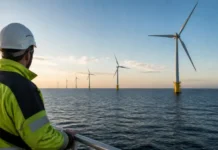
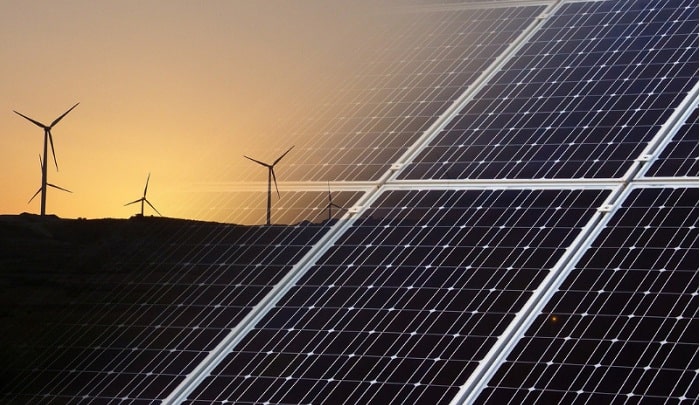
Germany’s ruling coalition has agreed changes to a new energy law that aims to boost renewable power and help the country meet its goal of producing 65% of its electricity from green sources by 2030, the environment minister said on Monday.

The energy law is now expected to go before a parliamentary committee on Tuesday ahead of votes in the lower house on Thursday and the upper house on Friday, with a view to enacting the legislation by Jan. 1, 2021.

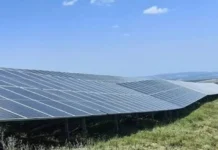
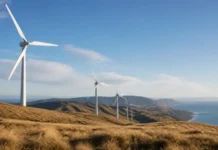
The law will give local communities financial incentives to build onshore wind projects, promote biomass and geothermal energy and encourage more large-scale solar plants on commercial buildings as well as smaller-scale rooftop installations.

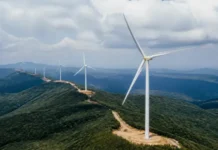
It will cut bureaucracy on production from solar power plants after their first 20 years of run-time, when fixed support payments expire, and from wind turbines over 20 years of age, which can be adapted for higher efficiency, six lawmakers, who did not wish to be identified, told Reuters.

“We had a basic agreement at the weekend, that is very important,” Environment Minister Svenja Schulze told a news conference.

The EU agreed on Friday to cut greenhouse gas emissions by at least 55% from 1990 levels by 2030, up from 40% previously. EU states plan to spend 30% of their 1.8 trillion euro ($2.2 trillion) budget and COVID-19 recovery fund on climate action.

Renewable sources accounted for 46.3% of Germany’s power consumption in 2020, 3.8 percentage points more than in 2019, utility industry association BDEW said on Monday, adding that part of the increase came from a drop in power usage during the coronavirus crisis.

Under the planned new legislation, energy consumption by householders from their own solar panels, and tax rules for apartment dwellers participating in solar projects, will be subject to fewer charges and less paperwork than at present, the lawmakers told Reuters.

National renewable capacity targets will be raised but details of their size will only be worked out in the first quarter 2021, the lawmakers said.

Earlier this month, the government as part of the reform plans scrapped a charge levied on power prices for producers of so-called green hydrogen. ($1 = 0.8233 euros)


Latest stories

Related stories

Carbon Pricing and Its Long-Term Impact on Power Generation Economics

The implementation of robust carbon pricing mechanisms is fundamentally altering the financial landscape of the energy sector. By internalizing the environmental costs of emissions, these policies are shifting the competitive advantage from fossil fuels to low-carbon alternatives, reshaping investment strategies, and redefining the long-term economic viability of power generation technologies globally.

Repurposing Legacy Power Infrastructure for Low-Carbon Energy Networks

The transition to a sustainable energy future does not require the wholesale destruction of existing systems. By creatively repurposing legacy power infrastructure for low-carbon energy networks, nations can accelerate the deployment of hydrogen and carbon capture technologies while significantly reducing the capital expenditure and environmental impact associated with building entirely new transmission and storage systems.

Balancing Grid Reliability with Deep Power Sector Decarbonisation

Maintaining a constant and reliable flow of electricity while transitioning away from traditional fossil fuels represents one of the greatest engineering feats of the modern era. This analysis explores the strategic deployment of flexible assets and the integration of carbon-neutral firm power to ensure that sustainability goals do not compromise the fundamental stability of the global energy network.

Risk Management Strategies in Emerging Low-Carbon Power Investments

Investing in the next generation of energy infrastructure requires a sophisticated understanding of the evolving risks associated with technological novelty and regulatory shifts. This discussion outlines the frameworks necessary to mitigate uncertainty in hydrogen and carbon capture projects, ensuring that capital is deployed effectively to achieve both financial returns and global sustainability targets.

Subscribe

- Never miss a story with notifications

- Gain full access to our premium content

- Browse free from any location or device.

Media Packs

Expand Your Reach With Our Customized Solutions Empowering Your Campaigns To Maximize Your Reach & Drive Real Results!

– Access the Media Pack Now

– Book a Conference Call

Leave Message for Us to Get Back

Translate »