






















Events Date: 9

Lofty 2070 Zero Emission Aim of India Needs $10 Trillion

Note* - All images used are for editorial and illustrative purposes only and may not originate from the original news provider or associated company.

Subscribe

- Never miss a story with notifications

- Gain full access to our premium content

- Browse free from any location or device.

Media Packs

Expand Your Reach With Our Customized Solutions Empowering Your Campaigns To Maximize Your Reach & Drive Real Results!

โ€“ Access the Media Pack Now

โ€“ Book a Conference Call

โ€“ Leave Message for Us to Get Back

Related stories

Hydrogen Infrastructure Driving Future Energy Growth

As the world shifts toward a low-carbon economy, hydrogen infrastructure for energy growth is emerging as a critical engine for industrial transformation. Through massive investments in clean fuel production, storage, and transport, hydrogen is poised to unlock new energy markets and provide a sustainable solution for the hardest-to-abate sectors.

Energy Storage Systems Supporting Utility Expansion

The rapid growth of global energy demand is driving a massive scale-up of utility infrastructure, where energy storage systems serve as the critical balancer. By providing essential services like grid stability and seamless renewable integration, these systems are enabling a flexible and reliable expansion of modern power networks.

Smart Energy Infrastructure Improving Grid Efficiency

The digital transformation of the power sector is being led by smart energy infrastructure efficiency, where data-driven insights and automation are redefining grid performance. By integrating digital monitoring and predictive operations, utilities are creating a more responsive, reliable, and efficient energy network for the modern age.
- Advertisement -

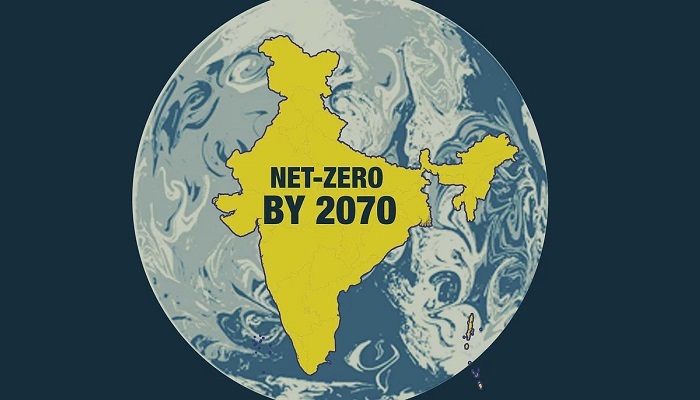
At the UN Climate Summit COP 26 in Glasgow on November 1, 2021, Prime Minister Narendra Modi said that India would achieve the net zero emission goal by 2070. As per experts, achieving this aim was rather ambitious but wouldn’t result in any additional environmental greenhouse gas emissions.

After a year has passed since that statement and 2023 is about to begin, the challenge is formidable since India, after China and the US, is the third-largest emitter of greenhouse gases. Environmental observers claim that real action will be needed on the ground to achieve this goal.

They claimed that multiple short-term objectives as well as potent sectoral targets must be set in order to achieve this goal.

Additionally, comparisons with the US and China should reveal that both nations aspire to reach their carbon neutrality goals significantly sooner than India.

China has declared that it intends to accomplish it by 2060, whilst the US and the EU hope to accomplish it by 2050. Before going on to accomplish the greater target, a comprehensive plan is needed to first meet this goal, which will require India to reduce its excessive reliance on coal.

According to analysts, India would also need to think about raising the necessary cash to complete the task and possessing the necessary technology to fulfil the target in the long term. According to research, $10 trillion in investments starting this year alone would be required to reach the net zero goal. Additionally, if 2050 is chosen as the deadline, the sum may reach $13.5 trillion.

The move to renewable energy, as has already been said, is still difficult.

Based on a report by the High-Level Policy Commission on Getting Asia to Net Zero, India would reap enormous economic benefits from speeding up its transition to climate neutrality by 2070, including an increase of up to 4.7% in its annual GDP by 2036 and the creation of about 15 million new jobs by 2047. According to the analysis published on December 23, the advantages are much bigger if India achieves net zero carbon emissions by 2050.

Achieving the zero-emission target by 2070 could boost the country’s economy by about 4.7% above the projected baseline growth in GDP terms by 2036, which would be worth $371 billion and generate about 15 million new jobs by 2047, according to a report called Getting India to Net Zero published in August this year by the High-Level Policy Commission On Getting Asia to Net Zero.

The research also stated that the timeline for India’s net zero emissions achievement and the potential benefits of it will depend heavily on the policies implemented to kickstart the clean energy transition. An enhanced trade balance of $236 billion brought on by a decline in the demand for fossil fuels is one factor contributing to positive economic effects.

It also stated that by meeting the net zero goal by 2050, India could increase its annual GDP by around 7% ($470 billion) and create almost 20 million employment by 2032.

Power Info Today brings together the global energy industry โ€” from generation and transmission operators to utility executives and energy transition leaders โ€” through trusted editorial, market intelligence, and digital engagement.

Our 2026 Media Pack offers integrated solutions to reach your audience:

  • Magazine & Digital Editions Showcase your brand within premium energy industry coverage read by executives and decision - makers worldwide.
  • Industry Insights & Reports Align with data - driven analysis, trend reports, and regional roundups across the global power and energy value chain.
  • Brand Authority & Credibility Position your company as a thought leader through expert commentary, interviews, and special features.

Latest stories

Related stories

Hydrogen Infrastructure Driving Future Energy Growth

As the world shifts toward a low-carbon economy, hydrogen infrastructure for energy growth is emerging as a critical engine for industrial transformation. Through massive investments in clean fuel production, storage, and transport, hydrogen is poised to unlock new energy markets and provide a sustainable solution for the hardest-to-abate sectors.

Energy Storage Systems Supporting Utility Expansion

The rapid growth of global energy demand is driving a massive scale-up of utility infrastructure, where energy storage systems serve as the critical balancer. By providing essential services like grid stability and seamless renewable integration, these systems are enabling a flexible and reliable expansion of modern power networks.

Smart Energy Infrastructure Improving Grid Efficiency

The digital transformation of the power sector is being led by smart energy infrastructure efficiency, where data-driven insights and automation are redefining grid performance. By integrating digital monitoring and predictive operations, utilities are creating a more responsive, reliable, and efficient energy network for the modern age.

Grid Modernization Driving Energy Infrastructure

Modern energy systems are undergoing a radical transformation as grid modernization becomes the cornerstone of infrastructure resilience. By integrating advanced digital monitoring, transmission upgrades, and smart grid technologies, utility providers are building a foundation for a reliable and decarbonized future.

Subscribe

- Never miss a story with notifications

- Gain full access to our premium content

- Browse free from any location or device.

Media Packs

Expand Your Reach With Our Customized Solutions Empowering Your Campaigns To Maximize Your Reach & Drive Real Results!

โ€“ Access the Media Pack Now

โ€“ Book a Conference Call

โ€“ Leave Message for Us to Get Back

Translate ยป