
















Close
MCE 2026
World Hydrogen & Carbon Americas

Plan Drafted By The EU To Shun Carbon Footprint By 2050

Note* - All images used are for editorial and illustrative purposes only and may not originate from the original news provider or associated company.

Subscribe

- Never miss a story with notifications

- Gain full access to our premium content

- Browse free from any location or device.

Media Packs

Expand Your Reach With Our Customized Solutions Empowering Your Campaigns To Maximize Your Reach & Drive Real Results!

– Access the Media Pack Now

– Book a Conference Call

Leave Message for Us to Get Back

Related stories

Transformation of Power Distribution through Advanced Metering Infrastructure

The distribution level of the energy value chain is undergoing a fundamental redesign as utilities replace legacy equipment with intelligent monitoring systems that optimize flow and efficiency.

Strengthening Grid Reliability Through Advanced Metering Infrastructure

Grid stability and uptime are becoming increasingly critical as extreme weather events and fluctuating demand patterns challenge the resilience of traditional power systems.

The Role of Advanced Metering Infrastructure in Driving Smart Grid Growth

Modern energy systems are undergoing a radical transformation as digital communication layers integrate with traditional power hardware to facilitate a more responsive and scalable grid architecture.
- Advertisement -

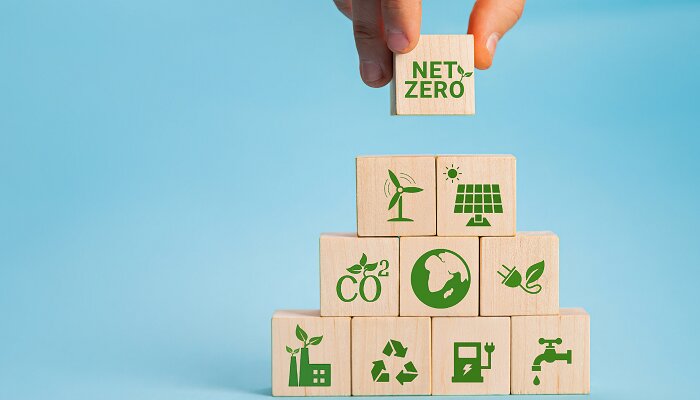
The European Union has gone ahead and drafted plans so as to capture and store hundreds of millions of tons of CO2 emissions by 2050 so as to make sure that the various sectors can go on to meet Europe’s climate change objectives, a draft document showed.

Accomplishing the 2050 net zero emissions target of the EU is going to require companies to make a green energy switch and also change their production methodology. For sectors that go on to lack the technologies to do this, their leftover emissions will have to be captured in order to avoid them going into the atmosphere, thereby fuelling global warming.

It is well to be noted that by 2050, the EU will require to capture almost 450 million tons of CO2 every year, as per a draft European Commission plan that happened to be seen by Reuters.

According to the draft, by the same date, most of the leftover emissions from EU industries will have to be captured as well as stored, especially from the cement as well as the chemical sectors.

It is quite interesting to note that the EU emitted 3.6 billion tons of CO2, which is equivalent to 2022, as per the official data. Most CO2 that happens to be captured in 2050 will be stored underground permanently and some would be made use of in industrial processes such as chemical manufacturing.

The draft remarked that 100 million tons of CO2, which could be captured by 2050, will be in the power sector, right from the power plants running on CO2-emitting fossil fuels or biogenic sources such as organic waste.

Apparently, the EU will require to capture almost 200 million tons of CO2 from the atmosphere directly so as to balance out some leftover emissions in 2050, said the draft.

The director of campaign group CCS Europe, Chris Davies, said that a dearth when it comes to political support has gone on to leave the EU playing catch-up in order to quickly scale the technology. The fact is that the EU has no CO2 storage projects that are functional.

Davies, who also happens to be a former lawmaker, said that most governments have done their best so as to put this on that too difficult back burner. The Commission has already declined to comment when it comes to the draft document, which was at first reported by Bloomberg News.

The draft went on to state that building carbon capture as well as storage infrastructure this decade will need both EU as well as national funds.

Latest stories

Related stories

Transformation of Power Distribution through Advanced Metering Infrastructure

The distribution level of the energy value chain is undergoing a fundamental redesign as utilities replace legacy equipment with intelligent monitoring systems that optimize flow and efficiency.

Strengthening Grid Reliability Through Advanced Metering Infrastructure

Grid stability and uptime are becoming increasingly critical as extreme weather events and fluctuating demand patterns challenge the resilience of traditional power systems.

The Role of Advanced Metering Infrastructure in Driving Smart Grid Growth

Modern energy systems are undergoing a radical transformation as digital communication layers integrate with traditional power hardware to facilitate a more responsive and scalable grid architecture.

Advanced Metering Infrastructure Powering Data Driven Utilities

The transition from analog management to digital intelligence is redefining the utility sector as data becomes the primary driver for operational excellence and strategic decision-making.

Subscribe

- Never miss a story with notifications

- Gain full access to our premium content

- Browse free from any location or device.

Media Packs

Expand Your Reach With Our Customized Solutions Empowering Your Campaigns To Maximize Your Reach & Drive Real Results!

– Access the Media Pack Now

– Book a Conference Call

Leave Message for Us to Get Back

Translate »