





















Events Date: 9

Renewable Energy Potential And Challenges In Latin America

Note* - All images used are for editorial and illustrative purposes only and may not originate from the original news provider or associated company.

Subscribe

- Never miss a story with notifications

- Gain full access to our premium content

- Browse free from any location or device.

Media Packs

Expand Your Reach With Our Customized Solutions Empowering Your Campaigns To Maximize Your Reach & Drive Real Results!

– Access the Media Pack Now

– Book a Conference Call

Leave Message for Us to Get Back

Related stories

Ergonomics Improving Efficiency in Transmission Worksites

Optimizing the physical interaction between utility professionals and their environment, ergonomics transmission worksites initiatives are proving that worker comfort is a primary engine of operational speed. By refining tool design and harness mechanics, the power sector is reducing physical strain and fatigue, allowing crews to maintain peak performance throughout the demanding lifecycle of infrastructure projects.

Data Driven Insights Transforming Safety in Power Grids

Revolutionizing the management of risk in the energy sector, data driven safety power grids initiatives are turning vast streams of information into actionable protection strategies. By analyzing patterns of maintenance, environmental conditions, and worker behavior, utility providers are now able to predict hazards before they manifest, creating a more transparent and responsive safety environment for the modern electrical infrastructure.

Building Safety Culture Across Power Transmission Teams

Strengthening the human foundation of our energy networks, safety culture power transmission teams initiatives are moving beyond compliance to a deep-seated commitment to mutual protection. By fostering open communication, leadership accountability, and peer-to-peer engagement, utility organizations are creating an environment where every individual feels empowered to prioritize safety as a core personal and professional value.
- Advertisement -

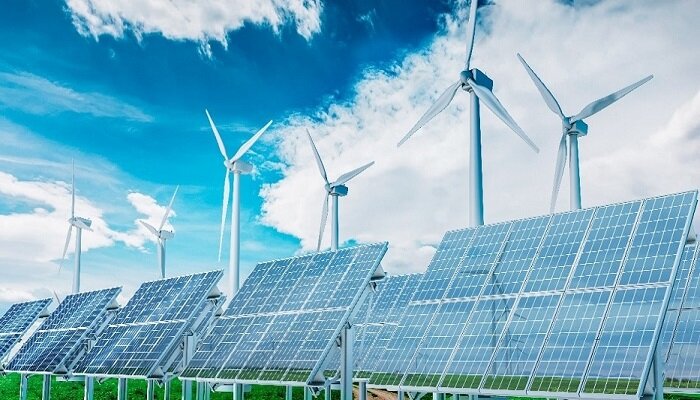
Renewable energy technologies like wind, hydro, solar, and battery energy storage systems (BESS) are leading the global shift toward clean energy. The US and Latin America are experiencing significant progress in these technologies driven by geopolitical and economic trends. As per insights, the demand for electricity is projected to nearly double from 1,295 TWh in 2020 to 2,282 TWh in 2040, posing challenges for some regions. This article explores the latest advancements in solar, wind, hydro, and BESS technologies while addressing the issues of insurability and risk perception in the renewable energy sector.

Wind energy, both onshore and offshore, is rapidly expanding worldwide. The East Coast of the US has seen substantial growth in offshore wind projects due to streamlined permitting processes and improved grid integration. Similarly, Latin American countries such as Brazil, Argentina, and Mexico are tapping into their wind resources through government auctions and private investments. Community wind projects and hybrid installations are also gaining traction. While Europe and Asia are leading in offshore wind development, Latin America is still in the early stages. Offshore wind farms require consistent energy policies and investment in transmission infrastructure to fully realize their potential in the region.

Solar power is booming globally due to falling costs and supportive policies. In the US, utility-scale installations, community solar initiatives, and commercial rooftop systems are driving substantial growth. LATAM countries like Chile, Mexico, and Brazil are also experiencing remarkable solar capacity additions, supported by regulatory frameworks and programs. However, hail and weather-related risks pose challenges to solar farms, and the region needs to develop transmission infrastructure to meet growing energy demand.

Battery energy storage systems (BESSs) play a crucial role in addressing the intermittency of clean energy sources. The US is experiencing a surge in utility-scale BESS installations due to declining costs and state-level energy storage mandates. Latin American countries like Chile, Mexico, and Argentina are also implementing energy storage projects to enhance grid stability, support renewable integration, and improve energy access in remote areas. However, the risk of thermal runaway in lithium-ion batteries poses a significant challenge to the integrity of BESS installations. Insurance coverage needs to consider these risks and develop specialized solutions accordingly.

Hydroelectric power growth in Latin America is relatively low compared to other regions, with a projected reduction in development between 2021 and 2030. Associated risks with the construction and operation of hydroelectric plants, such as quality issues and natural catastrophes like flooding, need to be carefully evaluated and re-evaluated.

Insurance Coverage and Risk Reduction

As renewable energy projects expand, specialized insurance coverage is required to manage technology risks, natural disasters, business interruption, liability concerns, cybersecurity threats, and regulatory changes. Early assessment of asset-specific risks and the involvement of insurers can help optimize premium costs. Offshore wind, solar, BESS, and hydro projects each have specific risks that insurers must address through tailored coverage options and collaboration with industry stakeholders and governments.

Latest stories

Related stories

Ergonomics Improving Efficiency in Transmission Worksites

Optimizing the physical interaction between utility professionals and their environment, ergonomics transmission worksites initiatives are proving that worker comfort is a primary engine of operational speed. By refining tool design and harness mechanics, the power sector is reducing physical strain and fatigue, allowing crews to maintain peak performance throughout the demanding lifecycle of infrastructure projects.

Data Driven Insights Transforming Safety in Power Grids

Revolutionizing the management of risk in the energy sector, data driven safety power grids initiatives are turning vast streams of information into actionable protection strategies. By analyzing patterns of maintenance, environmental conditions, and worker behavior, utility providers are now able to predict hazards before they manifest, creating a more transparent and responsive safety environment for the modern electrical infrastructure.

Building Safety Culture Across Power Transmission Teams

Strengthening the human foundation of our energy networks, safety culture power transmission teams initiatives are moving beyond compliance to a deep-seated commitment to mutual protection. By fostering open communication, leadership accountability, and peer-to-peer engagement, utility organizations are creating an environment where every individual feels empowered to prioritize safety as a core personal and professional value.

Human Factors Shaping Safety in Power Transmission Work

Understanding the cognitive and psychological drivers of performance, human factors power transmission safety initiatives are refining the interface between the worker and the high-voltage environment. By addressing issues like cognitive load, decision-making biases, and fatigue, the energy sector is moving beyond physical protection to a sophisticated model of error prevention that acknowledges the inherent limitations and strengths of the human mind.

Subscribe

- Never miss a story with notifications

- Gain full access to our premium content

- Browse free from any location or device.

Media Packs

Expand Your Reach With Our Customized Solutions Empowering Your Campaigns To Maximize Your Reach & Drive Real Results!

– Access the Media Pack Now

– Book a Conference Call

Leave Message for Us to Get Back

Translate »