












Close
MCE 2026
World Hydrogen & Carbon Americas

Repsol targets 15GW of renewables capacity by 2030

Note* - All images used are for editorial and illustrative purposes only and may not originate from the original news provider or associated company.

Subscribe

- Never miss a story with notifications

- Gain full access to our premium content

- Browse free from any location or device.

Media Packs

Expand Your Reach With Our Customized Solutions Empowering Your Campaigns To Maximize Your Reach & Drive Real Results!

– Access the Media Pack Now

– Book a Conference Call

Leave Message for Us to Get Back

Related stories

Industrial Decarbonisation and Power Sector Synergy

The path to a net-zero economy requires the deep integration of heavy industry with the electrical grid. By exploring the concept of sector coupling and the role of hydrogen in difficult-to-abate sectors, this analysis details how industrial decarbonisation and power sector synergy can create a more resilient, flexible, and efficient energy system through shared infrastructure and coordinated strategy.

Hydrogen Trade Corridors Reshape Global Energy Supply

The emergence of international hydrogen trade is fundamentally redrawing the world's energy maps. By establishing dedicated corridors that connect resource-rich exporters with high-demand industrial centers, the global energy transition is moving toward a more diversified and resilient supply chain underpinned by advanced maritime logistics and rigorous certification standards.

Largest Solar-Plus-Storage Project Hits Initial Grid Sync

The first phase of the MTerra Solar project in...
- Advertisement -

Repsol will ramp up investment in solar PV and wind in the next five years as looks to reach 15GW of renewable energy capacity by 2030.

The Spanish oil major will spend €5.5 billion (US$6.6 billion) between 2021 and 2025 on low carbon technologies to help it develop more than 500MW of green energy projects annually. Then, from 2025 to 2030, the firm is targeting the addition of more than 1GW of installed renewables capacity each year.

The investments form part of Repsol’s new strategic plan that CEO Josu Jon Imaz says represents “a significant step” towards it reaching net zero – a goal it aims to achieve by 2050.

The new business model contemplates the incorporation of partners or investors to the low-carbon generation business or a possible listing to accelerate the achievement of objectives.

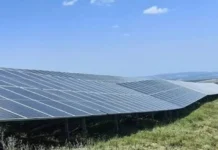
Having entered the PV market in 2018, Repsol currently has just 390MW of solar projects under construction, both in Spain: the 264MW Valdesolar farm in Extremadura and the 126MW Kappa facility in Castilla-La Mancha. These are slated for completion in the first half of next year.

However, the company currently has 4,305MW of solar projects under development and negotiations.

Repsol also hinted at further acquisitions of assets to boost its renewables business outside Spain. Earlier this year, it partnered with Grupo Ibereólica Renovables to create a joint venture in Chile that will develop more than 1.6GW of green energy projects by 2025. Repsol will invest €168 million in the venture by 2023 and will have the option to take control of it from 2025.

The company’s strategic plan also includes renewable hydrogen, which it says will be important for the decarbonisation of industry. In Spain and Portugal, it aims to achieve green hydrogen production of the equivalent of 400MW by 2025, with the ambition of exceeding 1.2GW in 2030.

Latest stories

Related stories

Industrial Decarbonisation and Power Sector Synergy

The path to a net-zero economy requires the deep integration of heavy industry with the electrical grid. By exploring the concept of sector coupling and the role of hydrogen in difficult-to-abate sectors, this analysis details how industrial decarbonisation and power sector synergy can create a more resilient, flexible, and efficient energy system through shared infrastructure and coordinated strategy.

Hydrogen Trade Corridors Reshape Global Energy Supply

The emergence of international hydrogen trade is fundamentally redrawing the world's energy maps. By establishing dedicated corridors that connect resource-rich exporters with high-demand industrial centers, the global energy transition is moving toward a more diversified and resilient supply chain underpinned by advanced maritime logistics and rigorous certification standards.

Largest Solar-Plus-Storage Project Hits Initial Grid Sync

The first phase of the MTerra Solar project in...

India, UK Launch Offshore Wind Taskforce to Scale Capacity

India and the United Kingdom formally launched the India-UK...

Subscribe

- Never miss a story with notifications

- Gain full access to our premium content

- Browse free from any location or device.

Media Packs

Expand Your Reach With Our Customized Solutions Empowering Your Campaigns To Maximize Your Reach & Drive Real Results!

– Access the Media Pack Now

– Book a Conference Call

Leave Message for Us to Get Back

Translate »