















Events Date: 9

Saudi Arabia And Kazakhstan Join Forces In Energy Sector

Note* - All images used are for editorial and illustrative purposes only and may not originate from the original news provider or associated company.

Subscribe

- Never miss a story with notifications

- Gain full access to our premium content

- Browse free from any location or device.

Media Packs

Expand Your Reach With Our Customized Solutions Empowering Your Campaigns To Maximize Your Reach & Drive Real Results!

โ€“ Access the Media Pack Now

โ€“ Book a Conference Call

โ€“ Leave Message for Us to Get Back

Related stories

Ergonomics Improving Efficiency in Transmission Worksites

Optimizing the physical interaction between utility professionals and their environment, ergonomics transmission worksites initiatives are proving that worker comfort is a primary engine of operational speed. By refining tool design and harness mechanics, the power sector is reducing physical strain and fatigue, allowing crews to maintain peak performance throughout the demanding lifecycle of infrastructure projects.

Data Driven Insights Transforming Safety in Power Grids

Revolutionizing the management of risk in the energy sector, data driven safety power grids initiatives are turning vast streams of information into actionable protection strategies. By analyzing patterns of maintenance, environmental conditions, and worker behavior, utility providers are now able to predict hazards before they manifest, creating a more transparent and responsive safety environment for the modern electrical infrastructure.

Building Safety Culture Across Power Transmission Teams

Strengthening the human foundation of our energy networks, safety culture power transmission teams initiatives are moving beyond compliance to a deep-seated commitment to mutual protection. By fostering open communication, leadership accountability, and peer-to-peer engagement, utility organizations are creating an environment where every individual feels empowered to prioritize safety as a core personal and professional value.
- Advertisement -

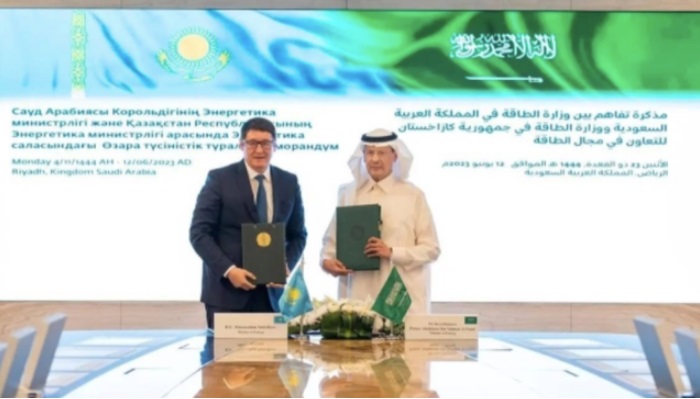
Saudi Arabia and Kazakhstan have reached an agreement to create a framework for collaboration in the energy industry, thereby strengthening the Kingdom’s energy alliances. The two countries will cooperate in various sectors such as petroleum, refining, petrochemicals, gas, and electricity. Additionally, they will join forces to progress renewable energy, clean hydrogen, energy efficiency, storage, and development. The agreement also aims to enhance cooperation in promoting the idea of a circular carbon economy, which would aid in emission reduction efforts.

The decision is in line with Saudi Arabia’s Saudi Green Initiative, strengthening its commitment to clean energy, reducing emissions, and safeguarding the environment. The agreement, signed by Saudi Energy Minister Prince Abdulaziz bin Salman and his Kazakhstani counterpart Almasadam Satkaliyev in Riyadh, also promotes localizing energy-related materials, products, and services. Additionally, the collaboration includes exploring hydrocarbon uses across industries and addressing digital transformation, innovation, cybersecurity, and artificial intelligence in the energy sector.

As per insights, Saudi Arabia’s focus on collaborating with Arab nations in the energy sector is a fundamental aspect of its strategy to bolster relationships across various domains. Saudi Arabia has entered into numerous agreements, such as with Egypt, Jordan, Oman, and Iraq, with the objective of promoting cooperation in areas like electricity, petrochemicals, renewable energy, clean hydrogen, petroleum and gas, and other related fields.

In order to explore new markets and expand its presence in Central Asia, Saudi Arabia recently entered into an agreement with Azerbaijan. The main objective of this agreement was to promote cooperation between the two countries in various areas, including petroleum, petrochemicals, gas, electricity, and renewable energy.

In February, Saudi Arabia partnered with France to enhance collaboration in the energy sector, particularly in technologies addressing climate change like carbon capture and hydrogen production. The agreement focuses on closer working in electricity, renewables, and energy efficiency and also covers storage, smart grids, oil and gas, refining, petrochemicals, and distribution.

Latest stories

Related stories

Ergonomics Improving Efficiency in Transmission Worksites

Optimizing the physical interaction between utility professionals and their environment, ergonomics transmission worksites initiatives are proving that worker comfort is a primary engine of operational speed. By refining tool design and harness mechanics, the power sector is reducing physical strain and fatigue, allowing crews to maintain peak performance throughout the demanding lifecycle of infrastructure projects.

Data Driven Insights Transforming Safety in Power Grids

Revolutionizing the management of risk in the energy sector, data driven safety power grids initiatives are turning vast streams of information into actionable protection strategies. By analyzing patterns of maintenance, environmental conditions, and worker behavior, utility providers are now able to predict hazards before they manifest, creating a more transparent and responsive safety environment for the modern electrical infrastructure.

Building Safety Culture Across Power Transmission Teams

Strengthening the human foundation of our energy networks, safety culture power transmission teams initiatives are moving beyond compliance to a deep-seated commitment to mutual protection. By fostering open communication, leadership accountability, and peer-to-peer engagement, utility organizations are creating an environment where every individual feels empowered to prioritize safety as a core personal and professional value.

Human Factors Shaping Safety in Power Transmission Work

Understanding the cognitive and psychological drivers of performance, human factors power transmission safety initiatives are refining the interface between the worker and the high-voltage environment. By addressing issues like cognitive load, decision-making biases, and fatigue, the energy sector is moving beyond physical protection to a sophisticated model of error prevention that acknowledges the inherent limitations and strengths of the human mind.

Subscribe

- Never miss a story with notifications

- Gain full access to our premium content

- Browse free from any location or device.

Media Packs

Expand Your Reach With Our Customized Solutions Empowering Your Campaigns To Maximize Your Reach & Drive Real Results!

โ€“ Access the Media Pack Now

โ€“ Book a Conference Call

โ€“ Leave Message for Us to Get Back

Translate ยป