








Close
MCE 2026
World Hydrogen & Carbon Americas

South Korea Enforces Regulations Emphasizing On Hydrogen

Note* - All images used are for editorial and illustrative purposes only and may not originate from the original news provider or associated company.

Subscribe

- Never miss a story with notifications

- Gain full access to our premium content

- Browse free from any location or device.

Media Packs

Expand Your Reach With Our Customized Solutions Empowering Your Campaigns To Maximize Your Reach & Drive Real Results!

– Access the Media Pack Now

– Book a Conference Call

Leave Message for Us to Get Back

Related stories

Industrial Decarbonisation and Power Sector Synergy

The path to a net-zero economy requires the deep integration of heavy industry with the electrical grid. By exploring the concept of sector coupling and the role of hydrogen in difficult-to-abate sectors, this analysis details how industrial decarbonisation and power sector synergy can create a more resilient, flexible, and efficient energy system through shared infrastructure and coordinated strategy.

Hydrogen Trade Corridors Reshape Global Energy Supply

The emergence of international hydrogen trade is fundamentally redrawing the world's energy maps. By establishing dedicated corridors that connect resource-rich exporters with high-demand industrial centers, the global energy transition is moving toward a more diversified and resilient supply chain underpinned by advanced maritime logistics and rigorous certification standards.

Largest Solar-Plus-Storage Project Hits Initial Grid Sync

The first phase of the MTerra Solar project in...
- Advertisement -

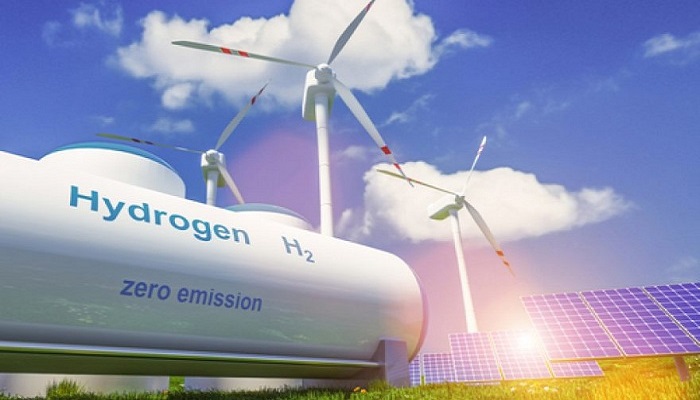
In order to create a clean hydrogen supply chain and support a world-leading hydrogen industry, the South Korean government has unveiled new laws and goals for the sector.

The government has three main growth strategies, according to a statement from the Ministry of Trade, Industry, and Energy, that are intended to scale up, build up, and level up the sector. To build the green hydrogen ecosystem, the government intends to create a global supply chain and a sizable demand for hydrogen for transportation and power generation.

The goal is to increase the supply of high-mobility vehicles such as hydrogen buses and trucks as well as to accomplish hydrogen-enhanced burning, which combines hydrogen and ammonia. Overseas sites for large-scale production would be constructed, the ministry announced.

As part of the buildup plan, South Korea also wants to establish a legal structure for the distribution network to hasten the adoption of clean hydrogen.

This will entail constructing the biggest liquid hydrogen plant and fueling station in the world, as well as an ammonia and liquid hydrogen receiving facility and a hydrogen pipeline. Additionally, the government intends to establish a clean hydrogen certificate program, regulate hydrogen company legislation, and develop a hydrogen bid market.

The government wants to level up the industry by acquiring fundamental technology across the entire hydrogen cycle, from production to distribution, with the goal of becoming the leading hydrogen powerhouse. The government also stated that help would be given to businesses with the necessary technical know-how in seven key critical areas, including water electrolysis and hydrogen turbines. Furthermore, domestic products would be marketed for export, and business-hampering rules would be eliminated.

The government also came up with three different ways to implement the three strategies, one of which is for the ministry to take the initiative in promoting the clean hydrogen environment. The action plan seeks to create 70 liquid hydrogen refuelling stations, generate 20,000 commercial cars powered by hydrogen by 2030, and have hydrogen make up 7.1% of the nation’s energy mix by 2036.

By securing cutting-edge technology, 10 top-ranked products, and the development of 600 hydrogen-focused businesses by 2030, MOTIE will also take the lead in transforming Korea into a worldwide energy powerhouse. As a result, the Ministry of Science and ICT will completely localise the water electrolysis technology, gain the liquefaction and ammonia process technologies, and lead the hydrogen mobility market in order to close the super divide in hydrogen technologies.

The spectrum of rules was initially restricted to the sectors of hydrogen cars and fuel cells for power production, according to the ministry, and Korea’s hydrogen ecosystem is mostly driven by grey hydrogen.

Latest stories

Related stories

Industrial Decarbonisation and Power Sector Synergy

The path to a net-zero economy requires the deep integration of heavy industry with the electrical grid. By exploring the concept of sector coupling and the role of hydrogen in difficult-to-abate sectors, this analysis details how industrial decarbonisation and power sector synergy can create a more resilient, flexible, and efficient energy system through shared infrastructure and coordinated strategy.

Hydrogen Trade Corridors Reshape Global Energy Supply

The emergence of international hydrogen trade is fundamentally redrawing the world's energy maps. By establishing dedicated corridors that connect resource-rich exporters with high-demand industrial centers, the global energy transition is moving toward a more diversified and resilient supply chain underpinned by advanced maritime logistics and rigorous certification standards.

Largest Solar-Plus-Storage Project Hits Initial Grid Sync

The first phase of the MTerra Solar project in...

India, UK Launch Offshore Wind Taskforce to Scale Capacity

India and the United Kingdom formally launched the India-UK...

Subscribe

- Never miss a story with notifications

- Gain full access to our premium content

- Browse free from any location or device.

Media Packs

Expand Your Reach With Our Customized Solutions Empowering Your Campaigns To Maximize Your Reach & Drive Real Results!

– Access the Media Pack Now

– Book a Conference Call

Leave Message for Us to Get Back

Translate »