










Events Date: 9

Covid-19: 150 GW renewable energy projects at risk in Asia Pacific

Note* - All images used are for editorial and illustrative purposes only and may not originate from the original news provider or associated company.

Subscribe

- Never miss a story with notifications

- Gain full access to our premium content

- Browse free from any location or device.

Media Packs

Expand Your Reach With Our Customized Solutions Empowering Your Campaigns To Maximize Your Reach & Drive Real Results!

– Access the Media Pack Now

– Book a Conference Call

Leave Message for Us to Get Back

Related stories

Energy Storage Systems Supporting Utility Expansion

The rapid growth of global energy demand is driving a massive scale-up of utility infrastructure, where energy storage systems serve as the critical balancer. By providing essential services like grid stability and seamless renewable integration, these systems are enabling a flexible and reliable expansion of modern power networks.

Vattenfall and Nscale Secure Sustainable AI Infrastructure Power Agreement

In a key development for enterprise leaders focused on...

British Hydropower Association Issues Technical Framework for Pumped Storage Infrastructure

The British Hydropower Association (BHA) has released new pumped...
- Advertisement -

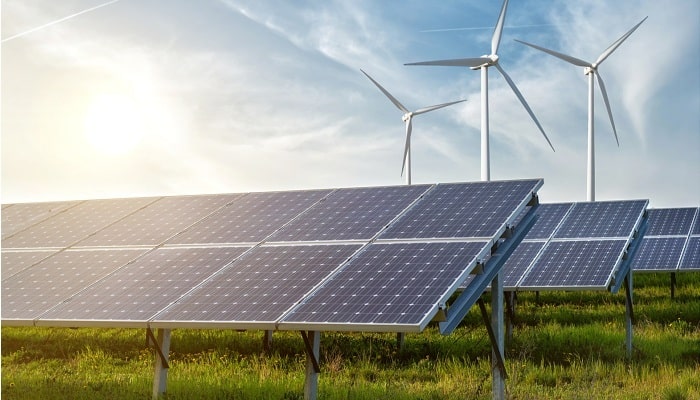
Up to 150 Gigawatt (GW) of wind and solar power projects across the Asia Pacific could be delayed or cancelled over the next five years (2020–24) if the coronavirus-led recession extends beyond 2020.

This is equivalent to pushing back the Asia Pacific renewables construction pipeline by nearly two years, according to research and consultancy firm Wood Mackenzie.

“The extent of the coronavirus impact on Asia Pacific markets is key to the future growth of the renewables sector. Over the last five years (2015 – 2019), the Asia Pacific region accounted for over three-quarters of global power demand growth, while leading the world in wind and solar capacity installations,” Wood Mackenzie research director Alex Whitworth said.

He added the coming months will be crucial to determine if the region is moving towards a rapid recovery or extended recession future. “Key indicators to monitor include power demand growth, credit terms for renewables projects, cost competition between renewables and fossil fuels and government support including stimulus for renewables markets.”

A 2-3 month power demand disruption with strong recovery would lead to 380 Terawatt hour (TWh) of power demand lost in Asia Pacific this year. However, if the coronavirus is not brought under control and markets go into major recession, approximately 1,000 TWh of demand could be lost by 2023. This is equivalent to about two years of growth in the region.

Prior to the virus outbreak, global investors had been active in Asia Pacific renewables projects, offering developers access to cash at competitive rates of interest. However, if the coronavirus outbreak evolves into a financial crisis, funding may be harder to secure, leading to reduced competitiveness of renewables.

“In our base case outlook, the impact on wind and solar installations in 2020 can be offset by stronger growth and support policies in 2021. But if the situation worsens, renewables projects in Developing Asia* could be heavily impacted by increased financing costs, as well as forex risk due to high capex share of costs. A 10% increase in weighted average cost of capital could lead to an 8% increase in levelised cost of electricity (LCOE) in renewables,” Whitworth said.

Another factor determining the competitiveness of renewables is the comparison of the LCOE of renewables vis-a-vis fossil fuels. While generation costs of new solar and wind plants across the Asia Pacific have fallen by 54% and 29% respectively in the last five years, Whitworth said that in a recession scenario with lower fossil fuel prices, renewables would only become competitive with coal-fired power plants in most of the Asia Pacific beyond 2025.

Power Info Today brings together the global energy industry — from generation and transmission operators to utility executives and energy transition leaders — through trusted editorial, market intelligence, and digital engagement.

Our 2026 Media Pack offers integrated solutions to reach your audience:

  • Magazine & Digital Editions Showcase your brand within premium energy industry coverage read by executives and decision - makers worldwide.
  • Industry Insights & Reports Align with data - driven analysis, trend reports, and regional roundups across the global power and energy value chain.
  • Brand Authority & Credibility Position your company as a thought leader through expert commentary, interviews, and special features.

Latest stories

Related stories

Energy Storage Systems Supporting Utility Expansion

The rapid growth of global energy demand is driving a massive scale-up of utility infrastructure, where energy storage systems serve as the critical balancer. By providing essential services like grid stability and seamless renewable integration, these systems are enabling a flexible and reliable expansion of modern power networks.

Vattenfall and Nscale Secure Sustainable AI Infrastructure Power Agreement

In a key development for enterprise leaders focused on...

British Hydropower Association Issues Technical Framework for Pumped Storage Infrastructure

The British Hydropower Association (BHA) has released new pumped...

Nordex Begins Rotor Blade Production Operations in Türkiye

Nordex Group has started operations at its new blade...

Subscribe

- Never miss a story with notifications

- Gain full access to our premium content

- Browse free from any location or device.

Media Packs

Expand Your Reach With Our Customized Solutions Empowering Your Campaigns To Maximize Your Reach & Drive Real Results!

– Access the Media Pack Now

– Book a Conference Call

Leave Message for Us to Get Back

Translate »