

















Case Western Reserve University computer scientists and energy technology experts are teaming up to leverage the diagnostic power of artificial intelligence (AI) to make solar-power plants more efficient.
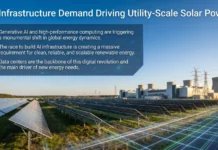
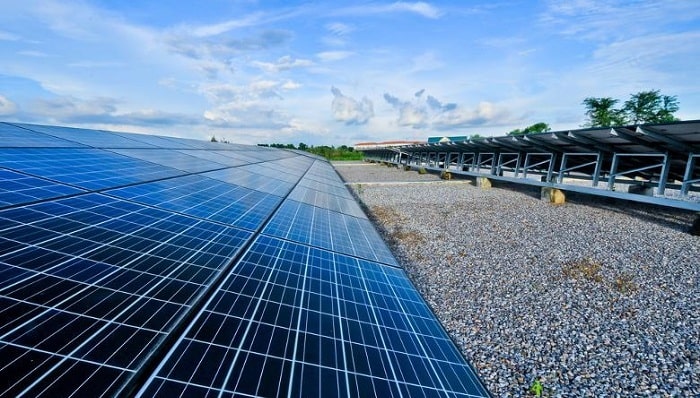
Solar power uses energy from the sun collected by photovoltaic (PV) modules to create clean and renewable energy. Making solar-power plants more efficient will benefit industry and, eventually, consumers, researchers say.
“Solar is now the cheapest form of electricity in the world, but the efficiency of the actual power plants is being analyzed one at a time, and that’s just not tractable, especially for a fast-growing industry,” said Roger French, director of the Solar Durability and Lifetime Extension Research Center and Kyocera Professor of Ceramics, Department of Materials Science and Engineering at the Case School of Engineering. “This project will help us learn where we can make improvements to make solar power even more efficient.”
The work, funded by a three-year, $750,000 grant from the U.S. Department of Energy (DOE), is part of a broad $130 million solar-technologies initiative announced by the DOE in 2020—including $7.3 million specifically for machine-learning solutions and other AI for solar applications.
French and Laura Bruckman, research associate professor in Materials Science and Engineering, are co-leading the project.
Machine learning and shared data
In short, the Case Western Reserve-led project aims to use computers to better analyze data from a large number of neighboring PV systems to help quantify their short- and long-term performance.
Those machine-learning methods will be used to overcome data-quality issues affecting the individual plants. To do that, researchers say they’ll use a “spatiotemporal graph neural network model.”
That spatiotemporal approach means identifying how plants perform differently in space (solar plants in the cold North vs. the hot, dry South, for example) and time (plants built 25 years ago with older technology vs. newly constructed systems), and building a model to improve all the individual PV plants in that group—and future systems.
“Since we don’t have a robot who visits all of the photovoltaic plants to look at their info and identify patterns of similarity between their behaviors, instead we use all of the collected data to act as if we did,” said team member Mehmet Koyutürk, the Andrew R. Jennings Professor of Computer Sciences.
But it also means assessing, comparing and contrasting what has been brand-specific data, Bruckman said.
“Different companies have information about their technology, in their area of the country,” Bruckman said, “but, until now, we haven’t had a chance to be able to gather and analyze all of the data from a wide range of companies and areas.”
Finally, researcher and team member Yinghui Wu, an assistant professor in the Department of Computer and Data Sciences, said the work will not only help the solar industry—and ultimately energy users—but AI researchers as well.
“Every time we build a new system for understanding new data from specific domains, it helps us understand our own science,” said Wu, also a co-investigator on a National Science Foundation-funded project to improve cyber security of large computer networks. “That makes us better for the next time as well, even if it’s not solar power, but something else.”
French said the group will work on gathering and analyzing data this year, then start providing solar-energy companies and individual power plants a “pre-trained computer model” to assess how to improve their own system.
Background: the SETO 2020 program
The Solar Energy Technologies Office Fiscal Year 2020 (SETO 2020) funding program aims to support projects that will “improve the affordability, reliability and value of solar technologies on the national grid and tackle emerging challenges in the solar industry.”
It funds projects ranging from early-stage PV to solar thermal power, as well as emphasizing integrating different technologies and reducing costs for installing solar energy systems.
SETO also encourages the project teams to form partnerships with AI experts and industry representatives, such as solar power plant operators or owners, electric utilities, photovoltaic module manufacturers, and others.
The Case Western Reserve team, for example, will work with SunPower, Canadian Solar, C2 Energy Capital, Brookfield Renewable and Sandia National Laboratories, among other partners.