














Events Date: 9

Clean Power Share of 90% To Be Witnessed By 2035 In Japan

Note* - All images used are for editorial and illustrative purposes only and may not originate from the original news provider or associated company.

Subscribe

- Never miss a story with notifications

- Gain full access to our premium content

- Browse free from any location or device.

Media Packs

Expand Your Reach With Our Customized Solutions Empowering Your Campaigns To Maximize Your Reach & Drive Real Results!

โ€“ Access the Media Pack Now

โ€“ Book a Conference Call

โ€“ Leave Message for Us to Get Back

Related stories

Hydrogen Infrastructure Driving Future Energy Growth

As the world shifts toward a low-carbon economy, hydrogen infrastructure for energy growth is emerging as a critical engine for industrial transformation. Through massive investments in clean fuel production, storage, and transport, hydrogen is poised to unlock new energy markets and provide a sustainable solution for the hardest-to-abate sectors.

Energy Storage Systems Supporting Utility Expansion

The rapid growth of global energy demand is driving a massive scale-up of utility infrastructure, where energy storage systems serve as the critical balancer. By providing essential services like grid stability and seamless renewable integration, these systems are enabling a flexible and reliable expansion of modern power networks.

Smart Energy Infrastructure Improving Grid Efficiency

The digital transformation of the power sector is being led by smart energy infrastructure efficiency, where data-driven insights and automation are redefining grid performance. By integrating digital monitoring and predictive operations, utilities are creating a more responsive, reliable, and efficient energy network for the modern age.
- Advertisement -

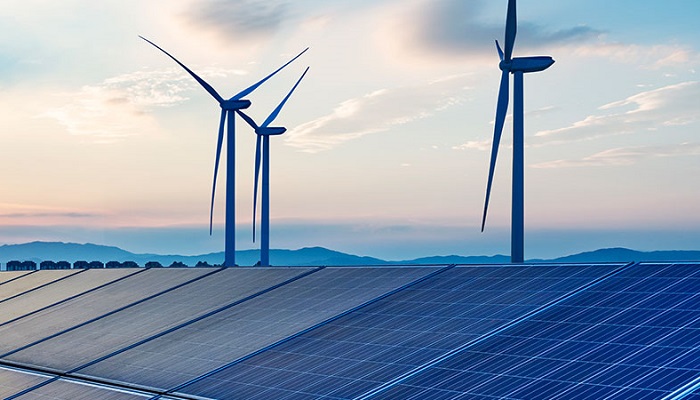
A dip in the cost of solar energy as well as wind and battery storage means that Japan can avail 90% of its power generation from clean electricity by 2035, according to a study by the Lawrence Berkeley National Laboratory, which is backed by the US energy department.

The study also puts forth the fact that Japanโ€™s power grid, which has extra battery storage as well as inter-region transmission lines, can be trusted without coal generation or even new gas-fired power plants.

Notably, the group of seven countries, which includes Japan, committed in 2022 to majorly decarbonize their respective power sectors by 2035 so as to tackle climate change; however, Tokyo is yet to map out a clear pathway towards the goal.

The fact is that resource-poor Japan faces a prominent energy security risk since it imports almost all of the fuel used in its power industry. It is well to note that clean electricity, which is generated from wind, solar, hydrocarbon, biomass, nuclear, and hydrogen sources, accounts for 24% of the total.

As per the study, raising the share to 90% is going to cut the electricity costs as well as power sector emission cost by 6% and 92% respectively from the levels found out in 2020. But it also stated that clear policies like setting the mid-term targets beyond 2030 as well as corresponding renewable deployment targets were essential to take the best out of environmental, economic and energy security benefits.

The research happens to be based on modelling using the recent coal data on batteries and renewables and is consistent with the countryโ€™s G7 commitment as well as 2030 policy objectives. Apparently, Japan is looking to slash greenhouse gas emissions by 46% by 2030 vis-ร -vis 2013 levels by pushing up renewable energy in its electricity mix to somewhere between 26% and 38%, double the 2019 levels, and also adding nuclear power to 20% and 22% from 6% in 2019. Japan, which happens to be the worldโ€™s fifth highest emitter looks to achieve neutrality in carbon by 2050.

With the least mix of generation, under the scenario, renewable power that includes floating offshore wind, storage, and transmission would account for 70% of the electricity mix by 2035, with gas-fired power as well as nuclear power accounting for 10% and 25%, respectively, as the existing coal power plants get phased out, as per the study.

Power Info Today brings together the global energy industry โ€” from generation and transmission operators to utility executives and energy transition leaders โ€” through trusted editorial, market intelligence, and digital engagement.

Our 2026 Media Pack offers integrated solutions to reach your audience:

  • Magazine & Digital Editions Showcase your brand within premium energy industry coverage read by executives and decision - makers worldwide.
  • Industry Insights & Reports Align with data - driven analysis, trend reports, and regional roundups across the global power and energy value chain.
  • Brand Authority & Credibility Position your company as a thought leader through expert commentary, interviews, and special features.

Latest stories

Related stories

Hydrogen Infrastructure Driving Future Energy Growth

As the world shifts toward a low-carbon economy, hydrogen infrastructure for energy growth is emerging as a critical engine for industrial transformation. Through massive investments in clean fuel production, storage, and transport, hydrogen is poised to unlock new energy markets and provide a sustainable solution for the hardest-to-abate sectors.

Energy Storage Systems Supporting Utility Expansion

The rapid growth of global energy demand is driving a massive scale-up of utility infrastructure, where energy storage systems serve as the critical balancer. By providing essential services like grid stability and seamless renewable integration, these systems are enabling a flexible and reliable expansion of modern power networks.

Smart Energy Infrastructure Improving Grid Efficiency

The digital transformation of the power sector is being led by smart energy infrastructure efficiency, where data-driven insights and automation are redefining grid performance. By integrating digital monitoring and predictive operations, utilities are creating a more responsive, reliable, and efficient energy network for the modern age.

Grid Modernization Driving Energy Infrastructure

Modern energy systems are undergoing a radical transformation as grid modernization becomes the cornerstone of infrastructure resilience. By integrating advanced digital monitoring, transmission upgrades, and smart grid technologies, utility providers are building a foundation for a reliable and decarbonized future.

Subscribe

- Never miss a story with notifications

- Gain full access to our premium content

- Browse free from any location or device.

Media Packs

Expand Your Reach With Our Customized Solutions Empowering Your Campaigns To Maximize Your Reach & Drive Real Results!

โ€“ Access the Media Pack Now

โ€“ Book a Conference Call

โ€“ Leave Message for Us to Get Back

Translate ยป