
































The landscape of power electronics has undergone a paradigm shift over the last decade, transitioning from traditional analog control schemes to sophisticated digital architectures. While analog circuits served the industry well for decades, offering simplicity and fast response times, they lack the flexibility and precision required by today’s complex energy ecosystems. Digital control systems power electronics have emerged as the dominant solution, providing the intelligence needed to manage high-speed switching, multi-level conversion, and real-time optimization. This digital revolution is enabling a new generation of power converters that are more efficient, reliable, and capable of seamless integration into the burgeoning smart grid and electric vehicle infrastructures.
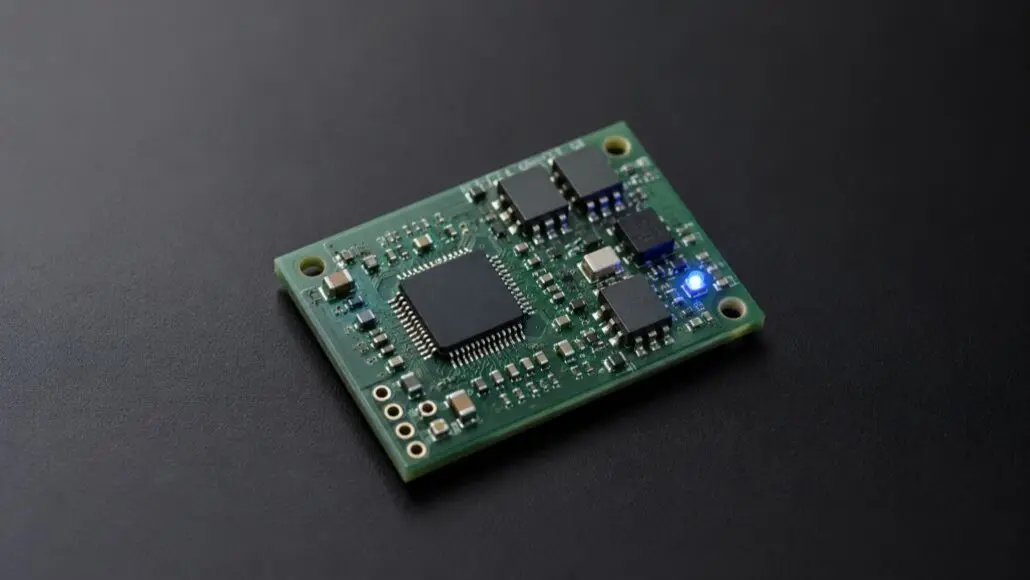
At its core, a digital control system replaces the fixed resistors and capacitors of an analog control loop with high-speed processors and programmable software. This shift allows for the implementation of advanced control algorithms that can adapt to changing load conditions and system parameters on the fly. Whether it is a Microcontroller (MCU), a Digital Signal Processor (DSP), or a Field Programmable Gate Array (FPGA), these digital “brains” process data from sensors at incredible speeds, making millions of decisions per second to ensure that the power conversion process remains stable and efficient. This level of granularity in control is essential for managing the sensitive dynamics of modern wide bandgap semiconductors, which operate at frequencies far beyond the reach of traditional analog systems.
The Architecture of Digital Precision
The heart of any digital control system is the feedback loop. In power electronics, this involves sampling voltage and current levels at various points in the circuit and comparing them to a desired reference value. In a digital system, these samples are converted into digital data using high-speed Analog-to-Digital Converters (ADCs). The processor then applies complex mathematical models such as Proportional-Integral-Derivative (PID) control or Model Predictive Control (MPC) to calculate the necessary adjustments. These adjustments are then sent back to the power devices via Pulse Width Modulation (PWM) signals. The beauty of the digital approach is that these control parameters can be tuned via software without ever needing to change a physical component, allowing for a level of customization and “field-upgradability” that was previously unthinkable.
Furthermore, the use of FPGAs in digital control systems power electronics has opened up new possibilities for high-frequency applications. FPGAs provide a hardware-programmable fabric that can execute many control tasks in parallel, offering deterministic response times and extremely low latency. This is particularly valuable in multi-phase motor drives and large-scale solar inverters, where dozens of switching signals must be perfectly synchronized to minimize harmonic distortion and maximize energy throughput. By offloading time-critical tasks to the FPGA, the system can achieve a level of precision that ensures long-term component health and superior energy quality.
Real-Time Monitoring and Diagnostic Intelligence
One of the most significant advantages of moving to a digital platform is the inherent ability for real-time monitoring. Every digital controller is, by definition, a data collector. By constantly tracking parameters like temperature, current ripples, and duty cycles, these systems can provide a detailed “health report” of the power electronics at any given moment. This data is not just useful for immediate control; it is the foundation for predictive maintenance and advanced diagnostics. If a component begins to drift out of its normal operating range, the digital controller can detect the anomaly and either adjust the operating conditions to mitigate stress or signal the need for a service check before a failure occurs.
In smart energy systems, this monitoring capability extends beyond the individual device to the entire network. Digital control systems can communicate with each other over industrial protocols or wireless networks, forming a coordinated web of power conversion. For instance, in a microgrid environment, multiple inverters can “talk” to each other to balance loads and maintain grid stability without the need for a centralized controller. this decentralized intelligence is a key enabler for the widespread adoption of intermittent renewable energy sources like wind and solar, as it allows the grid to respond dynamically to fluctuations in generation and demand.
Software-Defined Power: Flexibility and Optimization
The concept of “Software-Defined Power” is becoming a reality thanks to the maturity of digital control software. Modern power converters can now support multiple operating modes through simple firmware updates. For example, a single hardware design could be configured as a battery charger, a grid-tie inverter, or a motor controller just by changing the control algorithms. This flexibility drastically reduces development time and costs for manufacturers, as they can leverage a common hardware platform across a wide range of products. It also allows for continuous improvement; as new optimization techniques are developed, they can be deployed to existing hardware in the field, ensuring that the energy system always operates at the cutting edge of efficiency.
Advanced algorithms like “Maximum Power Point Tracking” (MPPT) for solar panels or “Space Vector Modulation” (SVM) for motor drives have been vastly improved by digital processing. These techniques require complex trigonometric calculations and iterative searching, which are trivial for a modern DSP but nearly impossible for analog circuitry. By squeezing every possible milliwatt of efficiency out of the system, digital control systems power electronics are directly contributing to the economic viability of green energy technologies. The ability to optimize for multiple goals simultaneously such as maximizing efficiency while minimizing thermal stress is perhaps the greatest gift that the digital revolution has brought to the field of power electronics.
Security and Resilience in a Connected World
As power electronics become increasingly digitized and connected, the issue of cybersecurity has moved to the forefront. A digital controller that is part of a smart grid is a potential target for cyberattacks, making robust security protocols a mandatory part of the design process. Modern digital control systems now incorporate encrypted communication, secure boot processes, and hardware-level isolation to protect the integrity of the power system. Ensuring the resilience of these systems is not just about electrical stability; it is about protecting the critical infrastructure that our society depends on.
Moreover, the digital nature of these controllers allows for more sophisticated “fault-ride-through” capabilities. In the event of a grid disturbance, a digitally controlled inverter can precisely adjust its output to help stabilize the network rather than simply shutting down. This proactive participation in grid management is essential for maintaining a reliable supply of electricity as we move away from traditional synchronous generators toward an inverter-based grid. Digital control systems power electronics are the bridge between the physical world of high-voltage electricity and the virtual world of high-speed data, providing the intelligence and security required for a sustainable future.