




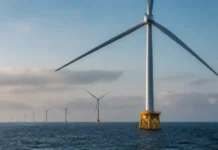

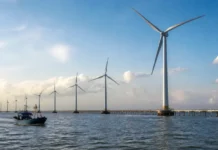
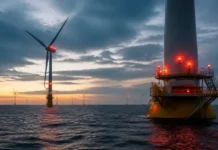











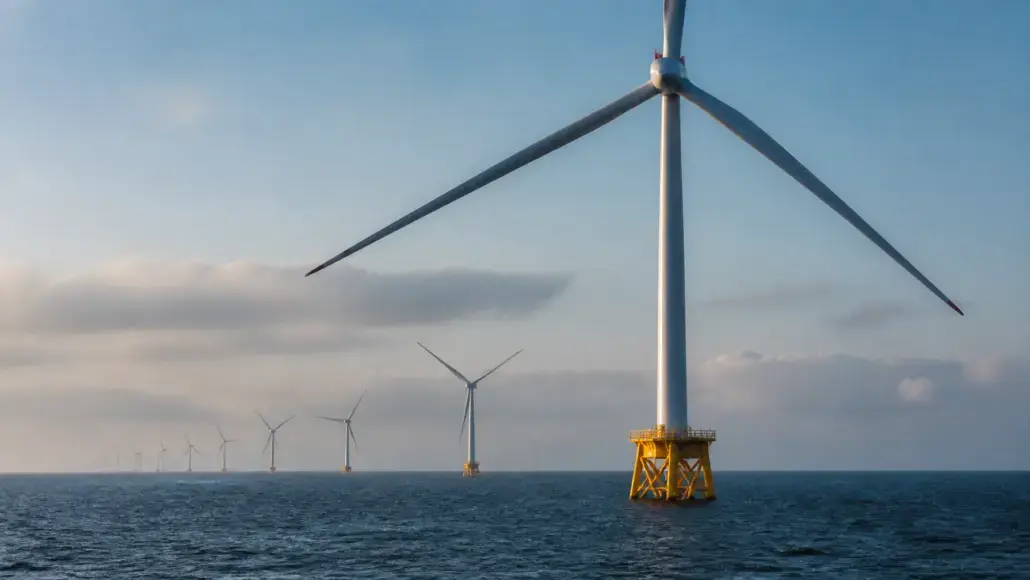

Offshore wind has entered a scale of machine building that the industry could barely sketch a decade ago. In January 2026, the world’s first 20 MW offshore turbine was installed in Chinese waters, a machine with a rotor diameter of roughly 300 meters and blades stretching 147 meters from hub to tip. Dongfang Electric has since unveiled a 26 MW offshore platform described as the largest single-unit capacity and rotor diameter in commercial development, while Mingyang’s MySE series has pushed rotors beyond 310 meters with designs engineered specifically for typhoon-exposed seas. In Europe, the Vestas V236-15.0 MW and Siemens Gamesa SG 14-236 DD have established the 15 MW class as the current reference point for Western offshore projects.
These machines are not incremental updates. Ultra-large wind turbines represent a step change in how capacity is generated, transported, installed and monetized, because every subsystem, from the main bearing to the export cable, has been redesigned around a rotor that sweeps an area comparable to tens of football fields. For developers, the appeal is straightforward: fewer positions, fewer foundations and fewer cable runs for the same or greater total output, which compresses both capital expenditure and lifetime operations cost. For manufacturers, the challenge is that every megawatt added at this scale multiplies structural loads, casting weights and factory tolerances in ways that test the limits of existing supply chains.
Rotor Scale as the Foundation of Multi-Megawatt Ratings
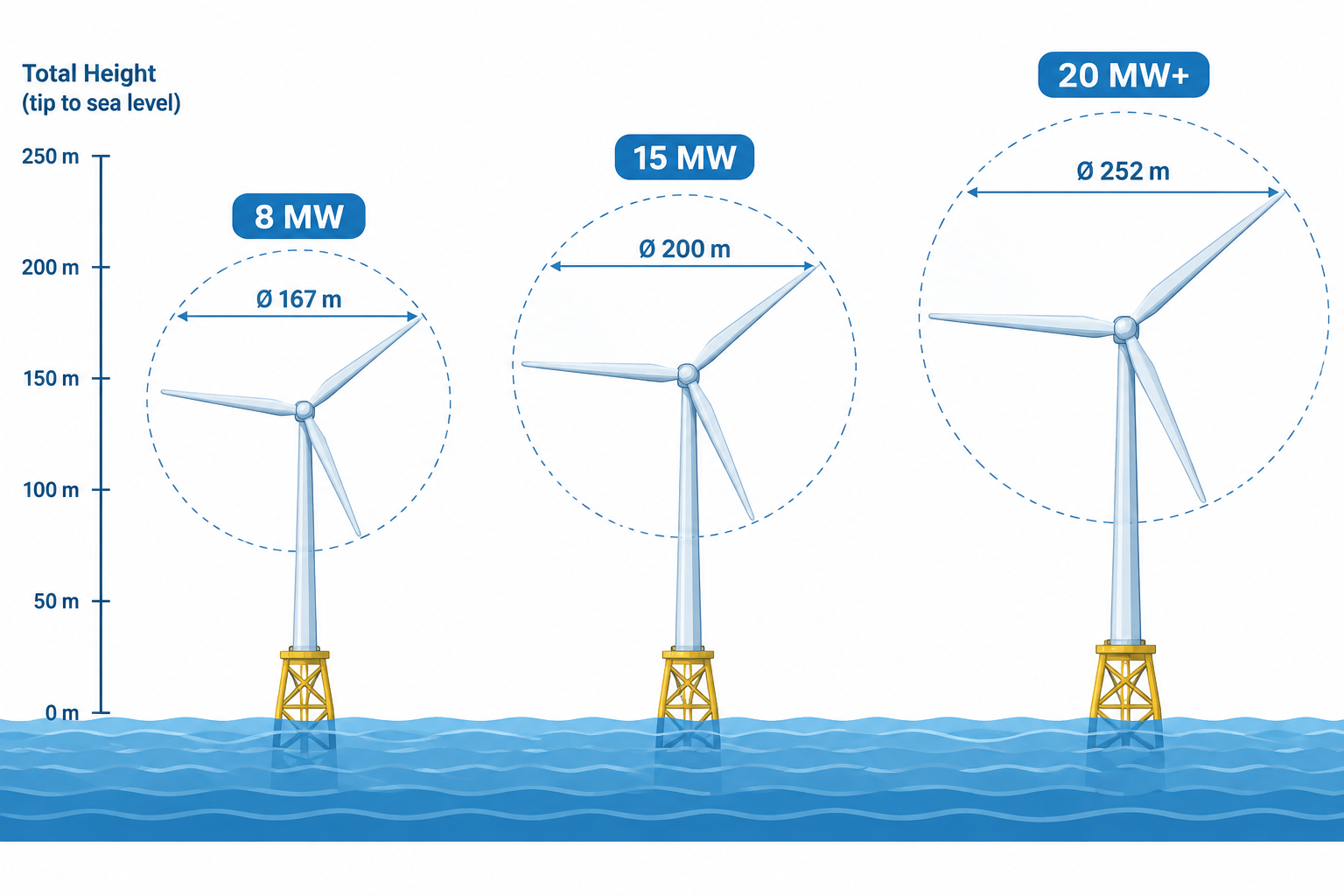
The physics behind the capacity race is unforgiving and well understood. Available power scales with the square of rotor radius, which means each additional meter of blade length contributes disproportionately to energy capture. A 300-meter rotor sweeps approximately 70,000 square meters, and at a good offshore wind site a single such machine can produce more than 80 GWh per year, enough to power tens of thousands of households from one foundation. Swept area, not nacelle volume, is the true currency of turbine value, and that is why designers have pursued longer blades even when it demands heavier spars, new carbon fiber compositions and more generous tip clearances.
Rated capacity alone, however, tells only part of the story. Two turbines with identical megawatt ratings can deliver materially different annual energy production if their rotors differ in diameter, their specific power ratings differ, or their control systems manage partial-load operation differently. Developers increasingly evaluate machines on specific power (watts per square meter of swept area) and capacity factor rather than nameplate capacity, because a lower specific power rotor extracts more energy across the broad middle of the wind speed distribution where offshore sites spend most of their operating hours. The result is that modern ultra-large wind turbines are often deliberately undersized in generator terms relative to their rotors, prioritizing hours of full output over headline ratings.
The 20 Megawatt Threshold and What It Changed
Crossing the 20 MW mark carried symbolic and practical weight. Practically, it validated a series of engineering bets: permanent magnet direct-drive and medium-speed drivetrains at torques exceeding 250 MNm, cast main frames weighing several hundred tonnes, and blade designs in which the root section alone approaches the diameter of many onshore rotors. It also confirmed that installation logistics could keep pace. The tallest cranes and jack-up vessels on the market have evolved in parallel, with lifting capacities now exceeding 3,000 tonnes so that complete nacelles for 20 MW machines can be raised more than 150 meters above the sea surface in a single lift.
The threshold also changed procurement behavior. Turbine supply agreements written for projects reaching final investment decision in the late 2020s increasingly specify machines in the 15 to 20 MW band, and some Asian tenders explicitly encourage platforms above that line. Standards bodies have responded as well, updating design load assumptions for extreme offshore conditions as the industry gains operating data from prototype sites. Each gigawatt of experience logged by early 20 MW units feeds directly into certification pathways for the next generation.
Prototype economics play into this acceleration as well. Manufacturers accept slim margins on early 20 MW units in exchange for operating data and reference sites, a pattern that has historically priced the first machines high and the following series substantially lower. Projects reaching construction in the late 2020s will therefore benefit from pricing that reflects serial production rather than first-of-a-kind risk, improving bid competitiveness in auctions where every increment per megawatt-hour counts.
Manufacturing, Logistics and Installation Constraints
Scaling is not free, and the constraint set at 20 MW and above is as much industrial as aerodynamic. Several bottlenecks now dominate production planning:
- Blade manufacturing lines must handle molds above 145 meters, requiring longer autoclaves, faster infusion cycles and inspection methods capable of scanning laminate quality across hundreds of square meters.
- Main frame castings and forged shafts exceed the capacity of many foundries, forcing manufacturers to qualify new casting partners or redesign components as welded fabrications.
- Port infrastructure has become a genuine bottleneck, since marshalling harbors need quays rated for heavy nacelle loads, laydown space measured in hectares per turbine, and channel depths sufficient for the newest generation of installation vessels.
- Monopile foundations for larger rotors now exceed 10 meters in diameter and 2,500 tonnes in weight, pressing fabricators and pile-driving contractors into new equipment investments.
- Transport of towers and blades demands specialized vessels and road convoys, and in some markets rail gauges and bridge clearances effectively cap component length regardless of what the factory can produce.
These constraints explain why the jump from 15 to 20 MW took years of parallel investment across at least five industrial sectors. A turbine design succeeds only when its entire delivery chain, from steel plate to final commissioning, can execute at volume. Manufacturers who control or partner across that chain hold a decisive cost advantage, which is one reason the ultra-large segment has concentrated among vertically integrated groups with deep domestic supply networks.
Grid Integration and Project Economics
Larger machines change the electrical character of offshore plants as much as their mechanical design. A 20 MW turbine feeds its full output through converters and export systems sized for intermittent swings that are larger per position than anything previously grid-connected at scale. Grid codes in Europe and Asia increasingly require fault ride-through, reactive power support and curtailment responsiveness from each unit, and manufacturers have responded with converter topologies and control software tuned for high-inertia, low-specific-power rotors. On the economics side, the balance sheet is compelling: levelized cost analyses consistently show that raising machine rating from 12 to 20 MW reduces the number of foundations, array cables and offshore substations per gigawatt, offsets that generally outweigh the higher unit cost of the turbines themselves.
The financial model, however, is sensitive to reliability assumptions. With so much capacity concentrated in single positions, an unplanned outage on one machine carries roughly the revenue loss of an entire small wind farm from the early 2010s. Developers therefore weigh warranty structures, availability guarantees and condition-monitoring provisions as heavily as headline price. Insurers, too, are recalibrating risk exposure as single-asset values rise into the tens of millions of dollars. The industry’s response has been a rapid professionalization of digital monitoring, in which every large rotor is instrumented from commissioning to catch faults long before they become outages.
Procurement patterns reflect these trade-offs. Utilities and offshore developers planning gigawatt-scale buildouts now model ultra-large wind turbines as infrastructure assets rather than commodity purchases, weighing the reduction in foundations, array cables and installation days against the concentrated revenue risk of fewer positions. The calculation favors scale in most mature markets, because each avoided monopile saves months of vessel time and each avoided cable run removes both capital cost and the electrical losses that accumulate along hundreds of kilometers of subsea infrastructure.
The Road Toward 26 Megawatts and Beyond
Dongfang’s 26 MW platform and Mingyang’s ongoing prototype program indicate that the capacity ceiling has not yet been reached. Chinese manufacturers benefit from a domestic supply chain that casts, forges and laminates most components within a single country, and from installation fleets purpose-built for extreme-scale machines. European and American OEMs, constrained by more fragmented logistics and tighter certification regimes, are pursuing a parallel path: refining the 15 MW class for reliability and serial production while investing in next-generation drivetrains and blades for the early 2030s.
Supporting structures are evolving in step with the machines themselves, and advanced tower engineering now allows hub heights tall enough to keep blade tips clear of the water even in extreme wave climates, a precondition for rotors of 300 meters and more. Floating foundations add another dimension, since platforms designed around 20 MW turbines concentrate more power per floater and reduce the number of mooring systems and dynamic cables a floating project requires.
Standardization is the quieter story behind these announcements. Certification frameworks, installation procedures and port designs built around 20 MW reference machines lower the marginal cost of every subsequent rating increase, and component suppliers commit to capacity once they can see a multi-year order pipeline. The same dynamic shaped the 15 MW class, and it suggests that capacity records, once set, tend to become production reality within a handful of tender cycles.
The direction of travel is consistent across every market: fewer, larger, smarter machines. For the power sector, ultra-large wind turbines have moved from engineering showcase to procurement baseline, and the projects that will define offshore wind’s next decade are being designed today around rotors that would have been dismissed as science fiction when the first offshore arrays were built.