
















Events Date: 9

China Is All Set For Dominating Global Renewable Markets

Note* - All images used are for editorial and illustrative purposes only and may not originate from the original news provider or associated company.

Subscribe

- Never miss a story with notifications

- Gain full access to our premium content

- Browse free from any location or device.

Media Packs

Expand Your Reach With Our Customized Solutions Empowering Your Campaigns To Maximize Your Reach & Drive Real Results!

– Access the Media Pack Now

– Book a Conference Call

Leave Message for Us to Get Back

Related stories

Ergonomics Improving Efficiency in Transmission Worksites

Optimizing the physical interaction between utility professionals and their environment, ergonomics transmission worksites initiatives are proving that worker comfort is a primary engine of operational speed. By refining tool design and harness mechanics, the power sector is reducing physical strain and fatigue, allowing crews to maintain peak performance throughout the demanding lifecycle of infrastructure projects.

Data Driven Insights Transforming Safety in Power Grids

Revolutionizing the management of risk in the energy sector, data driven safety power grids initiatives are turning vast streams of information into actionable protection strategies. By analyzing patterns of maintenance, environmental conditions, and worker behavior, utility providers are now able to predict hazards before they manifest, creating a more transparent and responsive safety environment for the modern electrical infrastructure.

Building Safety Culture Across Power Transmission Teams

Strengthening the human foundation of our energy networks, safety culture power transmission teams initiatives are moving beyond compliance to a deep-seated commitment to mutual protection. By fostering open communication, leadership accountability, and peer-to-peer engagement, utility organizations are creating an environment where every individual feels empowered to prioritize safety as a core personal and professional value.
- Advertisement -

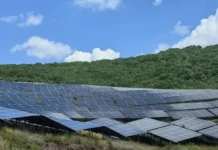
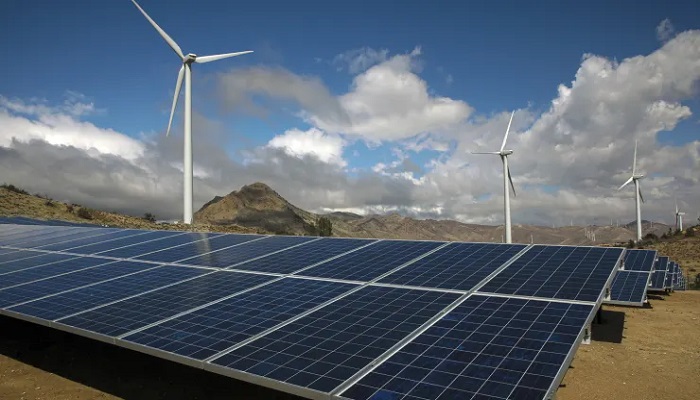
As per insights, China is poised to double its renewable energy capacity and generate 1,200 gigawatts of power through wind and solar sources by 2025, achieving its 2030 target five years ahead of schedule. The country’s utility-scale solar capacity has already reached an impressive 228 gigawatts by the first quarter of the year, surpassing the combined solar capacity of the rest of the world. These installations are primarily concentrated in the northern and north-western provinces of Shanxi, Xinjiang, and Hebei.

In addition, these insights highlight the ongoing construction of solar farms that could potentially contribute an additional 379 gigawatts in capacity, which is three times that of the US and nearly twice that of Europe. China has also made significant advancements in wind capacity, with its combined onshore and offshore wind capacity now surpassing 310 gigawatts, twice the level it had in 2017 and roughly equivalent to the combined capacity of the next top seven countries. With forthcoming projects in regions like Inner Mongolia, Xinjiang, Gansu, and coastal areas, China is on track to add another 371 gigawatts of wind capacity before 2025, increasing the global wind fleet by almost half.

The invaluable nature of this detailed data has been underscored for understanding China’s impressive expansion in solar and wind energy capacity. These findings align with previous ones and government data that suggested China could easily surpass its target of sourcing a third of its power from renewables by 2030.

China’s push for green energy is part of its broader efforts to achieve dual carbon goals set in 2020. As the world’s second-largest economy and the largest emitter of greenhouse gases, accounting for half of global coal consumption, China’s President Xi Jinping committed in 2020 to achieving peak CO2 emissions before 2030 and carbon neutrality by 2060.

The remarkable strides in non-fossil energy growth in China are attributed to a range of governmental policies, including substantial subsidies to incentivize developers, along with regulations that exert pressure on local governments and energy companies. China recently commenced the operation of the world’s largest hybrid solar-hydro power plant, named Kela, in the Tibetan plateau. This initial phase can produce 2 billion kW hours of electricity annually, equivalent to powering over 700,000 households. This plant represents only the beginning of a substantial clean energy initiative in the Yalong River basin, expected to reach around 50 gigawatts of capacity by 2030.

However, China’s transition to green energy is not without hurdles. Recent heatwaves and droughts have disrupted hydropower stations, leading to power shortages and factory shutdowns. An outdated electricity grid and challenges in transferring energy between regions add further complexity. The western regions of the country, where the majority of coal, wind, and solar power is generated, are less populated than the energy-consuming eastern regions, leading to inefficiencies in energy transport. The existing grid structure can incentivize coal plant construction near renewable sources, as much of the new renewable capacity remains disconnected from the local energy supply and often bundled with coal power for transmission to high-demand areas.

Despite the progress, coal’s dominant position as the primary power source necessitates more robust advancements in energy storage and green technologies for a secure energy future.

Latest stories

Related stories

Ergonomics Improving Efficiency in Transmission Worksites

Optimizing the physical interaction between utility professionals and their environment, ergonomics transmission worksites initiatives are proving that worker comfort is a primary engine of operational speed. By refining tool design and harness mechanics, the power sector is reducing physical strain and fatigue, allowing crews to maintain peak performance throughout the demanding lifecycle of infrastructure projects.

Data Driven Insights Transforming Safety in Power Grids

Revolutionizing the management of risk in the energy sector, data driven safety power grids initiatives are turning vast streams of information into actionable protection strategies. By analyzing patterns of maintenance, environmental conditions, and worker behavior, utility providers are now able to predict hazards before they manifest, creating a more transparent and responsive safety environment for the modern electrical infrastructure.

Building Safety Culture Across Power Transmission Teams

Strengthening the human foundation of our energy networks, safety culture power transmission teams initiatives are moving beyond compliance to a deep-seated commitment to mutual protection. By fostering open communication, leadership accountability, and peer-to-peer engagement, utility organizations are creating an environment where every individual feels empowered to prioritize safety as a core personal and professional value.

Human Factors Shaping Safety in Power Transmission Work

Understanding the cognitive and psychological drivers of performance, human factors power transmission safety initiatives are refining the interface between the worker and the high-voltage environment. By addressing issues like cognitive load, decision-making biases, and fatigue, the energy sector is moving beyond physical protection to a sophisticated model of error prevention that acknowledges the inherent limitations and strengths of the human mind.

Subscribe

- Never miss a story with notifications

- Gain full access to our premium content

- Browse free from any location or device.

Media Packs

Expand Your Reach With Our Customized Solutions Empowering Your Campaigns To Maximize Your Reach & Drive Real Results!

– Access the Media Pack Now

– Book a Conference Call

Leave Message for Us to Get Back

Translate »