




















Close
MCE 2026
World Hydrogen & Carbon Americas

World’s Largest Utility-Scale Battery Energy Storage System Now Online

Note* - All images used are for editorial and illustrative purposes only and may not originate from the original news provider or associated company.

Subscribe

- Never miss a story with notifications

- Gain full access to our premium content

- Browse free from any location or device.

Media Packs

Expand Your Reach With Our Customized Solutions Empowering Your Campaigns To Maximize Your Reach & Drive Real Results!

– Access the Media Pack Now

– Book a Conference Call

Leave Message for Us to Get Back

Related stories

India’s Clean Energy Expansion: Unlocking Sustainable Growth with Biomass Power

As India accelerates its transition away from fossil fuels,...

Renewsys Reel-Format Encapsulants Launched for Solar Modules

With the launch of Conserv Augmensheet sheet encapsulant, which...

Scatec Egypt Solar-Plus-Storage PPA Marks Major Milestone

Scatec ASA has signed a long-term power purchase agreement...
- Advertisement -

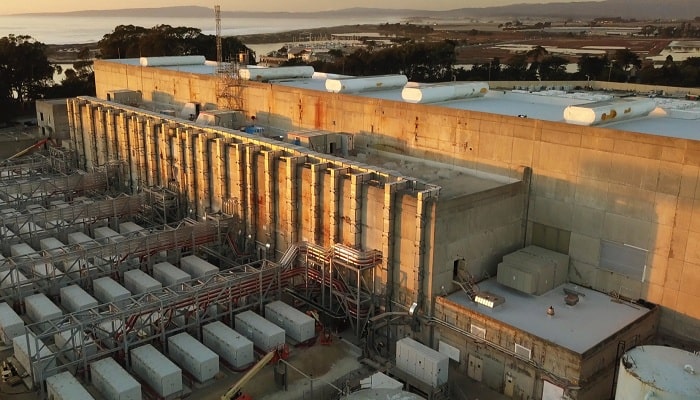
The Moss Landing Energy Storage Facility, the world’s largest utility-scale battery energy storage system, is now online. The 300 megawatts/1,200 megawatt-hours lithium-ion battery storage system is located on-site at Vistra’s Moss Landing Power Plant in Monterey County, California. Construction is already underway on Phase II, which will add an additional 100 MW/400 MWh to the facility by August 2021, bringing its total capacity to 400 MW/1,600 MWh.

Vistra, a power generation company that handled the project, says that, as the country transitions to a clean energy future, batteries will play a pivotal role and this project will serve as the model for utility-scale battery storage for years to come.

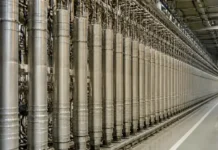
Phase 1 is housed inside the power plant’s refurbished former turbine building and spans the length of nearly three football fields. The system is made up of more than 4,500 stacked battery racks or cabinets, each containing 22 individual battery modules, which capture excess electricity from the grid, largely during high solar-output hours, and can release the power when energy demand is at its highest and solar electricity is declining, usually early morning and late afternoon.

Phases I and II of the Vistra Moss Landing Energy Storage Facility are backed up by long-term resource adequacy contracts with Pacific Gas and Electric Company (PG&E).

Latest stories

Related stories

India’s Clean Energy Expansion: Unlocking Sustainable Growth with Biomass Power

As India accelerates its transition away from fossil fuels,...

Renewsys Reel-Format Encapsulants Launched for Solar Modules

With the launch of Conserv Augmensheet sheet encapsulant, which...

Scatec Egypt Solar-Plus-Storage PPA Marks Major Milestone

Scatec ASA has signed a long-term power purchase agreement...

Risk Management Strategies in Emerging Low-Carbon Power Investments

Comprehensive framework for identifying, quantifying and mitigating risks across technology, market, regulatory and operational domains in hydrogen, carbon capture and renewable hybrid power investments.

Subscribe

- Never miss a story with notifications

- Gain full access to our premium content

- Browse free from any location or device.

Media Packs

Expand Your Reach With Our Customized Solutions Empowering Your Campaigns To Maximize Your Reach & Drive Real Results!

– Access the Media Pack Now

– Book a Conference Call

Leave Message for Us to Get Back

Translate »