




















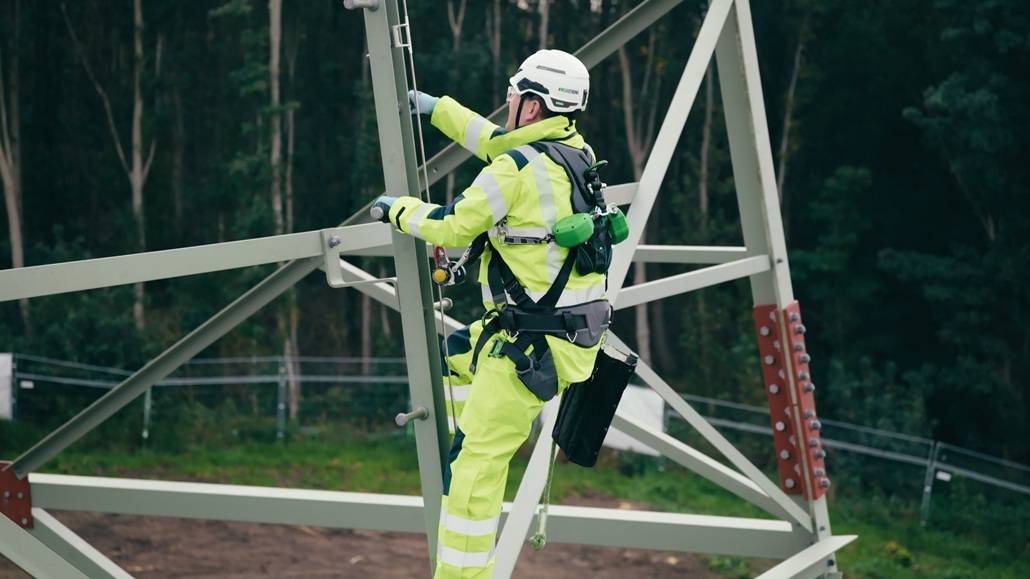
Working at height is a daily reality in the power transmission sector, where inspections, maintenance, and grid expansion require workers to be on towers and structures with inherent fall risks. This whitepaper explores how engineered fall protection systems can go beyond regulatory compliance to actively shape safer behaviours, stronger confidence, and a more resilient safety culture.
Focusing on human factors such as fatigue, decision-making, and trust, the paper examines the limitations of traditional, manual fall protection methods and the cognitive and physical burden they place on workers. It highlights how hands‑free, continuously guided systems, such as permanent vertical lifelines, reduce repeated attachment actions, minimise reliance on individual judgement, and allow workers to maintain situational awareness while climbing and working at height.
Through practical insights and real‑world examples from power transmission environments, the whitepaper demonstrates how engineered fall protection can standardise safe behaviour across diverse workforces, support productivity, and contribute to long term asset integrity. Designed for safety leaders, engineers, and decision‑makers, it reframes fall protection as a cultural tool, one that embeds safety into everyday work and makes the safest choice the easiest one.