





![Infographic about NextFloat Project securing EIA approval for a Mediterranean offshore test site, listing milestones and an 8.5 MW deployment.]](https://www.powerinfotoday.com/wp-content/uploads/2026/07/nextfloat-project-218x150.webp "NextFloat Project Secures EIA Approval for Mediterranean Test Site")












The Unlock American Energy and Jobs Act of 2026 ushered in a new era of natural gas permitting. With the approval process accelerating and government monitoring increasing, developers and operators are under more pressure to keep their projects moving while also staying in line with ever-changing regulatory standards.
In this context, corporations are not looking for consultants to do paperwork. They require experienced practitioners who know how to navigate the permitting process and help mitigate the risk of costly delays that might stall pipeline construction and other important energy infrastructure projects.
Understanding the 2026 Regulatory Overhaul
The natural gas industry expects a much different licensing environment in 2026 with the passage of the Unlock American Energy and Jobs Act. The act was meant to curb federal permission delays by setting more rigid review schedules, cutting out open-ended delays and fast-tracking applications related to key energy infrastructure projects. More than $1 trillion in infrastructure projects are stalled in federal licensing processes, leading to an estimated $2.4 trillion in lost economic activity, according to Senator Dave McCormick’s office.
The reforms are happening at a time when developers, pipeline operators and liquefied natural gas (LNG) stakeholders are facing increased pressure to boost local energy production to meet rising electrical demand and to capitalize on worldwide export potential. Industry groups have also stated that uncertainty in permitting processes hinders investment, with roughly 51% of manufacturers saying permitting time frames make them cautious about expanding operations in the U.S. Another 66% said they would invest more money if the approval process were speedier and more predictable.
Fast-Tracking Pipeline Construction
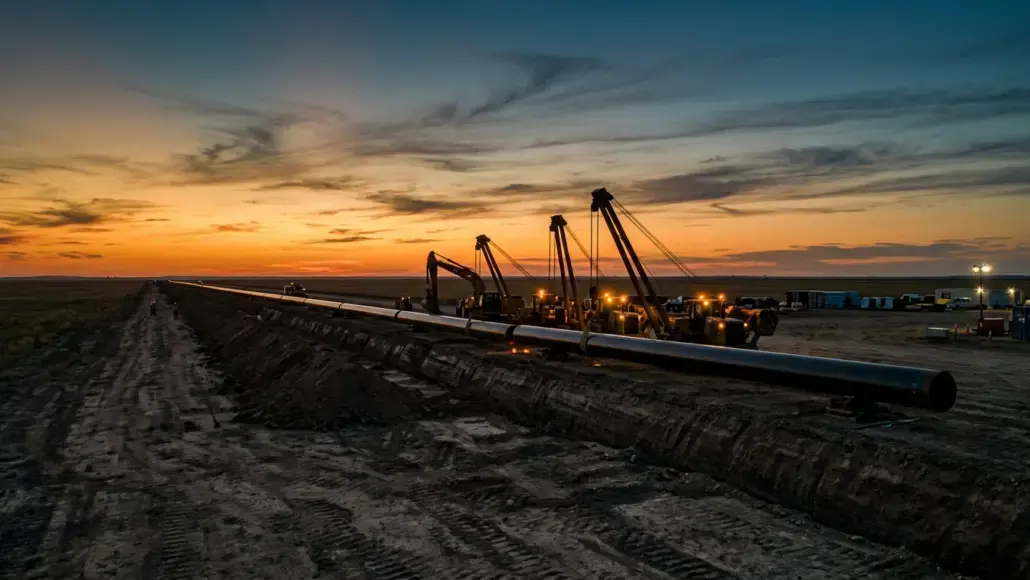
The biggest change is tougher government timetables for permitting processes connected to pipeline expansion and associated infrastructure. The measure is designed to cut down on the number of projects that are bogged down for years due to overlapping assessments or sluggish agency decisions. It also addresses delays in Section 401 water quality certifications by setting tighter time frames for state evaluations and requiring more detailed justifications for permit rejections.
For natural gas operators, reducing review windows could increase project predictability and reduce cost escalation due to protracted delays. This is especially crucial, as infrastructure costs can increase by 24% to 30% when projects are delayed due to permitting or litigation.
Streamlining LNG Exports
LNG exports are also a major emphasis of the reform plan. Existing licensing processes for LNG shipments to non-free-trade-agreement countries have often included long federal reviews and other regulatory reviews. The new approach aims to streamline parts of that process while minimizing the uncertainty around export licenses.
That may open new opportunities for LNG developers seeking to advance projects more effectively, as global demand for U.S. natural gas remains robust. At the same time, developers still require experienced permitting professionals who understand the overlap among federal, state and municipal regulations for complex export and terminal projects.
Curbing Litigation and Regulatory Delays
Another significant part of the reform is to reduce litigation-induced delays that can hinder infrastructure projects for years after their evaluations are finished. Federal authorities and industry parties have said permitting issues and repeated challenges have made for an increasingly unstable development environment.
The new strategy is intended to provide more durable approvals and to reduce duplicative reviews and procedural slowdowns. Still, even with expedited timescales, the permitting procedure is exceedingly technical. Companies still need practitioners with multi-jurisdictional permit experience, agency coordination skills and a strong awareness of shifting regulatory expectations to prevent costly failures.
The High Stakes of an Accelerated Timeline: Key Risks to Avoid
The 2026 permitting amendments are intended to help eliminate bottlenecks, but expedited schedules can also strain project teams. Faster approvals do not mean less regulation, and even small mistakes can lead to obstacles that hold up construction and invite legal review later in the process. Therefore, timely execution in compliance demands meticulous coordination across all stages of approval and evaluation.
Some of the biggest risks include:
- Incomplete environmental reviews: Tight timelines can increase the risk of missing documentation, incomplete impact assessments or gaps in supporting data. These issues may later result in permit challenges, supplemental reviews or litigation that slows project momentum.
- Mismanaging multi-agency approvals: Natural gas projects often require coordination between federal, state and local agencies, each with different review processes and deadlines. Without strong permitting oversight, conflicting requirements or missed submissions can create avoidable complications.
- Unexpected project delays: A faster permitting structure does not guarantee faster construction. A single compliance issue, stakeholder dispute or procedural error can still pause development and create ripple effects across project schedules.
- Increased pressure on internal teams: Many operators are navigating compressed timelines while also managing workforce shortages and evolving regulatory expectations. Experienced permitting practitioners can help reduce that burden by improving coordination and identifying risks early in the process.
- Greater scrutiny on documentation quality: As permitting windows narrow, agencies may place greater emphasis on clear, well-supported submissions that can withstand legal and regulatory review without requiring multiple revisions.
What Defines a Top Tier Permitting Partner?
As permission time frames get tighter, natural gas producers require more than just basic regulatory support. Strong permitting practitioners can help projects move through environmental reviews, engineering requirements and agency coordination and identify issues before they become delays. This has made proactive communications with regulators increasingly crucial, especially on projects with overlapping federal, state and local approvals. Experienced teams anticipate compliance issues early in the review process and try to keep the process moving rather than responding to problems as they arise.
Another huge factor for negotiating the 2026 permitting scenario is sector-specific experience. Natural gas infrastructure projects require firsthand industry experience to navigate the specific operational, environmental and regulatory constraints. A natural gas regulatory permitting service with integrated workstreams that straddle environmental planning, engineering and regulatory coordination can minimize disconnects between project phases and increase schedule reliability. For operators under time pressure and increased scrutiny, tried and true practitioners with hands-on natural gas project experience are frequently in the best position to facilitate quicker, more defensible clearances.
Top Natural Gas Project Permitting Consultants for the New Era
With regulatory schedules tightening up and projects under greater scrutiny, selecting the correct natural gas regulatory permitting expert has become more critical. The following tested practitioners are notable for their experience navigating complex processes, interacting with authorities and supporting large-scale energy infrastructure projects in changing regulatory contexts.
1. TRC
The TRC team’s ability to help operators manage shifting regulatory conditions without losing pace on major infrastructure projects is what sets it apart as a premier natural gas permitting consultant. It has a history dating back to 1969 and assists with projects through the entire development life cycle.
This entity can assist with early planning and routing to permitting, engineering and operational support. That kind of experience is particularly essential in today’s fast-paced permitting climate, when developers are attempting to juggle constricted time frames with ever-growing federal, state and municipal approval requirements. Another defining feature of TRC is the integrated approach to environmental, regulatory and engineering workstreams. The GIS-enabled routing and siting capabilities enable teams to identify potential concerns earlier in the planning phase, reducing the risk of delays later in development.
TRC prides itself on being adaptable and pragmatic, and the team is described as “grounded visionaries” dedicated to helping clients maintain pace in this shifting regulatory environment. The business offers a blend of technical depth and regulatory expertise to help natural gas operators achieve more efficient project delivery and improved schedule reliability through agency cooperation and sector-specific permitting experience.
2. Kimley-Horn
Kimley-Horn is a good fit for natural gas operators with complex project needs, as it is known for its multidisciplinary approach to infrastructure planning, engineering and design. It assists projects from concept and feasibility to final delivery, helping public and private sector clients coordinate infrastructure development across different disciplines. That knowledge can be especially applicable in the natural gas sector, where projects often have tighter permitting schedules and increasing demand to integrate technical, environmental and regulatory requirements more efficiently.
A key strength is Kimley-Horn’s technical experience in pipeline infrastructure, facilities and utility-related development. It supports distribution and transmission systems and facilities such as compressor and meter stations, which are essential for natural gas operations.
The enterprise’s capacity to bring together civil, structural, environmental and electrical services under one roof can also expedite communication and reduce project delays associated with separate work streams. For operators engaged in large-scale infrastructure development, this multidisciplinary collaboration can lead to improved project continuity from concept to construction.
3. EnTech Engineering
EnTech Engineering has specific experience managing complex state-level regulatory requirements in the Appalachian Basin and other major shale plays, including the Marcellus and Utica. Localized regulatory expertise can be a key factor in avoiding permitting delays and staying ahead of changing standards in Pennsylvania and nearby areas for producers.
With its knowledge of organizations such as the Pennsylvania Department of Environmental Protection, the firm is a good choice for brands needing more customized support in highly regulated regional markets. EnTech Engineering’s main expertise is in upstream permitting and wellsite development. The organization will assist with thorough well permit applications and planning for multi-well pad construction, including stormwater management and erosion control, which are crucial during site preparation.
Its function as a direct interface between operators and state or municipal agencies can also accelerate communication and reduce the risk of compliance issues that hinder project deadlines. Such geographical knowledge can give enterprises operating in complex regulatory environments greater clarity in the permitting process.
How the Consultants Were Evaluated
The consultants were selected for their expertise in supporting natural gas infrastructure projects in an increasingly difficult licensing environment. Evaluation criteria focused on regulatory competence, natural gas project experience, multi-jurisdiction permitting capability, and the capacity to integrate environmental, engineering and agency-related workstreams on accelerated deadlines.
Additional evaluation was made for companies with an established history of supporting pipeline infrastructure, LNG development, upstream permitting, and large-scale energy projects requiring collaboration between federal, state and local agencies. The study also evaluated each’s technical skills, schedule reliability and ability to adapt to growing regulatory expectations associated with the 2026 permitting amendments.
Frequently Asked Questions
As natural gas permitting requirements continue to evolve, many operators and developers still have important questions about navigating the accelerated regulatory landscape.
How can a consultant minimize the risk of litigation under the new 2026 Act?
Allowing experienced professionals to help can lessen the risk of lawsuits by improving documentation, working directly with agencies and catching compliance issues early in the review process. Legal issues can often create delays, so it is important to conduct comprehensive environmental evaluations and obtain explicit permits.
What is the difference between a permitting “consultant” and a “strategic partner”?
While a permitting consultant may focus on applications and regulatory filings, a strategic partner might assist with a more holistic project coordination effort that includes planning, engineering, environmental review and agency communications. In the fast-paced 2026 environment, many operators are seeking teams to handle the end-to-end permission process.
What should I look for in a natural gas permitting consultant?
When evaluating a natural gas project permitting consultant, entities should look for direct industry experience, multijurisdiction permitting expertise, and the ability to coordinate environmental, engineering and regulatory workstreams efficiently. Strong agency communication skills and experience managing complex infrastructure projects under tight timelines are also important factors to consider.
Navigating the Future of Natural Gas Permitting
Permitting revisions in 2026 are altering the journey from planning to clearance for natural gas infrastructure projects, presenting both opportunities and concerns for operators and developers. As time frames accelerate and regulatory expectations continue to grow, competent permitting practitioners can be critical in helping projects remain compliant, reduce delays and navigate more complex approval processes. Selecting a consultant with robust regulatory understanding, technical depth and natural gas project experience can have an important impact on long-term project performance.