






















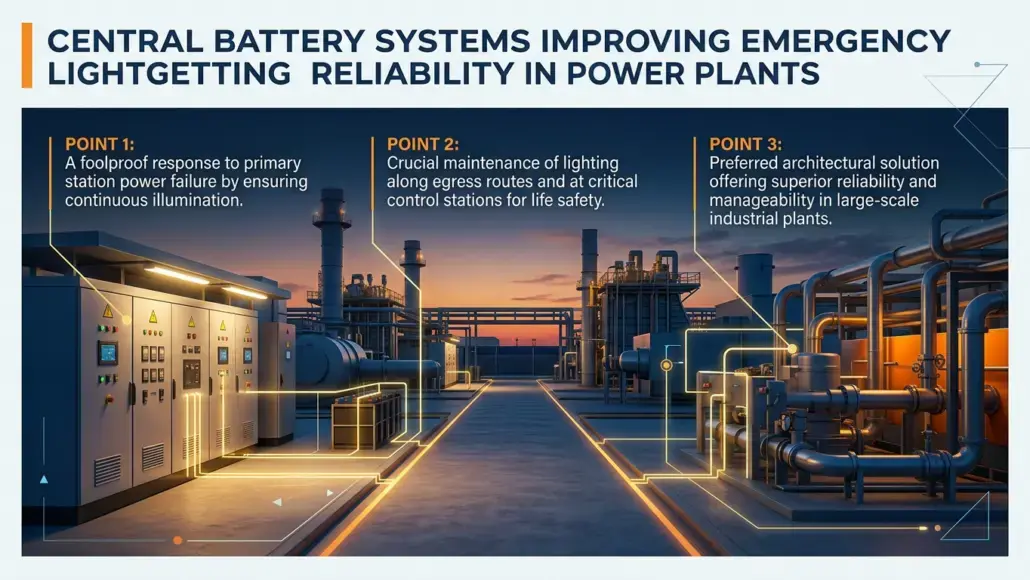

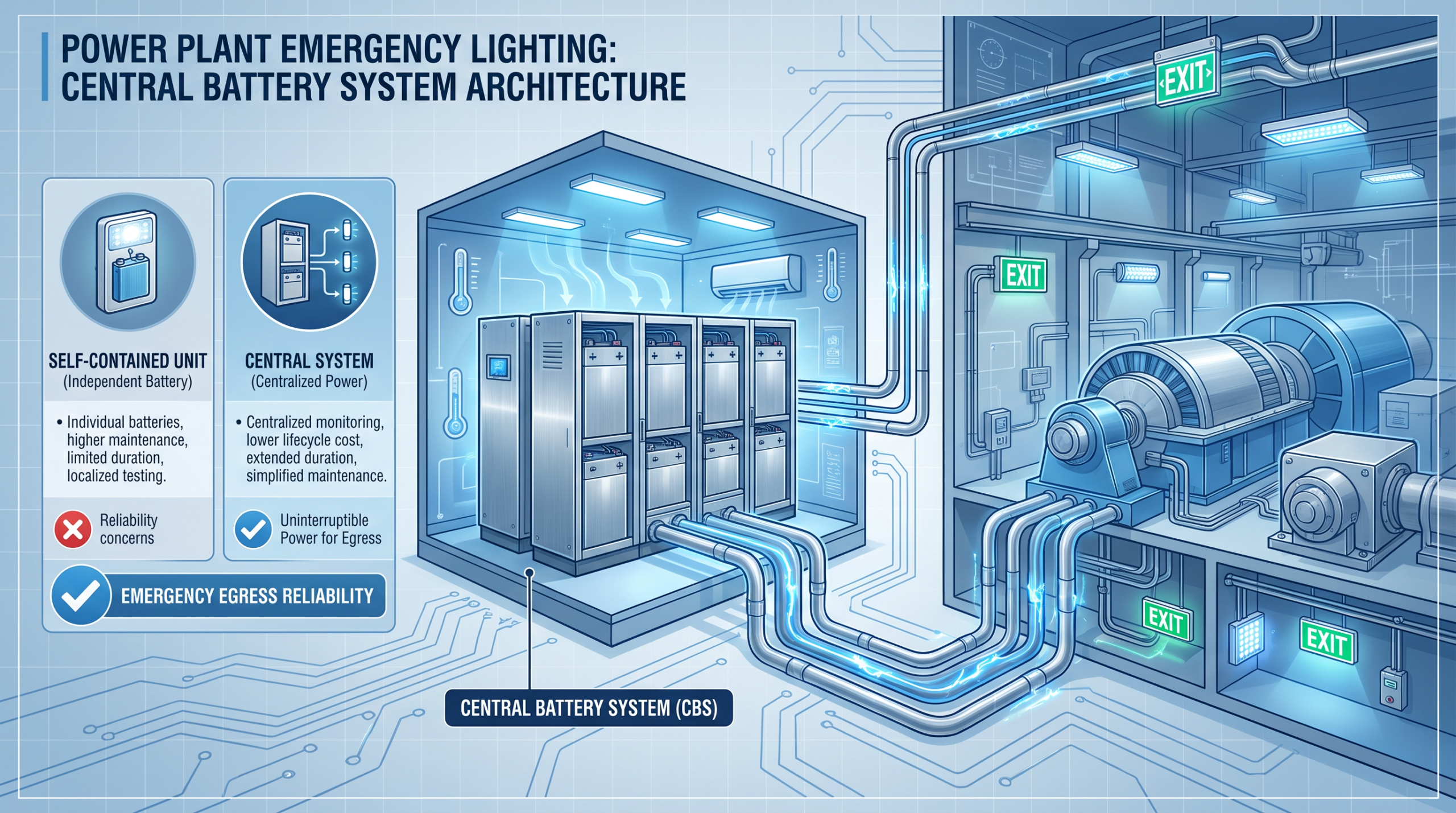
In the high-stakes environment of a power generation facility, the failure of primary station power is a scenario that requires an immediate and foolproof response. During such an event, the maintenance of illumination along egress routes and at critical control stations is a matter of life safety. The adoption of central battery systems has emerged as the preferred architectural solution for emergency lighting in large-scale industrial plants, offering a level of reliability and manageability that far exceeds traditional self-contained battery units. These systems work by housing a large bank of high-capacity batteries in a centralized, climate-controlled location, which then provides power to a network of emergency luminaires throughout the facility.
The primary advantage of these installations is the durability of the power source itself. In a self-contained unit, the battery is small, exposed to the harsh temperatures of the plant floor, and difficult to monitor individually. By contrast, a centralized unit allows for the use of large, industrial-grade batteries that are maintained in an ideal environment, significantly extending their operational lifespan. In many cases, a well-managed central battery can last up to ten years, whereas the batteries in self-contained units often require replacement every three to four years. This longevity ensures that the emergency lighting is always ready to perform when a crisis occurs, providing peace of mind to facility managers and safety officers.
Additionally, the centralized approach simplifies the mandatory testing and maintenance required by international fire and safety codes. Instead of having to physically inspect and discharge hundreds of individual units across a sprawling site, a technician can perform a comprehensive system test from a single control panel. Modern central battery systems are equipped with automated testing and logging capabilities, which generate the necessary compliance reports without human intervention. This not only saves significant labor costs but also ensures that no single fixture is overlooked during the maintenance cycle. The result is a more reliable and transparent life-safety infrastructure that can withstand the scrutiny of safety auditors and insurance inspectors.
System Architecture and Distribution Strategies
The design of backup power infrastructure for power plants involves a sophisticated electrical architecture that must be integrated into the facility’s overall power distribution network. The system typically consists of a charger, a battery bank, and a static inverter or DC-DC converter, depending on the type of emergency luminaires used. During normal operation, the system maintains the batteries at full charge while monitoring the health of the incoming power supply. If a voltage drop or total failure is detected, the system switches to battery power within milliseconds, ensuring a seamless transition that prevents panic among the staff.
Distribution strategies for these systems are carefully planned to ensure that a single circuit failure does not plunge an entire zone into darkness. Emergency lighting circuits are typically interleaved, meaning that adjacent fixtures are powered by different circuits. This redundancy is a core principle of industrial safety design. The use of fire-rated cabling is also a standard requirement, ensuring that the power supply to the emergency lights remains intact even if a fire occurs within the plant. This level of protection is essential for facilitating a safe evacuation and supporting the efforts of emergency responders who may need to enter the facility during an incident.
- Utilization of Lead-Acid or Nickel-Cadmium battery technologies based on site-specific needs.
- Implementation of static inverters to provide AC power to standard LED luminaires.
- Integration with Building Management Systems (BMS) for real-time status monitoring.
- Adoption of modular charger designs to ensure system availability even during a component failure.
- Use of deep-discharge protection to prevent permanent battery damage during extended outages.
The reliability of these systems is further enhanced by their ability to support a wide range of luminaire types. While some plants use dedicated emergency lights, others integrate the emergency power into the general illumination fixtures. This dual-purpose approach ensures that the visual environment during an emergency is as familiar as possible to the workers, reducing the likelihood of disorientation. The integration of Luminaire Thermal Management is another critical factor here, as the emergency luminaires must be capable of operating in the same harsh conditions as the primary lighting. By combining a reliable central power source with high-performance fixtures, power plant operators can create a life-safety system that is truly world-class.
Enhancing Response Times in Emergency Scenarios
When a power plant experiences a significant incident, the first few minutes are critical for preventing a minor issue from escalating into a catastrophe. The presence of reliable emergency lighting, powered by central battery systems, is the foundation of a successful emergency response. Clear visibility allows operators to quickly reach emergency shut-off valves, engage fire suppression systems, and communicate with the control room. Without this visibility, even the best-trained staff can become paralyzed by the darkness, leading to delays that can have devastating consequences.
The impact of high-quality emergency lighting on evacuation times is well-documented. In a smoke-filled or dark environment, the human brain takes significantly longer to process spatial information and make decisions. These centralized solutions ensure that egress paths are brightly and consistently lit, allowing for a fast and orderly evacuation. This is particularly important in plants with complex layouts, multiple floor levels, and numerous obstructions. The use of high-intensity emergency floodlights, capable of being powered for ninety minutes or more by the central battery, ensures that even the most remote areas of the plant are adequately illuminated for a safe exit.
Beyond evacuation, the emergency lighting system also supports the work of onsite fire brigades and technical rescue teams. These teams must be able to move quickly through the facility to address the source of the problem. If they are forced to rely solely on handheld torches, their effectiveness is severely limited. Technical backup systems provide the “ambient” light needed for these professionals to see the big picture, while their personal lights provide the precision needed for specific tasks. This synergy between fixed and portable lighting is a key component of a modern industrial emergency management strategy, ensuring that the facility can be safely secured and recovered following an incident.
Maintenance, Monitoring, and Life-Cycle Management
The long-term success of these systems depends on a rigorous program of maintenance and monitoring. Unlike traditional electrical components that may give clear signs of failure, a battery can appear functional while having lost the capacity needed to support its rated load. To address this, sophisticated central battery systems utilize specialized management software that monitors the voltage, impedance, and temperature of every cell in the bank. This real-time data allows maintenance teams to identify and replace a failing battery before it compromises the entire system.
Life-cycle management also involves the periodic performance of “duration tests,” where the system is disconnected from the mains and allowed to run the emergency load for the full rated time (typically one to three hours). These tests are the ultimate proof of the system’s readiness. With a centralized power system, these tests can be scheduled during periods of low activity and the results can be electronically recorded for compliance purposes. This level of oversight is nearly impossible to achieve with self-contained units, where the failure of a single small battery might go unnoticed for months.
The centralized location of the batteries also facilitates easier disposal and recycling at the end of their life. Large industrial batteries contain materials that must be handled with care to prevent environmental contamination. By centralizing these assets, the facility can manage their decommissioning in a more controlled and sustainable manner. This alignment with environmental, social, and governance (ESG) goals is an increasingly important consideration for the modern power generation company. By choosing a system that is both reliable and sustainable, the industry is demonstrating its commitment to responsible operational practices.
Integration with Smart Grids and Future Technologies
Looking to the future, the role of centralized emergency systems in power plants is likely to expand as facilities become more integrated with smart grid technologies. These systems could potentially serve a dual purpose, acting as a small-scale energy storage system that can provide ancillary services to the plant’s internal grid. For instance, during periods of peak demand, the emergency bank could be used to support non-critical loads, reducing the auxiliary power consumption of the plant. This “second life” for the emergency power infrastructure represents a significant opportunity for improving the overall efficiency of the facility.
Technological advancements are also occurring in the batteries themselves. While lead-acid remains the industry standard for its cost-effectiveness and reliability, lithium-iron-phosphate (LiFePO4) batteries are gaining traction for their higher energy density, longer life, and faster charging times. Future systems designed for these newer chemistries will be smaller, lighter, and even more reliable than their predecessors. Additionally, the integration of Internet of Things (IoT) sensors will allow for even more granular monitoring of the system’s health, with data being fed into cloud-based analytics platforms to predict failures before they happen.
The ongoing evolution of these systems ensures that they will remain a cornerstone of power plant safety for decades to come. As the complexity of power generation continues to grow, the need for simple, durable, and reliable life-safety systems has never been greater. Professional central battery systems provide the solid foundation upon which a safe and resilient facility is built, ensuring that no matter what happens to the primary power, the lights will stay on for the people who need them most. Through a combination of technical excellence and strategic planning, the industry can continue to protect its most valuable asset: its workforce.