




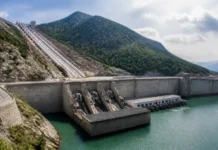

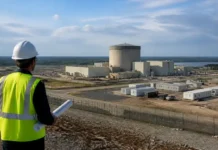
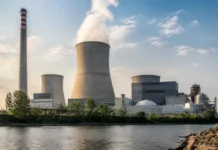

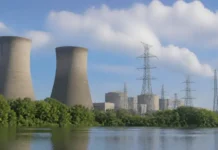
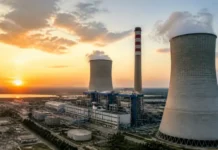
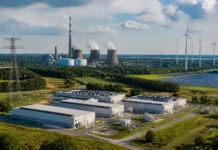
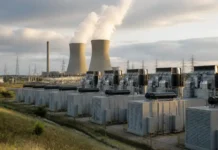








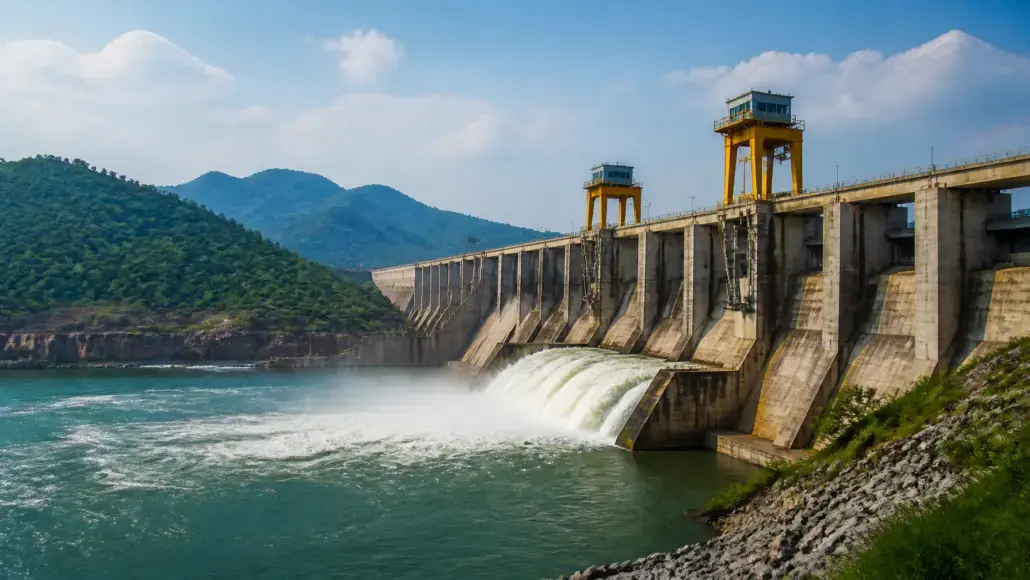

Cambodia’s energy sector is set to receive more than $200 million in assistance from the French government. Separately, French electricity company Électricité de France (EDF) and Cambodia’s state-owned Electricité du Cambodge (EDC) have outlined plans to conduct a feasibility study for an 800-megawatt hydropower project in Koh Kong province.
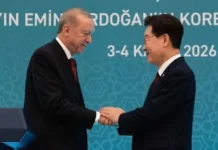
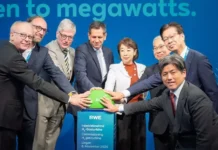
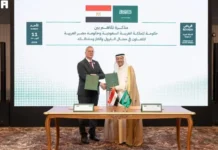
The France energy assistance agreement was signed on 15th November by Cambodian Minister of Mines and Energy Keo Rottanak and representatives of the French side. Cambodian Prime Minister Hun Manet and French President Emmanuel Macron co-chaired the signing ceremony during Macron’s state visit to Cambodia and his participation in the 20th Francophonie Summit.
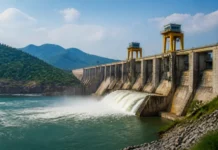
Rottanak said the proposed hydropower project could require an estimated investment of between $700 million and $900 million.
“This represents another major additional benefit for the future. All of this has been made possible by Cambodia’s role as host country under the wise leadership of Prime Minister Hun Manet,” he said.
Energy Supply and Investment Conditions
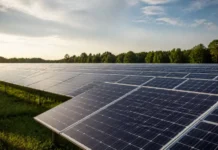
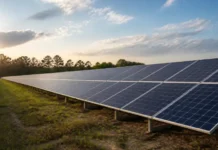
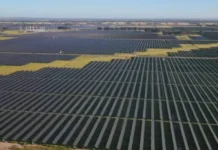
Rottanak identified the energy sector as an important factor in attracting domestic and international investment. He said the government was making efforts to expand electricity generation capacity, particularly through clean and renewable energy sources.
Te Taing Por, president of the Federation of Associations for Small and Medium Enterprises of Cambodia (FASMEC), had previously told The Post that electricity was essential to attracting investors and encouraging the establishment of factories, enterprises and businesses in the country. He noted that almost all production processes and office operations now depend on electricity.
Por said that increasing supply capacity, reducing electricity prices, extending the distribution network and maintaining a stable power supply would strengthen Cambodia’s appeal to investors. He also highlighted energy costs as a significant component of business operating expenses.
“Generally, before deciding to invest in a particular location or country, the first thing investors look at is energy costs, because all production processes today require energy. A widespread distribution network, affordable electricity prices and a reliable power supply are what every investor wants,” he said.
Electricity Network Coverage and Expansion
By the end of 2025, Cambodia’s electricity supply network covered 14,438 villages, an increase of 390 villages. However, the coverage rate declined slightly from 99.15% to 99.09% following a revision to the country’s total village count.
The figures were presented by Electricity Authority of Cambodia (EAC) president Yim Visith at the authority’s annual meeting to review its 2025 performance and establish work directions for 2026.
Visith reported that electricity supply covered 14,008 villages, or 98.87% of the total, at the end of 2023. By the end of 2024, coverage had reached 14,048 villages, representing 99.15%. The subsequent decline in the percentage was attributed to an increase in the total number of villages.
The France energy assistance agreement comes as Cambodia continues to address gaps in electricity access. EDC and private electricity service providers are expected to extend supply from the national grid to another 67 villages over the next two to three years.
“We may have 65 villages, equivalent to 0.45 percent, remaining without electricity supply from the national grid. These villages are located in particularly challenging areas, such as extremely remote locations, areas without road access, islands, floating communities, flood-prone areas during the rainy season, sparsely populated areas and newly established settlements,” noted Visith.
“Extending the national grid to these locations will require substantial investment and involve considerable complexity,” he added.