



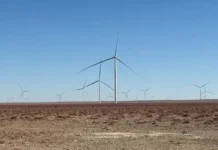
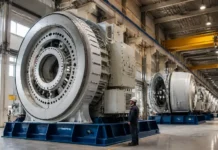
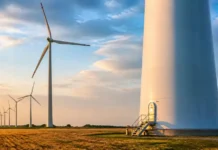

















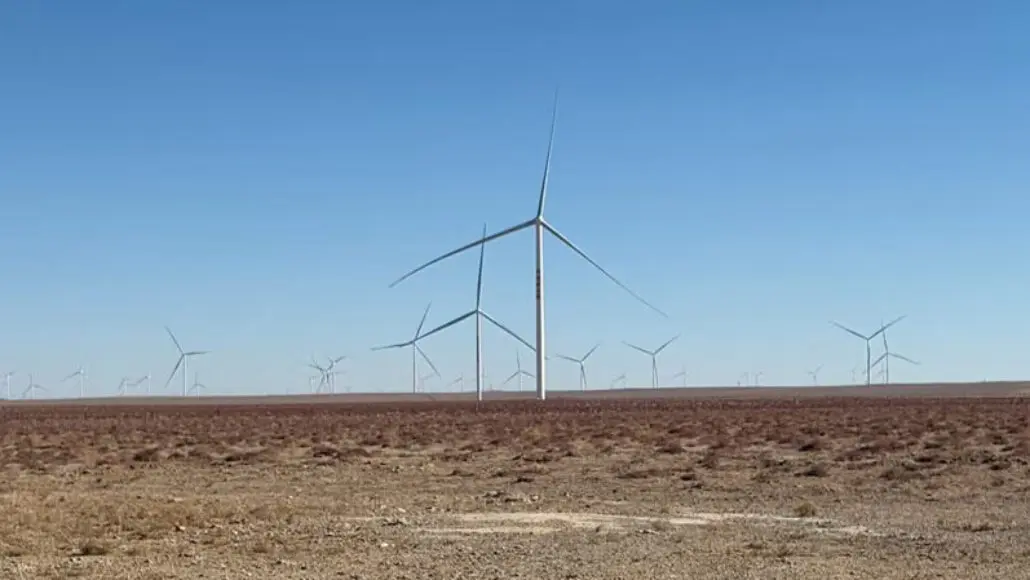

China Unicom’s Inner Mongolia Branch has partnered with Huawei and Inner Mongolia Energy Group to deploy a 5G-A and artificial intelligence solution across 21 wind farms. The initiative is designed to support the transition from conventional wind farm operations to intelligent management, with a planned rollout covering more than 1,500 wind turbines.
The 5G-A smart wind farms solution combines 5G-A GigaUplink networks, AI agents, edge computing and 4K high-definition drone imaging to improve turbine blade inspections. It is intended to increase operations and maintenance (O&M) efficiency while reducing the need for engineers to conduct inspections in difficult and potentially hazardous conditions.
5G-A Networks Support Remote Turbine Inspections
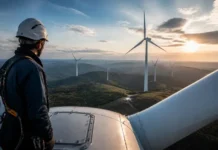
The expansion of wind farms into remote locations has increased the challenges associated with conventional inspection methods. Engineers have traditionally needed to climb towers approximately 100 metres high and examine turbine components visually in confined spaces and harsh conditions.
These inspections have also faced communication limitations, including signal dead zones inside turbine towers, inadequate 4G uplink bandwidth and the high cost of deploying fibre infrastructure. Such constraints have contributed to lengthy inspection cycles, high labour requirements and the possibility of overlooking early-stage blade defects.
The new solution uses 5G-A technologies to address these communication challenges. Inside wind towers, 5G-A pRRUs eliminate signal dead zones, while 5G-A macro base stations provide a stable uplink speed of at least 40 Mbps per turbine, with latency below 20 milliseconds.
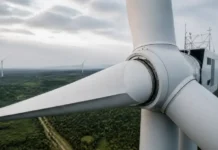
This network capacity supports the transmission of real-time 4K drone footage for blade inspections. Engineers can use the aerial images to examine turbine blades without climbing the towers, while AI algorithms identify and mark defects to support the inspection process.
AI and Edge Computing Improve O&M Performance
The 5G-A smart wind farms deployment integrates AI agents with edge computing to process inspection information closer to the wind farm sites. By moving user plane functions (UPFs) closer to the edge and using edge cloud and all-optical infrastructure, the system processes and stores inspection data locally.
According to the project information, this approach supports data security compliance and real-time AI responsiveness.
The solution is reported to reduce O&M time by 10% and costs by 21%. It also lowers turbine downtime rates by 15%. The resulting operational improvements could enable an additional 1.76 million kWh of green electricity generation annually.
Inner Mongolia Energy Group’s Renewable Energy Operations
Inner Mongolia Energy Group is described as the largest power generator in the Inner Mongolia Autonomous Region. The company has deployed 10 MW wind turbines in batches, identified as the first installations of their kind across the region, and generates more than 36 billion kWh of green electricity annually.
The group is also advancing the integration of wind power, solar energy and energy storage. The 5G-A and AI solution is intended to provide communication and computing support for data flows across wind turbines, photovoltaic modules, energy storage systems and booster stations.
The deployment across 21 wind farms provides a model that the partners intend to replicate at a larger scale.
Expansion of 5G-A Applications in Energy
China Unicom and Huawei plan to continue working with Inner Mongolia Energy Group and other partners to promote the use of 5G-A and AI technologies in energy operations. Following the benchmark deployment, the companies also intend to expand the solution into other industries, including mining and chemicals.
The initiative is positioned as part of efforts to support industrial digitalisation, improve operational efficiency and contribute to China’s national dual-carbon targets.