

























Close
MCE 2026
World Hydrogen & Carbon Americas

Germany agrees on amended energy law to boost renewables

Note* - All images used are for editorial and illustrative purposes only and may not originate from the original news provider or associated company.

Subscribe

- Never miss a story with notifications

- Gain full access to our premium content

- Browse free from any location or device.

Media Packs

Expand Your Reach With Our Customized Solutions Empowering Your Campaigns To Maximize Your Reach & Drive Real Results!

– Access the Media Pack Now

– Book a Conference Call

Leave Message for Us to Get Back

Related stories

Industrial Decarbonisation and Power Sector Synergy

The path to a net-zero economy requires the deep integration of heavy industry with the electrical grid. By exploring the concept of sector coupling and the role of hydrogen in difficult-to-abate sectors, this analysis details how industrial decarbonisation and power sector synergy can create a more resilient, flexible, and efficient energy system through shared infrastructure and coordinated strategy.

Hydrogen Trade Corridors Reshape Global Energy Supply

The emergence of international hydrogen trade is fundamentally redrawing the world's energy maps. By establishing dedicated corridors that connect resource-rich exporters with high-demand industrial centers, the global energy transition is moving toward a more diversified and resilient supply chain underpinned by advanced maritime logistics and rigorous certification standards.

Largest Solar-Plus-Storage Project Hits Initial Grid Sync

The first phase of the MTerra Solar project in...
- Advertisement -

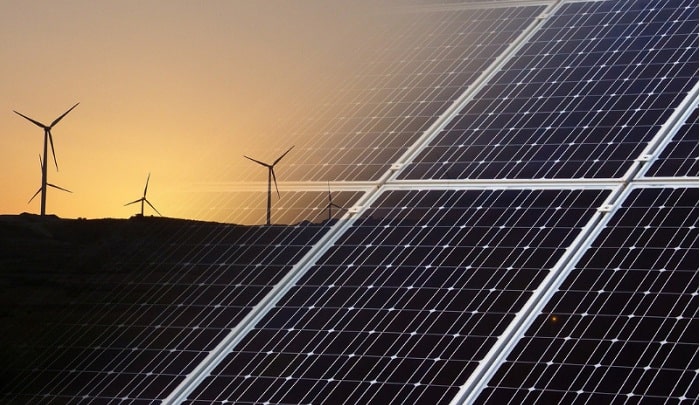
Germany’s ruling coalition has agreed changes to a new energy law that aims to boost renewable power and help the country meet its goal of producing 65% of its electricity from green sources by 2030, the environment minister said on Monday.

The energy law is now expected to go before a parliamentary committee on Tuesday ahead of votes in the lower house on Thursday and the upper house on Friday, with a view to enacting the legislation by Jan. 1, 2021.

The law will give local communities financial incentives to build onshore wind projects, promote biomass and geothermal energy and encourage more large-scale solar plants on commercial buildings as well as smaller-scale rooftop installations.

It will cut bureaucracy on production from solar power plants after their first 20 years of run-time, when fixed support payments expire, and from wind turbines over 20 years of age, which can be adapted for higher efficiency, six lawmakers, who did not wish to be identified, told Reuters.

“We had a basic agreement at the weekend, that is very important,” Environment Minister Svenja Schulze told a news conference.

The EU agreed on Friday to cut greenhouse gas emissions by at least 55% from 1990 levels by 2030, up from 40% previously. EU states plan to spend 30% of their 1.8 trillion euro ($2.2 trillion) budget and COVID-19 recovery fund on climate action.

Renewable sources accounted for 46.3% of Germany’s power consumption in 2020, 3.8 percentage points more than in 2019, utility industry association BDEW said on Monday, adding that part of the increase came from a drop in power usage during the coronavirus crisis.

Under the planned new legislation, energy consumption by householders from their own solar panels, and tax rules for apartment dwellers participating in solar projects, will be subject to fewer charges and less paperwork than at present, the lawmakers told Reuters.

National renewable capacity targets will be raised but details of their size will only be worked out in the first quarter 2021, the lawmakers said.

Earlier this month, the government as part of the reform plans scrapped a charge levied on power prices for producers of so-called green hydrogen. ($1 = 0.8233 euros)


Latest stories

Related stories

Industrial Decarbonisation and Power Sector Synergy

The path to a net-zero economy requires the deep integration of heavy industry with the electrical grid. By exploring the concept of sector coupling and the role of hydrogen in difficult-to-abate sectors, this analysis details how industrial decarbonisation and power sector synergy can create a more resilient, flexible, and efficient energy system through shared infrastructure and coordinated strategy.

Hydrogen Trade Corridors Reshape Global Energy Supply

The emergence of international hydrogen trade is fundamentally redrawing the world's energy maps. By establishing dedicated corridors that connect resource-rich exporters with high-demand industrial centers, the global energy transition is moving toward a more diversified and resilient supply chain underpinned by advanced maritime logistics and rigorous certification standards.

Largest Solar-Plus-Storage Project Hits Initial Grid Sync

The first phase of the MTerra Solar project in...

India, UK Launch Offshore Wind Taskforce to Scale Capacity

India and the United Kingdom formally launched the India-UK...

Subscribe

- Never miss a story with notifications

- Gain full access to our premium content

- Browse free from any location or device.

Media Packs

Expand Your Reach With Our Customized Solutions Empowering Your Campaigns To Maximize Your Reach & Drive Real Results!

– Access the Media Pack Now

– Book a Conference Call

Leave Message for Us to Get Back

Translate »