



















Close
MCE 2026
World Hydrogen & Carbon Americas

Croatia sets new record in renewable energy production

Note* - All images used are for editorial and illustrative purposes only and may not originate from the original news provider or associated company.

Subscribe

- Never miss a story with notifications

- Gain full access to our premium content

- Browse free from any location or device.

Media Packs

Expand Your Reach With Our Customized Solutions Empowering Your Campaigns To Maximize Your Reach & Drive Real Results!

– Access the Media Pack Now

– Book a Conference Call

Leave Message for Us to Get Back

Related stories

Industrial Decarbonisation and Power Sector Synergy

The path to a net-zero economy requires the deep integration of heavy industry with the electrical grid. By exploring the concept of sector coupling and the role of hydrogen in difficult-to-abate sectors, this analysis details how industrial decarbonisation and power sector synergy can create a more resilient, flexible, and efficient energy system through shared infrastructure and coordinated strategy.

Hydrogen Trade Corridors Reshape Global Energy Supply

The emergence of international hydrogen trade is fundamentally redrawing the world's energy maps. By establishing dedicated corridors that connect resource-rich exporters with high-demand industrial centers, the global energy transition is moving toward a more diversified and resilient supply chain underpinned by advanced maritime logistics and rigorous certification standards.

Largest Solar-Plus-Storage Project Hits Initial Grid Sync

The first phase of the MTerra Solar project in...
- Advertisement -

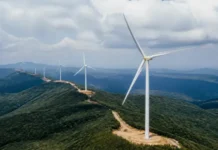
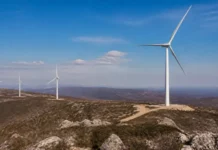
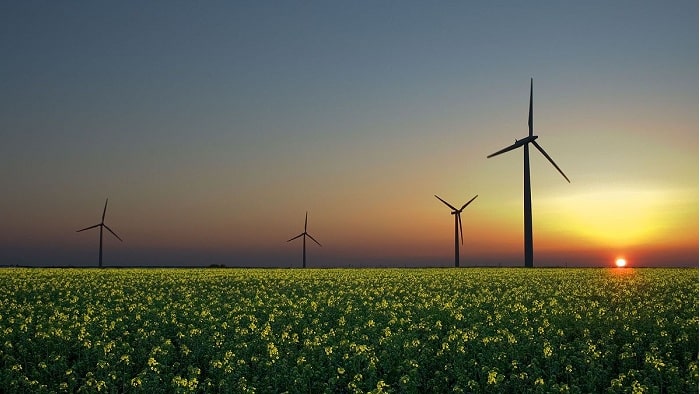
Croatia has set a new record in the production of energy from renewable sources, covering the entire consumption in the country with hydropower plants and wind farms.

Croatian transmission system operator (TSO) HOPS has announced that due to weather conditions, heavy rains and strong wind, production in hydropower plants and wind farms yesterday reached 48 GWh, while consumption was 47 GWh. It added that it was a serious test for the energy system in handling an enormous volume of green energy and analyzing the possibility of integrating new renewable power units.

Total installed capacity of power plants in Croatia at the end of 2019 was 4,817 MW, of which 1,127 MW in hydropower plants, 2,019 MW in thermal power plants and 671 MW in wind power plants. The share of hydropower plants in production was about 53% last year, thermal power plants on coal and gas and nuclear power plant Krško accounted for about 35%, and wind farms had 10%.

According to HOPS, hydropower plants produced more than 30 GWh yesterday and output reached almost 1,400 MWh/h. New renewable energy sources added 843 MWh/h, where the majority was produced by wind farms, with a total installed capacity of 800 MW. The maximum production in wind power plants was about 717 MWh/h.

Record production occurred on a Sunday, when consumption is usually the lowest, so the Croatian transmission network was put to a serious test to ensure the integration of large quantities of energy and export surplus to neighboring countries, HOPS said.

The country exported more than 1,100 MWh/h yesterday, which is a kind of a record because Croatia normally covers 20% to 40% of annual electricity needs with imports.

Yesterday’s situation can be seen as a serious live experiment for some extreme situations that are being analyzed for the development of the transmission network. Although rare, such events require a response.

The issue is also significant due to the requests for connecting renewable energy power plants with a large combined capacity in the Dalmatian area, because the capacity that could be connected without a significant expansion of the transmission network is questionable, according to HOPS.

Latest stories

Related stories

Industrial Decarbonisation and Power Sector Synergy

The path to a net-zero economy requires the deep integration of heavy industry with the electrical grid. By exploring the concept of sector coupling and the role of hydrogen in difficult-to-abate sectors, this analysis details how industrial decarbonisation and power sector synergy can create a more resilient, flexible, and efficient energy system through shared infrastructure and coordinated strategy.

Hydrogen Trade Corridors Reshape Global Energy Supply

The emergence of international hydrogen trade is fundamentally redrawing the world's energy maps. By establishing dedicated corridors that connect resource-rich exporters with high-demand industrial centers, the global energy transition is moving toward a more diversified and resilient supply chain underpinned by advanced maritime logistics and rigorous certification standards.

Largest Solar-Plus-Storage Project Hits Initial Grid Sync

The first phase of the MTerra Solar project in...

India, UK Launch Offshore Wind Taskforce to Scale Capacity

India and the United Kingdom formally launched the India-UK...

Subscribe

- Never miss a story with notifications

- Gain full access to our premium content

- Browse free from any location or device.

Media Packs

Expand Your Reach With Our Customized Solutions Empowering Your Campaigns To Maximize Your Reach & Drive Real Results!

– Access the Media Pack Now

– Book a Conference Call

Leave Message for Us to Get Back

Translate »