














Achema middle east

AI Modeling May Enable Power Plants Capture CO2 – Study Says

Note* - All images used are for editorial and illustrative purposes only and may not originate from the original news provider or associated company.

Subscribe

- Never miss a story with notifications

- Gain full access to our premium content

- Browse free from any location or device.

Media Packs

Expand Your Reach With Our Customized Solutions Empowering Your Campaigns To Maximize Your Reach & Drive Real Results!

– Access the Media Pack Now

– Book a Conference Call

Leave Message for Us to Get Back

Related stories

India Advances GAIL Solar Project Worth Rs 3,294 Crore in UP

State-owned energy major GAIL (India) is advancing plans to...

Integrated Safety Systems for Modern Power Transmission

Creating a unified shield for the energy sector, integrated safety systems power transmission projects are combining physical protection, digital monitoring, and organizational culture into a single, cohesive framework. This holistic approach ensures that every aspect of worker protection is synchronized, allowing for a more resilient and responsive safety environment that meets the demands of a modern, high-speed grid.

Compliance Driven Safety Advancing Transmission Efficiency

Aligning organizational goals with regulatory excellence, compliance safety transmission efficiency protocols are transforming the operational landscape of the power sector. By integrating rigorous safety standards into the core of project management, utility providers can reduce downtime, minimize legal risks, and foster a high-performance culture that delivers energy more reliably and safely than ever before.
- Advertisement -

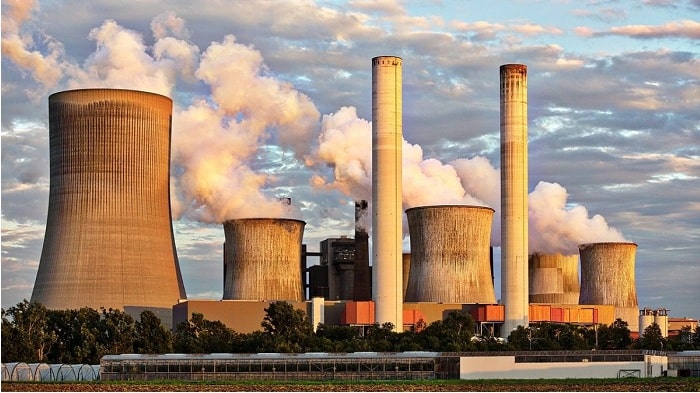
In a new development doing the rounds, the carbon capture right from the power plants can very well be climate-friendly and also consume less energy, all thanks to AI modeling, as per a study from the University of Surrey.

Apparently, the researchers there tweaked a capture system that was based on a real coal-fired power station. Their objective was to self-optimize the CO2 capture procedure within a renewable energy system by way of an enhanced weathering of calcite along with fresh water within a packed bubble column- PBC reactor.

By way of that process, CO2 gets captured by bubbling of the flue gas through fresh water that has limestone in the reactor, thereby converting the CO2 into bicarbonate as well as making sure to store it in the ocean.

However, since all this takes energy to pump the water as well as the CO2, the capture system happened to have its own wind turbine, but when the wind did not blow, the energy was taken from the grid. By way of using AI, researchers went on to teach a model system to anticipate what would happen so it could pump less water when there happened to be less CO2 to capture or when there was less renewable energy which was available.

Especially, two deep learning models happened to be considered to capture the dynamics of the PBC reactor: one, a long short-term memory network- LSTM and the other, a two-stage multilayer perceptron network- MLP. Data-driven models, which happened to be based on LSTM, were developed to anticipate wind energy- R2: 0.908 as well as the inlet flue gas CO2 concentration- R2: 0.981 by way of using publicly available datasets.

Interestingly, a multi-objective NSGA-II genetic algorithm happened to get applied that made use of the inlet flue gas CO2 concentration as well as wind energy predictions in order to pre-emptively self-optimize reactor process conditions, i.e., the superficial liquid flow rate as well as the superficial gas flow rate, in order to maximize the CO2 capture rate and at the same time minimize the consumption of non-renewable energy.

Researchers went on to remark that the model could go on to capture 16.7% more carbon dioxide in a one-month operation by way of using 36.3% less energy from the National Grid.

Latest stories

Related stories

India Advances GAIL Solar Project Worth Rs 3,294 Crore in UP

State-owned energy major GAIL (India) is advancing plans to...

Integrated Safety Systems for Modern Power Transmission

Creating a unified shield for the energy sector, integrated safety systems power transmission projects are combining physical protection, digital monitoring, and organizational culture into a single, cohesive framework. This holistic approach ensures that every aspect of worker protection is synchronized, allowing for a more resilient and responsive safety environment that meets the demands of a modern, high-speed grid.

Compliance Driven Safety Advancing Transmission Efficiency

Aligning organizational goals with regulatory excellence, compliance safety transmission efficiency protocols are transforming the operational landscape of the power sector. By integrating rigorous safety standards into the core of project management, utility providers can reduce downtime, minimize legal risks, and foster a high-performance culture that delivers energy more reliably and safely than ever before.

Next Gen Safety Approaches in Power Transmission Work

Navigating the frontier of industrial protection, next gen safety power transmission strategies are leveraging artificial intelligence and automation to redefine worker security. By moving beyond traditional compliance to a model of intelligent, anticipatory safety, the energy sector is creating a more resilient workforce capable of managing the complexities of a modern, digitized electrical grid with unprecedented confidence.

Subscribe

- Never miss a story with notifications

- Gain full access to our premium content

- Browse free from any location or device.

Media Packs

Expand Your Reach With Our Customized Solutions Empowering Your Campaigns To Maximize Your Reach & Drive Real Results!

– Access the Media Pack Now

– Book a Conference Call

Leave Message for Us to Get Back

Translate »