


Ursula von der Leyenl, the EC President has expressed her support for industrial subsidies in the nuclear energy sector, a topic that has generated significant debate within the European Union.
Speaking in the Czech Republic, a country that relies on nuclear power plants for over a third of its electricity needs, the president of the European Commission highlighted that each member state has the freedom to determine its own strategy towards achieving climate neutrality.
The selection of the energy mix is and will continue to be a matter of national authority, stated von der Leyen during a brief press announcement alongside the prime minister of the country, Petr Fiala. She continued that it is evident that nuclear power plays a crucial role in Czechia’s energy system, and it will necessitate ongoing investment to fulfil its function in the Czech energy transition.
And this is the reason they are always open to considering state aid, as long as the conditions are suitable.The European Commission, in its role as the chief enforcer of competition rules, holds the authority to either approve or deny the public funds that governments provide to their national industries. These funds can be delivered in the form of grants, reduced rates, lower taxation, and other similar measures.
The executive has the authority to reject the proposal if it deems that state intervention presents an excessive risk to the single market and could potentially disadvantage the rest of the EU. The Commission has been guided by the principles of fairness and equality since the beginning of European integration, and these principles are now firmly established within EU law.
However, due to increased global competition and the rising costs associated with the green and digital transition, there has been a closer examination of the established rules for competition policy, with some member states advocating for more flexibility in order to support their domestic companies and prevent them from relocating elsewhere.
The Commission has shown some willingness to compromise without conceding too much ground. Earlier in 2023, it relaxed the regulations for approving subsidies in six crucial areas of green transition: right from batteries, solar panels, and wind turbines to heat pumps, electrolysers, and carbon capture technology. Furthermore, Brussels has introduced the Net-Zero Industry Act, which aims to greatly enhance the domestic production of such essential products.
The original draft of the Act is worth noting because it does not include nuclear technology in its list of strategic projects. It briefly mentions advanced technologies that produce power derived from nuclear processes with minimal waste and small modular reactors that are still being developed.
In Prague, von der Leyen stated that they are in favour of advancing cutting-edge nuclear technology through the Net-Zero Industry Act, with the aim of promoting innovation and fostering cross-border collaboration.
The act is currently being negotiated among member states and the European Parliament. There is a strong push to have nuclear energy listed as a strategic project. However, reaching a consensus on this matter will not be a simple task. Nuclear energy is a highly controversial and emotionally charged topic within the European Union, and the majority of countries are deeply divided into groups that either support or oppose nuclear power.
France is a leading advocate for nuclear energy, as it generates approximately 70% of its electricity from its extensive network of reactors. The pro-nuclear group also receives support from countries such as Bulgaria, the Czech Republic, Poland, Hungary, Romania, and Slovakia. They argue that nuclear power is a low-carbon technology that can operate constantly for 24 hours a day while also reducing reliance on external sources.
In contrast, Germany, which is known for its strong industrial sector, has taken a firm stance against nuclear energy.
This position is supported by Austria, Spain, Portugal, Denmark, and Luxembourg. They argue that promoting nuclear energy can be seen as greenwashing, given the carbon footprint associated with uranium extraction and the long-term management of radioactive waste.
Both sides have established alliances and are actively seeking to engage more countries in order to strengthen the qualified majority required for passing energy and climate legislation.
I emphasised to the president of the European Commission the significant importance of nuclear energy for the Czech Republic. The traditional industrial sector in our country is well-established. It is one of the ways for our country to achieve the climate objectives and ensure sufficient sources of energy, Prime Minister Fiala stated, standing alongside von der Leyen.
Maintaining nuclear energy as one of the favoured forms of clean energy in the Czech Republic is of utmost importance, and the country is making every effort to ensure that nuclear energy remains an agreed-upon source of energy, stated Prime Minister Fiala.
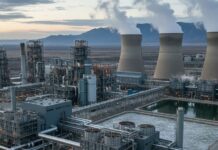
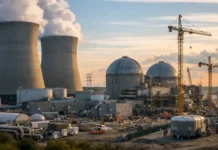
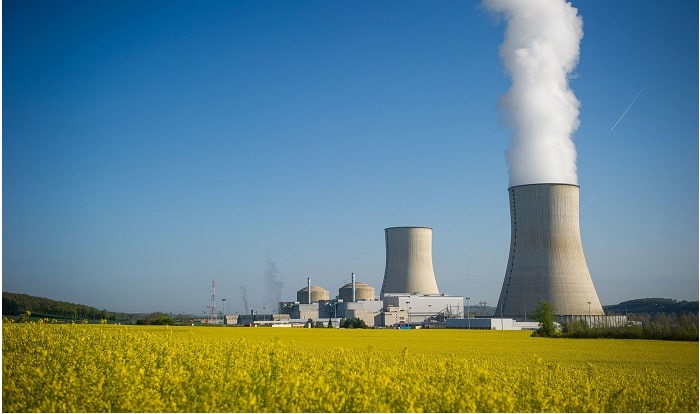
He mentioned that his team is currently assessing tenders for the purpose of expanding the capacity of the Dukovany nuclear power plant, home to four out of the six nuclear reactors in the country. Additionally, he mentioned that the government is currently in the process of drafting the notification that the Commission will need to review in order to determine whether or not to approve or block the subsidies.
In the past decade, the Commission has approved state aid for nuclear power plants in Hungary, Belgium, as well as the United Kingdom during their membership in the European Union. Austria contested the UK case before the European Court of Justice, which ultimately ruled that aid for nuclear energy was in line with EU law.