























Close
Achema middle east
Horizon Clean Energy Expansion India Conference 2026

Japanese Ministry, Kyocera in blockchain renewable energy solution

Note* - All images used are for editorial and illustrative purposes only and may not originate from the original news provider or associated company.

Subscribe

- Never miss a story with notifications

- Gain full access to our premium content

- Browse free from any location or device.

Media Packs

Expand Your Reach With Our Customized Solutions Empowering Your Campaigns To Maximize Your Reach & Drive Real Results!

– Access the Media Pack Now

– Book a Conference Call

Leave Message for Us to Get Back

Related stories

Breakthrough Energy Technologies Accelerating Net Zero

The global journey toward a zero-carbon world relies on more than just incremental improvements; it requires the deployment of frontier innovations. Accelerating net zero with breakthrough energy technologies involves integrating ultra-dense power sources like fusion and advanced geothermal with versatile molecular carriers such as hydrogen to create a truly resilient and sustainable industrial civilization.

How Renewable Infrastructure Drives Industrial Decarbonization

The heavy industry sector is often considered the "last mile" of the energy transition. Building renewable infrastructure for industrial decarbonization involves a fundamental redesign of industrial energy systems, moving away from high-carbon combustion toward a hybrid model of direct electrification and molecular green energy.

Integrating Renewable Energy for Enhanced Grid Stability

As the world transitions toward a cleaner power mix, the challenge of maintaining a steady electricity supply becomes paramount. Integrating renewable energy for grid stability involves leveraging cutting-edge technology and flexible infrastructure to turn variable resources into a reliable backbone for modern society.
- Advertisement -

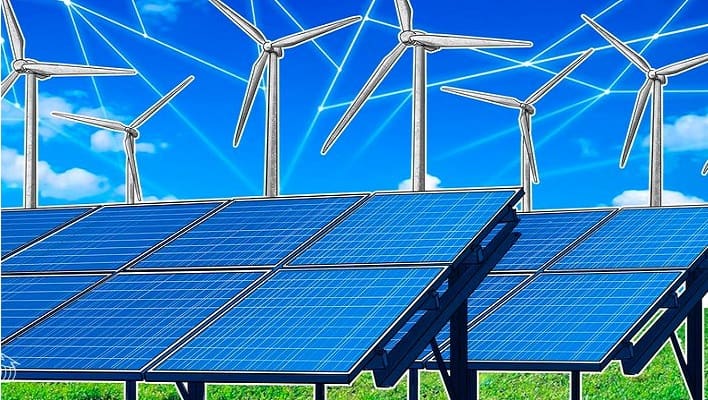
Japan’s Ministry of Economy, Trade, and Industry announced the continuation of its Regional Microgrid Construction Project, this time with Kyocera, ALI Technologies, and REVEX. This second phase of the project will begin this month and last until February 2022. It aims to build a regional microgrid and create a blockchain-based model that could potentially be used throughout Japan.

The project targets surplus electricity from solar power generators, which are installed in ordinary households located in Odawara City in Japan’s Kanagawa Prefecture. Excess electricity will be stored in large batteries and electric vehicles (EVs). The blockchain-based Regional Energy Management (REM) system designed by ALI Technologies manages electricity that’s produced and consumed locally. The system will centrally manage all power generation, including excess supply, as well as demand. The ultimate aim is to build a regional renewable energy-sharing model.

In the event of an emergency, the grid power supply can be disconnected and the microgrid will continue to operate via the solar panels, storage batteries, and EVs.

The project will also launch a consortium with Odawara City (Kanagawa Prefecture) and Shonan Electric Power, a local Kanagawa electric power company.

The consortium coordinator is Kyocera, the leading global supplier of solar power systems, printers, and other electronics. It will also provide the solar panels and storage batteries, and operate part of the microgrid. This is not Kyocera’s first project involving blockchain. In early 2019, Kyocera joined LO3 Energy in a project testing a blockchain-based virtual power plant, a network of decentralized medium-scale power generating units.

ALI Technologies develops advanced technologies such as AI, blockchain, and drones. Its role is to balance supply and demand and introduce its blockchain-based Regional Energy Management (REM) solution. REM will be able to analyze the data stored through smart meters which will act as blockchain nodes.

REVEX is a technology firm focused on e-mobility and energy sharing using EV batteries. It will provide the EV energy management system.

Japan has been looking into renewable energy for some time now. This arguably comes as a result of the 2011 earthquake and tsunami, causing the Fukushima disaster. Solar power and other renewable energy sources have been a focus ever since then, with blockchain and distributed ledger technology now providing safer, quicker, and more efficient solutions.

Two years ago, a separate consortium that included MUFG and Unisys announced plans to begin research on pricing surplus solar power and a blockchain trading system. Other startups exploring energy trading marketplaces include Australian firm Power Ledger, which announced a trial for P2P solar energy trading in Japan’s Kanto region late last year. Power Ledger previously trailed its platform with KEPCO, Japan’s second-biggest energy firm, and announced the trial’s extension earlier this year.

Power Info Today brings together the global energy industry — from generation and transmission operators to utility executives and energy transition leaders — through trusted editorial, market intelligence, and digital engagement.

Our 2026 Media Pack offers integrated solutions to reach your audience:

  • Magazine & Digital Editions Showcase your brand within premium energy industry coverage read by executives and decision - makers worldwide.
  • Industry Insights & Reports Align with data - driven analysis, trend reports, and regional roundups across the global power and energy value chain.
  • Brand Authority & Credibility Position your company as a thought leader through expert commentary, interviews, and special features.

Latest stories

Related stories

Breakthrough Energy Technologies Accelerating Net Zero

The global journey toward a zero-carbon world relies on more than just incremental improvements; it requires the deployment of frontier innovations. Accelerating net zero with breakthrough energy technologies involves integrating ultra-dense power sources like fusion and advanced geothermal with versatile molecular carriers such as hydrogen to create a truly resilient and sustainable industrial civilization.

How Renewable Infrastructure Drives Industrial Decarbonization

The heavy industry sector is often considered the "last mile" of the energy transition. Building renewable infrastructure for industrial decarbonization involves a fundamental redesign of industrial energy systems, moving away from high-carbon combustion toward a hybrid model of direct electrification and molecular green energy.

Integrating Renewable Energy for Enhanced Grid Stability

As the world transitions toward a cleaner power mix, the challenge of maintaining a steady electricity supply becomes paramount. Integrating renewable energy for grid stability involves leveraging cutting-edge technology and flexible infrastructure to turn variable resources into a reliable backbone for modern society.

Advancing Hydrogen Storage for Enhanced Energy Security

The global energy landscape is currently undergoing a transformation...

Subscribe

- Never miss a story with notifications

- Gain full access to our premium content

- Browse free from any location or device.

Media Packs

Expand Your Reach With Our Customized Solutions Empowering Your Campaigns To Maximize Your Reach & Drive Real Results!

– Access the Media Pack Now

– Book a Conference Call

Leave Message for Us to Get Back

Translate »