












Achema middle east

Better Energy Models For Tomorrow Through Grid Revolution

Note* - All images used are for editorial and illustrative purposes only and may not originate from the original news provider or associated company.

Subscribe

- Never miss a story with notifications

- Gain full access to our premium content

- Browse free from any location or device.

Media Packs

Expand Your Reach With Our Customized Solutions Empowering Your Campaigns To Maximize Your Reach & Drive Real Results!

– Access the Media Pack Now

– Book a Conference Call

Leave Message for Us to Get Back

Related stories

Smart Safety Systems Enhancing Grid Workforce Protection

Integrating cutting-edge technology into traditional infrastructure, smart safety systems power transmission projects by providing an intelligent layer of protection that anticipates hazards before they manifest. These digital innovations are revolutionizing how utility companies manage risk, ensuring that every technician in the field is connected, monitored, and shielded by a data-driven safety net.

Advanced Fall Protection in Power Transmission Safety

Maintaining equilibrium in the power sector requires more than just technical skill; it demands a robust infrastructure of fall protection in power transmission. By integrating sophisticated engineering with rigorous training protocols, organizations can significantly diminish the frequency of workplace accidents while simultaneously elevating the standards of operational performance across complex electrical grids.

Safer Work at Heights Driving Power Sector Productivity

Empowering the individuals who scale our national grids, safer work at heights power sector initiatives are bridging the gap between worker protection and operational efficiency. By investing in sophisticated fall protection and ergonomic safety systems, utility companies are creating an environment where peak performance is the natural byproduct of a secure and confident workforce.
- Advertisement -

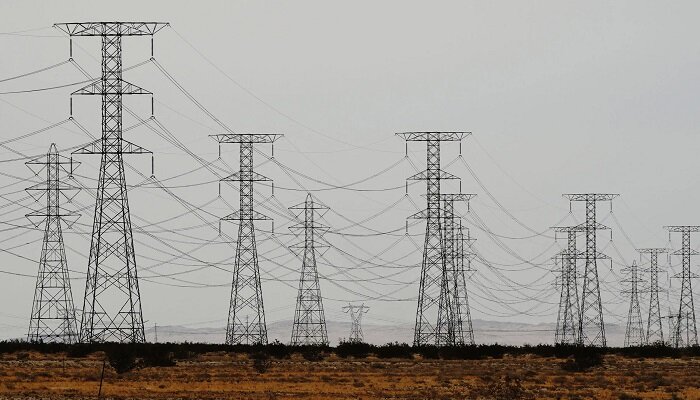
In a recent paper published, modeling experts from the US Department of Energy’s Argonne National Laboratory and various other institutions have highlighted the pressing requirement for improved energy system models. Their primary aim was to disseminate valuable insights to researchers, regulators, policymakers, industry stakeholders, and funding agencies, shedding light on opportunities to enhance these models.

The swift adoption of new technologies like solar power and grid energy storage necessitates a profound transformation in the way electric grids are managed to accommodate these innovations effectively.

The paper’s primary focus centers on capacity expansion models, instrumental tools employed to simulate future grid scenarios and pinpoint optimal long-term investments. These models take into account a multitude of intricate factors, including emerging policies, technological advancements, and forecasts of electricity demand. Electric utilities rely on these models for strategic grid planning, while regulators and governmental bodies utilize them to evaluate the implications of new energy and environmental policies.

Among the challenges underscored in the paper, one significant issue is the inadequate consideration of state of charge, which represents the amount of energy stored in a battery at any given moment. By factoring in the state of charge, grid operators can assess whether energy storage systems possess the capability to respond to sudden demand surges, particularly during instances when wind and solar generation fall short of predictions. It is imperative that these models be enhanced to effectively monitor changes in the state of charge in response to evolving grid conditions.

Furthermore, the paper brings to light the tendency of most models to overlook supply chain challenges associated with the manufacturing of energy storage technologies. Identifying the most viable decarbonization pathways requires a comprehensive examination of global battery supply chains. In certain instances, modelers may need to limit the deployment of specific storage technologies in decarbonization analyses due to the volatility of these supply chains.

Lastly, the paper emphasizes the necessity for model improvements to ensure that the benefits of the transition to clean energy are equitably distributed across all segments of the population. Energy storage has the potential to promote equity by reducing energy costs in disadvantaged communities and bolstering their resilience in the face of extreme weather events.

Latest stories

Related stories

Smart Safety Systems Enhancing Grid Workforce Protection

Integrating cutting-edge technology into traditional infrastructure, smart safety systems power transmission projects by providing an intelligent layer of protection that anticipates hazards before they manifest. These digital innovations are revolutionizing how utility companies manage risk, ensuring that every technician in the field is connected, monitored, and shielded by a data-driven safety net.

Advanced Fall Protection in Power Transmission Safety

Maintaining equilibrium in the power sector requires more than just technical skill; it demands a robust infrastructure of fall protection in power transmission. By integrating sophisticated engineering with rigorous training protocols, organizations can significantly diminish the frequency of workplace accidents while simultaneously elevating the standards of operational performance across complex electrical grids.

Safer Work at Heights Driving Power Sector Productivity

Empowering the individuals who scale our national grids, safer work at heights power sector initiatives are bridging the gap between worker protection and operational efficiency. By investing in sophisticated fall protection and ergonomic safety systems, utility companies are creating an environment where peak performance is the natural byproduct of a secure and confident workforce.

Risk Prevention Strategies for Safer Power Infrastructure

Ensuring the resilience of our global energy networks requires a sophisticated framework of risk prevention power infrastructure safety. By moving beyond reactive measures to a culture of proactive hazard identification, organizations can build a safer environment for their employees while maintaining the critical flow of electricity to communities and industries.

Subscribe

- Never miss a story with notifications

- Gain full access to our premium content

- Browse free from any location or device.

Media Packs

Expand Your Reach With Our Customized Solutions Empowering Your Campaigns To Maximize Your Reach & Drive Real Results!

– Access the Media Pack Now

– Book a Conference Call

Leave Message for Us to Get Back

Translate »