











Events Date: 9

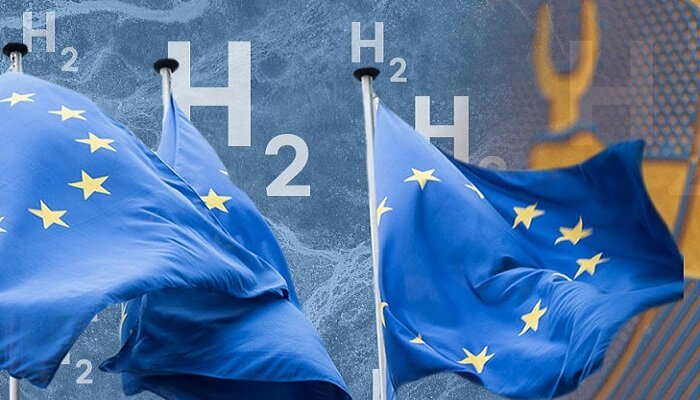
Next 5 To 10 Years Will See EU Make Use of Blue Hydrogen

Note* - All images used are for editorial and illustrative purposes only and may not originate from the original news provider or associated company.

Subscribe

- Never miss a story with notifications

- Gain full access to our premium content

- Browse free from any location or device.

Media Packs

Expand Your Reach With Our Customized Solutions Empowering Your Campaigns To Maximize Your Reach & Drive Real Results!

โ€“ Access the Media Pack Now

โ€“ Book a Conference Call

โ€“ Leave Message for Us to Get Back

Related stories

Ergonomics Improving Efficiency in Transmission Worksites

Optimizing the physical interaction between utility professionals and their environment, ergonomics transmission worksites initiatives are proving that worker comfort is a primary engine of operational speed. By refining tool design and harness mechanics, the power sector is reducing physical strain and fatigue, allowing crews to maintain peak performance throughout the demanding lifecycle of infrastructure projects.

Data Driven Insights Transforming Safety in Power Grids

Revolutionizing the management of risk in the energy sector, data driven safety power grids initiatives are turning vast streams of information into actionable protection strategies. By analyzing patterns of maintenance, environmental conditions, and worker behavior, utility providers are now able to predict hazards before they manifest, creating a more transparent and responsive safety environment for the modern electrical infrastructure.

Building Safety Culture Across Power Transmission Teams

Strengthening the human foundation of our energy networks, safety culture power transmission teams initiatives are moving beyond compliance to a deep-seated commitment to mutual protection. By fostering open communication, leadership accountability, and peer-to-peer engagement, utility organizations are creating an environment where every individual feels empowered to prioritize safety as a core personal and professional value.
- Advertisement -

The EU has been talking a lot about green hydrogen, but an expert has informed Renewables Now that blue and pink hydrogen will also likely be important over the next few years as the union realises it will not be able to meet its own short-term goals at the current rate of renewable energy expansion.

The UK investment firm Peel Hunt’s Head of Renewable Energy, Cleantech & Sustainability Research, LLP’s Nick Walker, is of an opinion that the state of the European hydrogen market, with a focus on electrolyser production and green certification. There will probably be another drive to transition to an all-green hydrogen fuel in the future. Nevertheless, both blue and green hydrogen are probably going to be used in the next 5 to 10 years as in the UK, Walker stated.

The analyst has reached this conclusion as a result of the contradictory messages being sent by the EU on the green label of hydrogen. More specifically, the REPowerEU Plan of the European Commission states that only fossil-free hydrogen will receive subsidies, but in practise, for a short period of time, some nuclear energy and fossil gas actions that sequester carbon (blue hydrogen) will also be considered environmentally sustainable. This will be the case as of the beginning of the next year because the EU adopted a change to its taxonomy in mid-July 2022 to include these activities.

The categorization, which serves as the foundation for investor rules, says it is okay to include nuclear and gas as eco-friendly for investment purposes in this sector,” he said, implying that the interests of some of the larger EU member states have come into play. Accordingly, it would appear that the EU will only provide tax incentives for electrolyser projects or companies producing green hydrogen.

Walker responded as follows when asked how this will impact the industry in general and the production of electrolysers in particular: He believes the EU has unearthed that they cannot construct enough new renewable sources in the timeframe it has fixed itself to fulfil its own objectives and there is a push to go faster, quicker, larger. In the medium term, they also intend to employ blue hydrogen produced from natural gas and nuclear power to drive electrolysers. The EU has also committed to reducing the time it takes to obtain permits for projects involving renewable energy and electrolyzers. Production of electrolysers might benefit from the use of nuclear power, he continued.

With the US IRA- Inflation Reduction Act of 2022 tax credit in place, he assumes that the EU has realised the importance of moving as swiftly and aggressively as possible while avoiding the creation of too many bureaucratic procedures or roadblocks. As a result, they are currently witnessing the weakening of the original additionality standards, Walker continued.

The EC’s postponed additionality guidelines, which will establish the criteria for hydrogen to receive the renewable certification, are now being awaited by the industry. According to reports, this was planned to occur on December 15 as a result of the draught document’s disclosure.

Latest stories

Related stories

Ergonomics Improving Efficiency in Transmission Worksites

Optimizing the physical interaction between utility professionals and their environment, ergonomics transmission worksites initiatives are proving that worker comfort is a primary engine of operational speed. By refining tool design and harness mechanics, the power sector is reducing physical strain and fatigue, allowing crews to maintain peak performance throughout the demanding lifecycle of infrastructure projects.

Data Driven Insights Transforming Safety in Power Grids

Revolutionizing the management of risk in the energy sector, data driven safety power grids initiatives are turning vast streams of information into actionable protection strategies. By analyzing patterns of maintenance, environmental conditions, and worker behavior, utility providers are now able to predict hazards before they manifest, creating a more transparent and responsive safety environment for the modern electrical infrastructure.

Building Safety Culture Across Power Transmission Teams

Strengthening the human foundation of our energy networks, safety culture power transmission teams initiatives are moving beyond compliance to a deep-seated commitment to mutual protection. By fostering open communication, leadership accountability, and peer-to-peer engagement, utility organizations are creating an environment where every individual feels empowered to prioritize safety as a core personal and professional value.

Human Factors Shaping Safety in Power Transmission Work

Understanding the cognitive and psychological drivers of performance, human factors power transmission safety initiatives are refining the interface between the worker and the high-voltage environment. By addressing issues like cognitive load, decision-making biases, and fatigue, the energy sector is moving beyond physical protection to a sophisticated model of error prevention that acknowledges the inherent limitations and strengths of the human mind.

Subscribe

- Never miss a story with notifications

- Gain full access to our premium content

- Browse free from any location or device.

Media Packs

Expand Your Reach With Our Customized Solutions Empowering Your Campaigns To Maximize Your Reach & Drive Real Results!

โ€“ Access the Media Pack Now

โ€“ Book a Conference Call

โ€“ Leave Message for Us to Get Back

Translate ยป